
🧠 Phases of HCl Secretion in the Stomach
The stomach produces hydrochloric acid (HCl) through specialized parietal cells, playing a vital role in protein digestion, enzyme activation, and defense against ingested pathogens. Gastric acid secretion is not constant it is carefully regulated through three physiological phases that respond to the anticipation, presence, and movement of food. Understanding these phases is essential for mastering gastrointestinal physiology on the MCAT.
👀 1. What Is Gastric Acid (HCl) Secretion?
Hydrochloric acid is secreted by parietal cells located in the gastric glands of the stomach. HCl creates a highly acidic environment (pH 1–2), which activates pepsinogen into pepsin, denatures dietary proteins, and helps destroy harmful microorganisms. Acid secretion is stimulated primarily by acetylcholine (ACh), gastrin, and histamine, while somatostatin acts as a major inhibitor.
🧠 2. Cephalic Phase (≈30% of Total HCl Secretion)
The cephalic phase begins before food even enters the stomach. The sight, smell, taste, or even the thought of food activates the cerebral cortex and hypothalamus, stimulating the vagus nerve. Vagal stimulation directly activates parietal cells and also promotes gastrin release, preparing the stomach for digestion before the first bite is swallowed.
🍽️ 3. Gastric Phase (≈60% of Total HCl Secretion)
The gastric phase accounts for the largest proportion of acid secretion. As food enters the stomach, gastric distension activates local enteric and vagovagal reflexes. Proteins and amino acids stimulate G cells in the antrum to release gastrin, which enhances acid production. This phase ensures sufficient hydrochloric acid is available while food is actively being digested.
⚙️ 4. Mechanisms That Stimulate Acid Secretion
Several pathways work together to maximize HCl production during digestion. The vagus nerve can directly stimulate parietal cells or indirectly increase acid secretion by promoting gastrin release. Gastric distension activates both vagal and local reflexes, while amino acids and peptides strongly stimulate gastrin secretion. These coordinated mechanisms optimize digestion and maintain gastric function.
🧪 5. Key Hormones and Neural Signals
Three major stimulators regulate parietal cell activity:
Acetylcholine (ACh): Released by the vagus nerve; directly stimulates parietal cells.
Gastrin: Secreted by G cells in the gastric antrum; stimulates acid secretion and promotes histamine release.
Histamine: Released by enterochromaffin-like (ECL) cells; activates H₂ receptors on parietal cells to produce maximal acid output.
These mediators work synergistically, explaining why medications targeting histamine receptors or proton pumps effectively reduce gastric acidity.
🚫 6. Regulation and Clinical Significance
Once gastric contents become highly acidic, somatostatin released from D cells inhibits gastrin secretion, creating a negative feedback loop that prevents excessive acid production. Disorders such as Zollinger-Ellison syndrome cause excessive gastrin secretion and severe peptic ulcers, while drugs like proton pump inhibitors (PPIs) and H₂ receptor blockers are commonly used to reduce acid secretion in GERD and peptic ulcer disease.
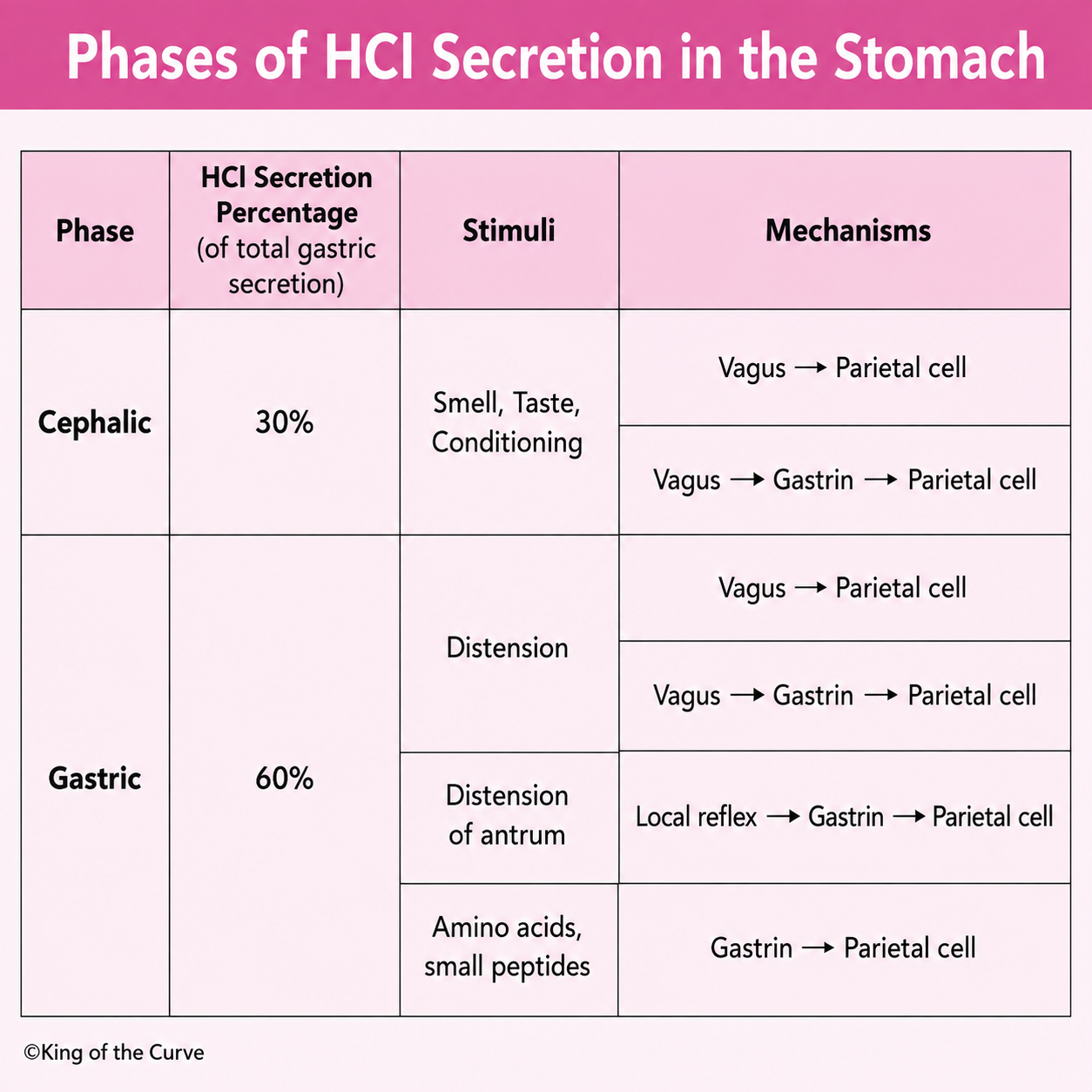
📊 7. Summary Table: Phases of HCl Secretion
| Phase | Approximate Contribution | Major Stimuli | Primary Mechanisms |
|---|---|---|---|
| Cephalic | 30% | Sight, smell, taste, and conditioning |
Vagus → Parietal cell
Vagus → Gastrin → Parietal cell |
| Gastric | 60% | Stomach distension |
Vagus → Parietal cell
Vagus → Gastrin → Parietal cell |
| Gastric | — | Distension of the antrum | Local reflex → Gastrin → Parietal cell |
| Gastric | — | Amino acids and small peptides | Gastrin → Parietal cell |
| Intestinal* | ~10% | Chyme entering the duodenum | Brief stimulation followed by inhibition through secretin, CCK, and GIP |
🎯 8. High-Yield MCAT Takeaways
Remember that the cephalic phase contributes approximately 30% of gastric acid secretion and is entirely mediated by vagal stimulation before food reaches the stomach. The gastric phase contributes about 60%, driven primarily by stomach distension and gastrin release. The vagus nerve, gastrin, and histamine are the three major stimulators of parietal cells, while somatostatin provides negative feedback. These concepts are frequently tested on the MCAT because they integrate physiology, neurobiology, endocrinology, and pharmacology into a single regulatory system.

Frequently Asked Questions (FAQs)
-
Aim for 4-6 focused hours, ensuring you incorporate breaks to avoid burnout.
-
Practice mindfulness techniques, take practice exams under realistic conditions, and maintain a balanced lifestyle.
-
Set short-term goals, seek support from mentors, and reward yourself for small achievements.
-
Regular exercise improves focus, reduces stress, and enhances overall mental clarity.
-
KOTC offers personalized learning tools, gamification features, and adaptive question banks to help students stay on track without burnout.