
🦵 Understanding the Trendelenburg Sign (Normal vs Positive)
The Trendelenburg sign is a classic orthopedic and neurologic clinical test used to evaluate hip abductor muscle function, especially the gluteus medius and gluteus minimus. It plays an important role in diagnosing conditions that affect hip stability and identifying causes of abnormal gait patterns.
This sign is especially valuable because weakness of hip abductors is linked to hip joint disease, nerve injury, muscle disorders, and structural abnormalities.
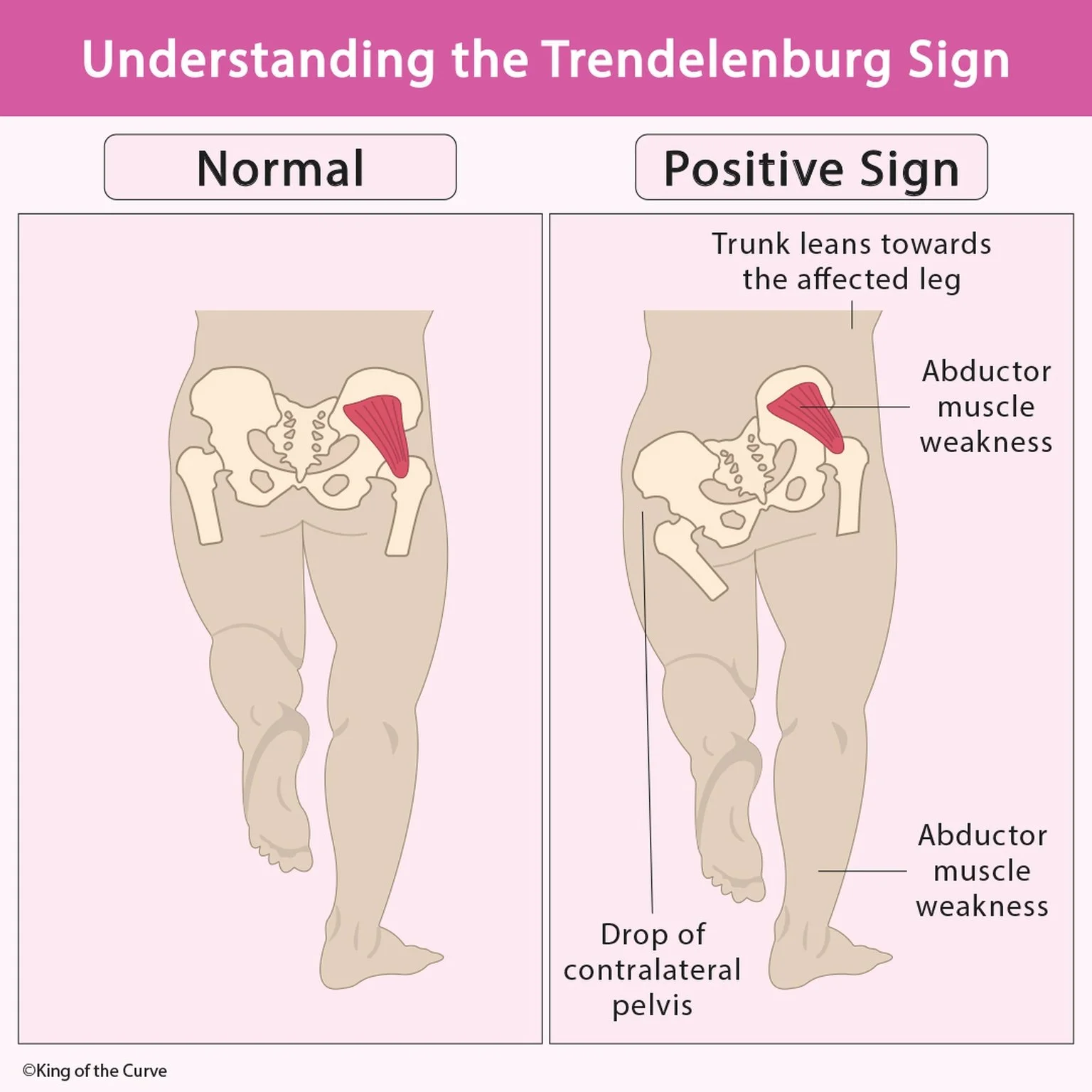
✅ What Is the Trendelenburg Sign?
The Trendelenburg sign is assessed by asking a person to stand on one leg.
Normal Response
When standing on one leg, the pelvis remains level or slightly rises on the lifted-leg side.
This happens because the hip abductors on the standing leg contract to maintain pelvic stability.
Positive Trendelenburg Sign
A positive sign occurs when the pelvis drops on the opposite (contralateral) side of the lifted leg.
This indicates weakness or dysfunction of the hip abductors on the stance leg.
🧠 Why Does a Positive Trendelenburg Sign Happen?
The hip abductors act like “pelvic stabilizers.” When one foot is lifted, these muscles contract to prevent the pelvis from falling.
If the abductors are weak or nerve supply is impaired:
✅ The pelvis drops on the opposite side
✅ The trunk leans toward the affected side
✅ A Trendelenburg gait may appear during walking
🚶 Trendelenburg Gait (Compensatory Lean)
Many people compensate for hip abductor weakness by leaning their torso toward the weak side.
This reduces the load on the abductors and helps them stay upright—but creates a visible limp.
📋 Trendelenburg Sign Summary Table
| Feature | Normal Trendelenburg | Positive Trendelenburg |
|---|---|---|
| Pelvic alignment | Pelvis stays level | Pelvis drops on opposite side |
| Hip abductor strength | Normal | Weak on the stance leg |
| Trunk position | Upright | Trunk leans toward affected leg |
| Gait impact | Normal walking pattern | Trendelenburg gait (limping) |
| Clinical meaning | Stable hip abductors | Suggests hip/nerve/muscle problem |
📌 Common Causes of a Positive Trendelenburg Sign
A positive Trendelenburg sign may result from:
✅ 1. Hip Abductor Weakness
Gluteus medius/minimus injury
Muscle atrophy
Prolonged inactivity
✅ 2. Superior Gluteal Nerve Damage
Trauma or surgery
Incorrect IM injections
L5 radiculopathy
✅ 3. Hip Joint Pathology
Osteoarthritis of the hip
Hip dysplasia
Femoral neck fracture
Legg-Calvé-Perthes disease
✅ 4. Structural Abnormalities
Congenital hip deformities
Limb length discrepancy
🩺 How to Perform the Trendelenburg Test
Ask the patient to stand upright
Have them lift one leg (knee bent)
Observe the pelvis for 10–30 seconds
✅ Normal: pelvis remains level
❌ Positive: pelvis drops on lifted-leg side
⭐ Why It Matters Clinically
Trendelenburg testing helps clinicians evaluate:
✅ Hip stability
✅ Neuromuscular integrity
✅ Causes of limping
✅ Rehab progress after injury or surgery
✅ Key Takeaway
A positive Trendelenburg sign indicates weakness of hip abductors on the standing leg and causes:
Contralateral pelvic drop
Trunk lean toward affected side
Limping (Trendelenburg gait)

Frequently Asked Questions (FAQs)
-
Aim for 4-6 focused hours, ensuring you incorporate breaks to avoid burnout.
-
Practice mindfulness techniques, take practice exams under realistic conditions, and maintain a balanced lifestyle.
-
Set short-term goals, seek support from mentors, and reward yourself for small achievements.
-
Regular exercise improves focus, reduces stress, and enhances overall mental clarity.
-
KOTC offers personalized learning tools, gamification features, and adaptive question banks to help students stay on track without burnout.