
🦴 Structure of a Long Bone
Long bones are a fundamental component of the human skeletal system and are specially designed to support body weight, movement, and metabolic activities. Examples include the femur, humerus, tibia, and radius. Their elongated shape and internal organization allow them to function efficiently under mechanical stress.
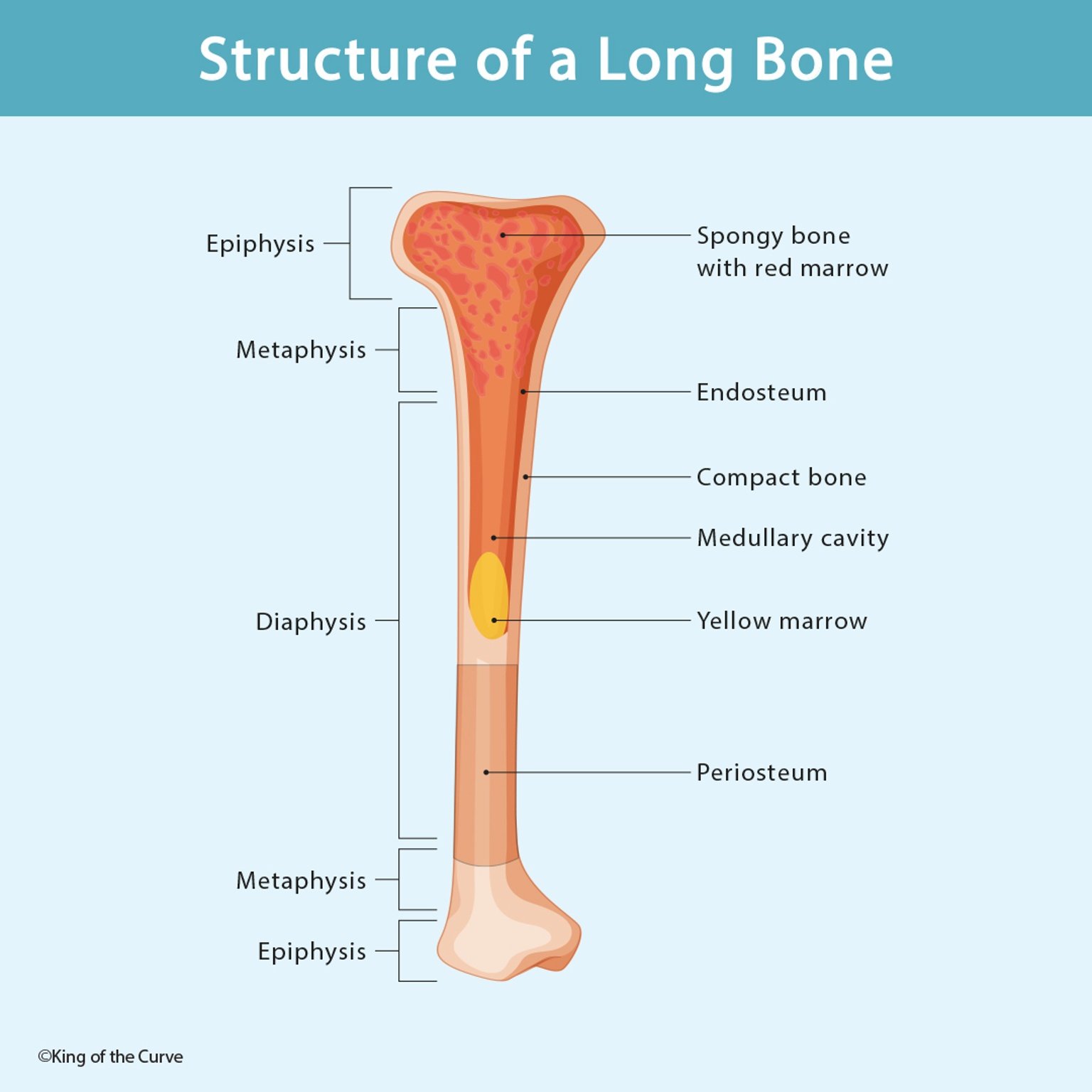
🔹 Epiphysis
The epiphyses are the expanded ends of a long bone. They consist mainly of spongy (cancellous) bone filled with red bone marrow, which plays a crucial role in hematopoiesis (blood cell formation). The outer surface of the epiphysis is covered by articular cartilage to reduce friction at joints.
🔹 Metaphysis
The metaphysis is the transitional zone between the epiphysis and diaphysis. In children and adolescents, it contains the epiphyseal (growth) plate, which is responsible for longitudinal growth of the bone. After growth is complete, this plate ossifies to form the epiphyseal line.
🔹 Diaphysis
The diaphysis forms the long shaft of the bone. It is composed predominantly of compact bone, providing strength and resistance to bending and torsion. This region supports most of the mechanical load during movement.
🔹 Medullary Cavity and Yellow Marrow
At the center of the diaphysis lies the medullary cavity, which contains yellow bone marrow in adults. Yellow marrow stores fat and acts as an energy reserve, and under extreme conditions, it can convert back to red marrow.
🔹 Endosteum
The endosteum is a thin connective tissue membrane lining the inner surface of the medullary cavity. It contains cells involved in bone growth, repair, and remodeling, including osteoblasts and osteoclasts.
🔹 Periosteum
The periosteum is a dense, fibrous outer covering of the bone (except at joint surfaces). It is rich in blood vessels and nerves, making it essential for nutrition, sensation, and fracture repair, as well as providing attachment points for muscles and ligaments.
📊 Summary Table: Structure of a Long Bone
| Component | Location | Primary Function |
|---|---|---|
| Epiphysis | Ends of the bone | Joint articulation, red marrow for blood formation |
| Metaphysis | Between epiphysis and diaphysis | Bone growth (lengthwise) |
| Diaphysis | Shaft of the bone | Strength, support, leverage |
| Compact Bone | Outer layer | Protection and mechanical strength |
| Spongy Bone | Epiphysis | Houses red marrow |
| Medullary Cavity | Center of diaphysis | Contains yellow marrow |
| Yellow Marrow | Medullary cavity | Fat storage, energy reserve |
| Endosteum | Inner lining | Bone remodeling |
| Periosteum | Outer surface | Nutrition, repair, muscle attachment |
📌 Key Takeaway
The long bone is a dynamic structure that combines strength, flexibility, and metabolic activity. Its organized anatomy allows it to support movement while also playing a vital role in blood cell production and mineral storage.

Frequently Asked Questions (FAQs)
-
Aim for 4-6 focused hours, ensuring you incorporate breaks to avoid burnout.
-
Practice mindfulness techniques, take practice exams under realistic conditions, and maintain a balanced lifestyle.
-
Set short-term goals, seek support from mentors, and reward yourself for small achievements.
-
Regular exercise improves focus, reduces stress, and enhances overall mental clarity.
-
KOTC offers personalized learning tools, gamification features, and adaptive question banks to help students stay on track without burnout.