
🫀 Stomach Mucous: Protective Barrier
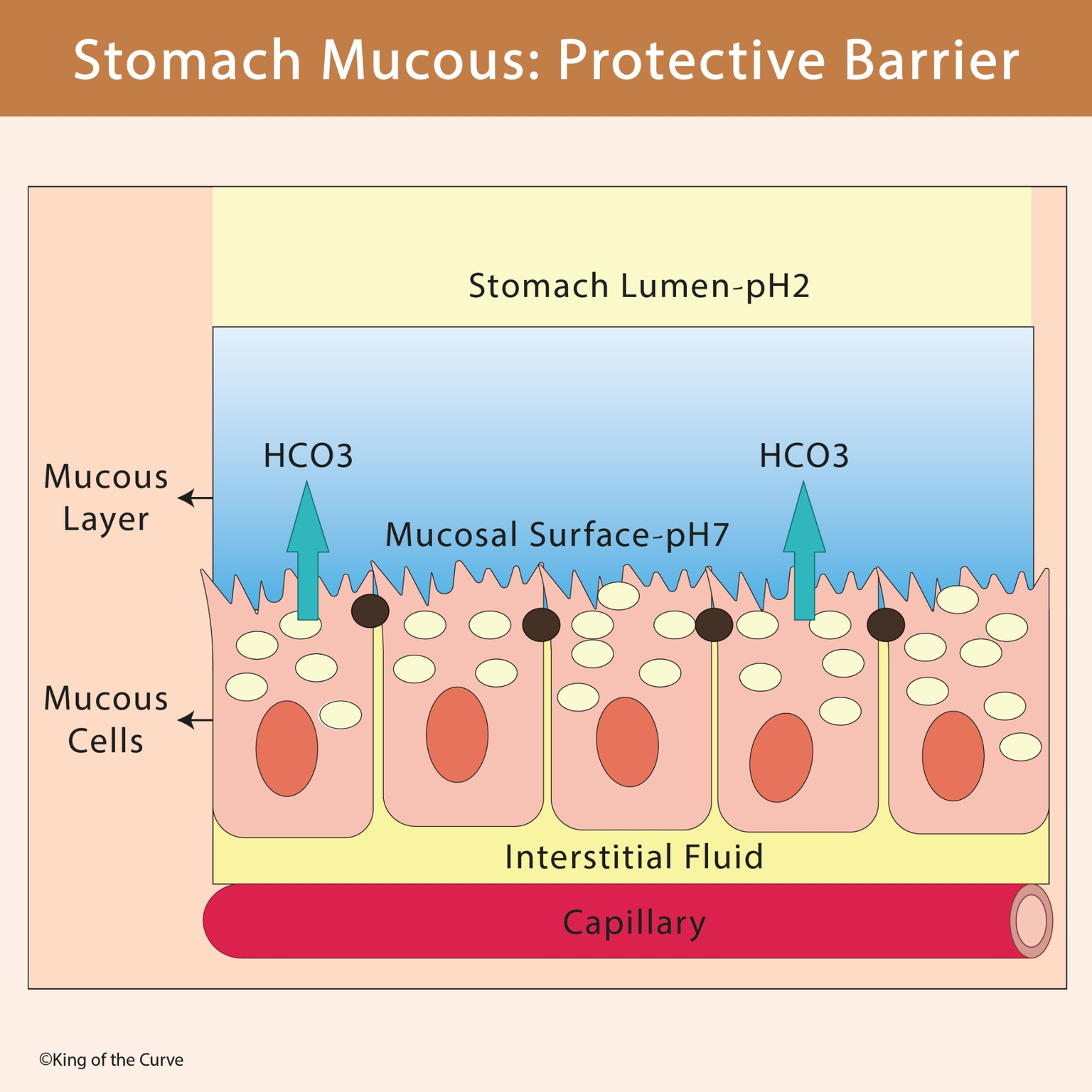
The stomach is exposed to an extremely acidic environment, with gastric lumen pH reaching as low as 1–2. Despite this harsh condition, the gastric mucosa remains intact due to a highly effective mucosal protective barrier. This barrier prevents autodigestion by acid and pepsin and is essential for maintaining gastric integrity.
🧪 The Gastric Acid Challenge
Gastric parietal cells secrete hydrochloric acid into the stomach lumen to aid digestion and kill pathogens. However, this acid poses a constant threat to the epithelial lining. Without protective mechanisms, the stomach would be vulnerable to erosion, ulceration, and bleeding.
🧬 Structure of the Mucous Barrier
The gastric mucous barrier is composed of a thick gel-like mucous layer secreted by surface mucous cells. This layer adheres tightly to the epithelium and acts as the first physical defense against acid and digestive enzymes.
⚖️ Role of Bicarbonate (HCO₃⁻)
Mucous cells actively secrete bicarbonate ions (HCO₃⁻) into the mucous layer. This neutralizes hydrogen ions diffusing from the lumen, creating a pH gradient:
Stomach lumen: pH ~2
Mucosal surface: pH ~7
This near-neutral pH at the epithelial surface is critical for cell survival.
🧠 Cellular and Vascular Support
Below the epithelial cells lies the interstitial fluid and a rich capillary network. Adequate blood flow supplies oxygen and nutrients while removing acid that diffuses inward. This vascular support is vital for rapid epithelial repair and bicarbonate delivery.
⚠️ When the Barrier Fails
Disruption of the mucous barrier—due to NSAIDs, Helicobacter pylori infection, alcohol, or ischemia—reduces mucous or bicarbonate secretion. This exposes epithelial cells to acid, leading to gastritis and peptic ulcer disease.
🧩 Key Takeaway
The gastric mucous barrier is a dynamic, multi-layered defense system combining mucous, bicarbonate secretion, tight epithelial junctions, and blood flow. Together, these mechanisms allow the stomach to digest food without digesting itself.
📊 Summary Table: Gastric Mucous Protective Barrier
| Component | Function |
|---|---|
| Mucous layer | Physical barrier preventing acid and pepsin from reaching epithelial cells |
| Bicarbonate (HCO3−) | Neutralizes acid, maintaining pH ~7 at mucosal surface |
| Surface mucous cells | Secrete mucous and bicarbonate |
| pH gradient | Protects epithelium despite acidic lumen (pH 2 → pH 7) |
| Capillary blood flow | Supplies nutrients, removes diffused acid, supports repair |
| Tight junctions | Prevent back-diffusion of hydrogen ions |

Frequently Asked Questions (FAQs)
-
Aim for 4-6 focused hours, ensuring you incorporate breaks to avoid burnout.
-
Practice mindfulness techniques, take practice exams under realistic conditions, and maintain a balanced lifestyle.
-
Set short-term goals, seek support from mentors, and reward yourself for small achievements.
-
Regular exercise improves focus, reduces stress, and enhances overall mental clarity.
-
KOTC offers personalized learning tools, gamification features, and adaptive question banks to help students stay on track without burnout.