
🩺 Spleen: Structure, Functions, and Clinical Importance
The spleen is the largest individual lymphatic organ in the human body and plays a vital role in blood filtration, immune response, and hematological regulation. Although not essential for survival, its absence significantly increases susceptibility to infections.
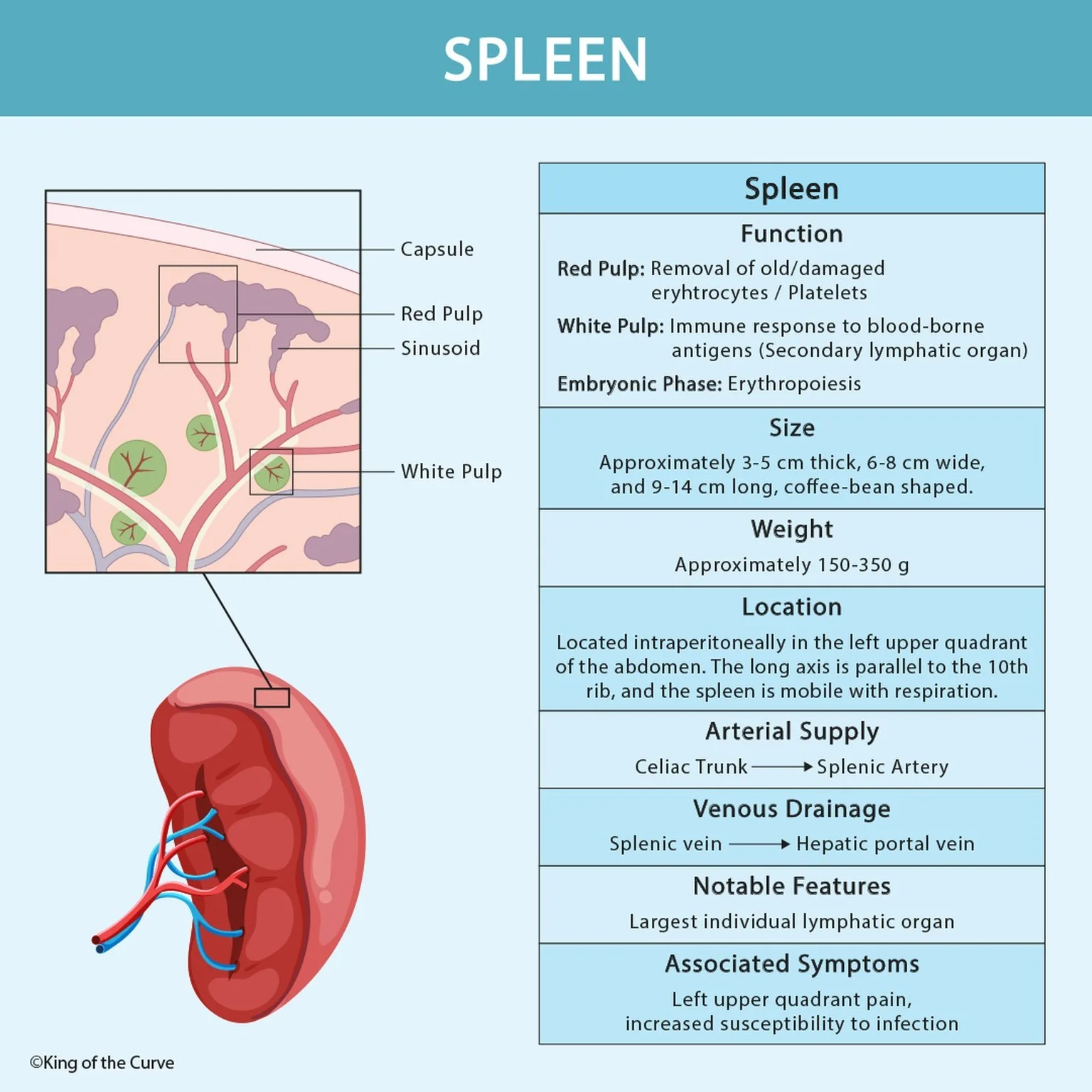
🔬 Microscopic Structure of the Spleen
The spleen is enclosed by a fibroelastic capsule and is composed of two functionally distinct regions:
Red pulp – Responsible for filtering blood and removing old or damaged erythrocytes and platelets
White pulp – Lymphoid tissue involved in immune responses to blood-borne antigens
Blood flows through sinusoids, allowing close contact between circulating cells and macrophages.
🛡️ Functions of the Spleen
1️⃣ Red Pulp Function
Removes senescent and damaged red blood cells
Clears platelets and blood debris
Acts as a reservoir for blood cells
2️⃣ White Pulp Function
Initiates immune responses against circulating pathogens
Produces antibodies
Functions as a secondary lymphoid organ
3️⃣ Embryonic Function
Serves as a site of erythropoiesis during fetal development
📍 Size, Weight, and Shape
Size: Approximately 3–5 cm thick, 6–8 cm wide, and 9–14 cm long
Weight: Around 150–350 grams
Shape: Characteristically coffee-bean shaped
📌 Anatomical Location
The spleen is:
Located intraperitoneally in the left upper quadrant of the abdomen
Positioned parallel to the 10th rib
Mobile with respiration due to its ligamentous attachments
🩸 Blood Supply and Drainage
Arterial supply: Celiac trunk → Splenic artery
Venous drainage: Splenic vein → Hepatic portal vein
This vascular arrangement highlights the spleen’s close relationship with the liver.
⚠️ Clinical Relevance
Enlargement of the spleen (splenomegaly) can cause left upper quadrant pain
Absence or removal of the spleen increases the risk of severe infections, especially from encapsulated bacteria
The spleen is the largest lymphatic organ in the body
📊 Summary Table: Spleen at a Glance
| Feature | Details |
|---|---|
| Organ Type | Largest individual lymphatic organ |
| Primary Functions |
|
| Red Pulp | Filters blood, removes senescent erythrocytes and platelets |
| White Pulp | Lymphoid tissue responsible for antibody production |
| Embryonic Role | Site of erythropoiesis during fetal life |
| Size | 3–5 cm thick, 6–8 cm wide, 9–14 cm long |
| Weight | Approximately 150–350 g |
| Shape | Coffee-bean shaped |
| Location | Intraperitoneal, left upper quadrant, parallel to 10th rib |
| Arterial Supply | Celiac trunk → Splenic artery |
| Venous Drainage | Splenic vein → Hepatic portal vein |
| Notable Feature | Largest lymphatic organ |
| Clinical Significance | Splenomegaly causes LUQ pain; splenectomy increases infection risk |
🧠 Key Takeaway
The spleen is essential for:
Blood quality control
Immune surveillance
Removal of aged blood cells
Despite being non-vital, its loss has significant immunological consequences.

Frequently Asked Questions (FAQs)
-
Aim for 4-6 focused hours, ensuring you incorporate breaks to avoid burnout.
-
Practice mindfulness techniques, take practice exams under realistic conditions, and maintain a balanced lifestyle.
-
Set short-term goals, seek support from mentors, and reward yourself for small achievements.
-
Regular exercise improves focus, reduces stress, and enhances overall mental clarity.
-
KOTC offers personalized learning tools, gamification features, and adaptive question banks to help students stay on track without burnout.