
🩺 Sliding vs Paraesophageal Hiatal Hernias Explained (High-Yield GI Anatomy for MCAT, NCLEX & USMLE)
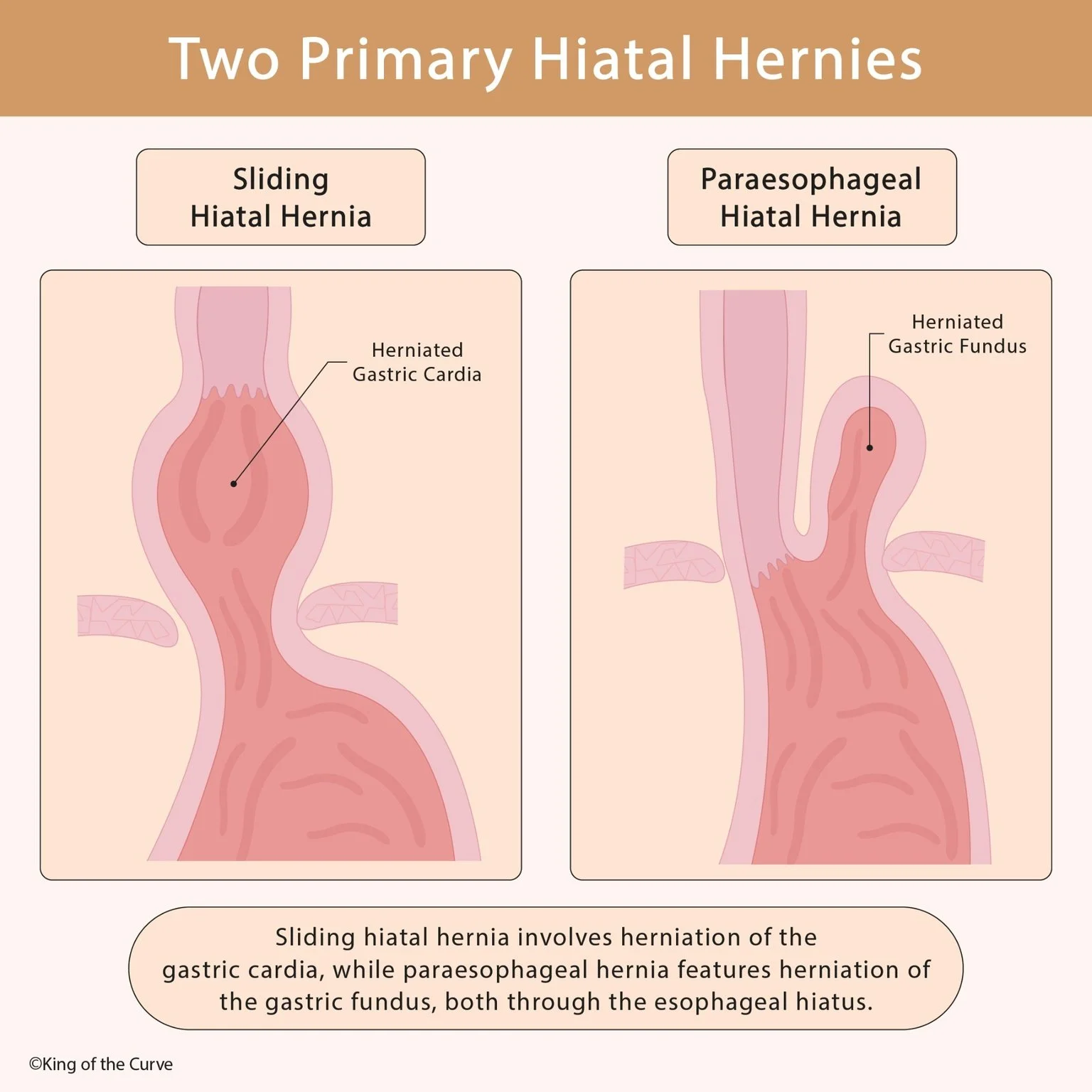
Hiatal hernias are one of those GI topics that exam writers love because they test both anatomy (what moves where?) and clinical logic (which type causes reflux vs strangulation risk?). On the MCAT, questions often focus on anatomy and acid reflux physiology, while the NCLEX and USMLE commonly test symptom patterns, complications, and management. Today, I’m going to show you the two primary hiatal hernias using this KOTC visual so you can recognize them instantly and answer related questions confidently.
🧠 What Is a Hiatal Hernia? (Quick Definition)
A hiatal hernia occurs when part of the stomach herniates upward through the esophageal hiatus of the diaphragm into the thoracic cavity. The key anatomical landmark for distinguishing types is the gastroesophageal junction (GE junction)—specifically whether it moves above the diaphragm or stays in place. That single detail can help you identify the hernia type and predict the clinical consequences.
🔁 Sliding Hiatal Hernia (Most Common + Most Associated with GERD)
A sliding hiatal hernia is when the GE junction and gastric cardia slide upward through the diaphragm. This is the most common type and is strongly linked to GERD (reflux) because the lower esophageal sphincter is displaced upward, making it easier for acid to reflux into the esophagus. On exams, the giveaway is a patient with chronic heartburn that worsens when lying down, often improved with lifestyle changes or acid suppression therapy.
🧷 Paraesophageal Hiatal Hernia (Less Common but More Dangerous)
A paraesophageal hiatal hernia occurs when the gastric fundus herniates upward next to the esophagus, while the GE junction stays in its normal position. This type is less associated with reflux but is clinically important because it carries a higher risk of strangulation, obstruction, ischemia, or volvulus. On the NCLEX and USMLE, a paraesophageal hernia may appear in a vignette describing post-meal chest discomfort, early satiety, or sudden severe pain with signs of compromised blood flow.
⚡ Why the Difference Matters (Reflux vs Strangulation Risk)
The major testable difference is this: sliding hernias mainly cause reflux symptoms, while paraesophageal hernias raise concern for mechanical complications. Sliding hernias can lead to chronic esophagitis, Barrett’s esophagus, and ulcers due to repeated acid exposure. Paraesophageal hernias can become surgical emergencies if the herniated stomach becomes trapped and loses blood supply. That’s why exam questions often ask which type is “more likely to strangulate”—and the answer is paraesophageal.
📊 Sliding vs Paraesophageal Hiatal Hernia: Comparison Table
| Feature | Sliding Hiatal Hernia | Paraesophageal Hiatal Hernia |
|---|---|---|
| What herniates? | GE junction + gastric cardia | Gastric fundus (next to esophagus) |
| GE junction position | Moves above diaphragm | Stays in normal position |
| Most common association | GERD / reflux | Strangulation / obstruction |
| Common symptoms | Heartburn, regurgitation, worse lying down | Chest discomfort, early satiety, post-meal pain |
| High-yield clue | “Reflux + sliding” | “Fundus herniates + strangulation risk” |
🚀 Study Smarter with King of the Curve (CTA + Internal Links)
Hiatal hernias become easy when you train your brain to recognize anatomy patterns instead of memorizing isolated facts. King of the Curve makes this process effortless and rewarding with 1000+ science visuals, an Adaptive Q-Bank, and engaging features like Curve Coins, daily questions, timed mode, and multiplayer study. To level up your prep, explore kingofthecurve.org/studyscience, browse kingofthecurve.org/pre-med-essentials, and build daily recall with kingofthecurve.org/qotd.

Frequently Asked Questions (FAQs)
-
Aim for 4-6 focused hours, ensuring you incorporate breaks to avoid burnout.
-
Practice mindfulness techniques, take practice exams under realistic conditions, and maintain a balanced lifestyle.
-
Set short-term goals, seek support from mentors, and reward yourself for small achievements.
-
Regular exercise improves focus, reduces stress, and enhances overall mental clarity.
-
KOTC offers personalized learning tools, gamification features, and adaptive question banks to help students stay on track without burnout.