
🧬 Turner Syndrome Explained: Features, Diagnosis, and High-Yield Exam Clues (45,XO)
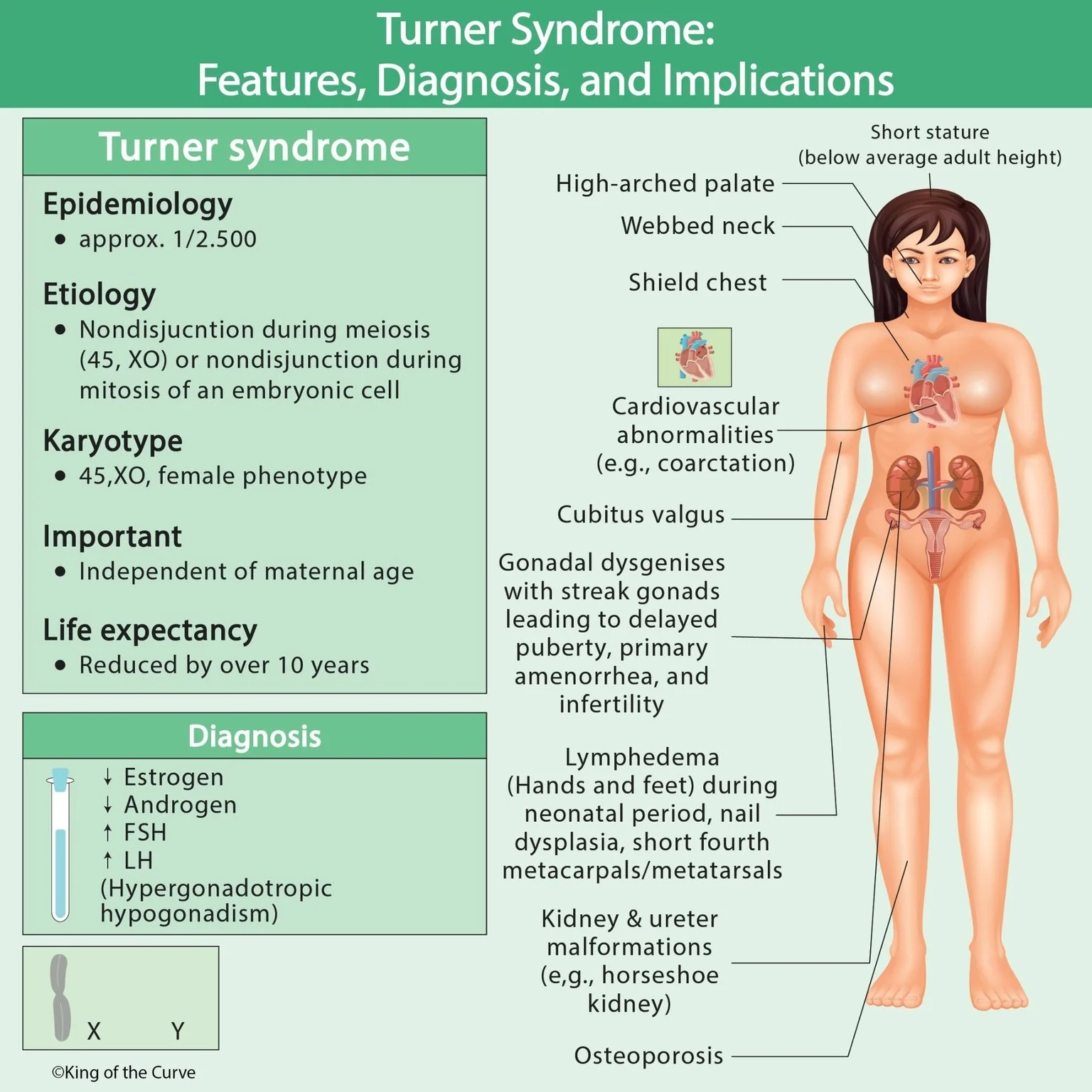
Turner syndrome is one of the most testable chromosomal disorders because it ties together genetics, endocrine physiology, and clinical presentation in a predictable pattern. It shows up on the MCAT when questions test nondisjunction, karyotypes, and hormone profiles, and it’s common on NCLEX and USMLE questions involving delayed puberty, infertility, and congenital heart defects. Today, I’m going to walk you through how to recognize Turner syndrome quickly using this KOTC visual so you can stop guessing and start scoring.
🧬 What Is Turner Syndrome? (The One-Line Definition)
Turner syndrome occurs when a genetic female has monosomy X, meaning she has only one X chromosome: 45,XO. This can happen due to nondisjunction during meiosis or mitotic errors early in embryonic development. A key point for exams is that it is independent of maternal age, unlike trisomy disorders such as Down syndrome. Most exam questions want you to connect the karyotype to the phenotype: a female with short stature, gonadal dysgenesis, and characteristic physical features.
👩⚕️ Classic Physical Features (What You Should Spot Immediately)
The KOTC diagram highlights the major traits that test writers love to include in question stems. The most high-yield features include short stature, a webbed neck, shield chest, and high-arched palate. Many questions also mention cubitus valgus (increased carrying angle) and lymphedema in hands and feet, especially during the neonatal period. If a question describes these features plus delayed puberty, you should immediately think: Turner syndrome.
❤️ Major Complications (High-Yield for NCLEX + USMLE)
Turner syndrome is associated with serious organ-system complications, which makes it a favorite for clinically oriented exams. Cardiovascular findings include coarctation of the aorta and bicuspid aortic valve, and renal findings include horseshoe kidney or ureter malformations. Because these patients often have low estrogen, they are also at higher risk for osteoporosis later in life. These complications are important not only for diagnosis, but also for long-term management and monitoring.
🧪 Hormone Pattern + Diagnosis (Hypergonadotropic Hypogonadism)
The key endocrine clue is that Turner syndrome causes gonadal dysgenesis with streak ovaries, meaning the ovaries can’t produce enough sex hormones. This leads to:
↓ Estrogen
↓ Androgens
↑ FSH
↑ LH
This pattern is called hypergonadotropic hypogonadism: the pituitary is working hard (high gonadotropins), but the ovaries can’t respond. On the MCAT, this hormone pattern is often tested as a pathway question. On the NCLEX and USMLE, it shows up through clinical features like delayed puberty, primary amenorrhea, and infertility.
📊 Turner Syndrome Cheat Table (Fast Recall)
| Category | Key Turner Syndrome Clue |
|---|---|
| Karyotype | 45,XO |
| Sex phenotype | Female |
| Core features | Short stature, webbed neck, shield chest |
| Gonads | Streak ovaries → infertility |
| Hormones | ↓ Estrogen, ↑ FSH/LH (hypergonadotropic hypogonadism) |
| Heart | Coarctation of the aorta, bicuspid valve |
| Kidneys | Horseshoe kidney |
| Exam giveaway line | “Primary amenorrhea + short stature + webbed neck” |
🚀 Study Smarter with King of the Curve (CTA + Internal Links)
Turner syndrome becomes easy when you study it as a visual pattern instead of a memorization list. King of the Curve helps students learn faster with 1000+ illustrations, an Adaptive Q-Bank, and gamified learning tools like Curve Coins, multiplayer, timed mode, daily questions, and a custom homepage built for long-term retention. For more structured learning, explore kingofthecurve.org/studyscience, check kingofthecurve.org/pre-med-essentials, and build recall daily with kingofthecurve.org/qotd.

Frequently Asked Questions (FAQs)
-
Aim for 4-6 focused hours, ensuring you incorporate breaks to avoid burnout.
-
Practice mindfulness techniques, take practice exams under realistic conditions, and maintain a balanced lifestyle.
-
Set short-term goals, seek support from mentors, and reward yourself for small achievements.
-
Regular exercise improves focus, reduces stress, and enhances overall mental clarity.
-
KOTC offers personalized learning tools, gamification features, and adaptive question banks to help students stay on track without burnout.