
🧬 Protein Formation: From DNA to Functional Proteins
Proteins are the molecular machines of the cell, carrying out nearly every biological process from catalyzing chemical reactions and transporting oxygen to defending against infections. The process of protein formation, also known as gene expression, involves converting genetic information stored in DNA into functional proteins through transcription and translation. Understanding this pathway is essential for the MCAT and forms the basis of molecular biology and genetics.
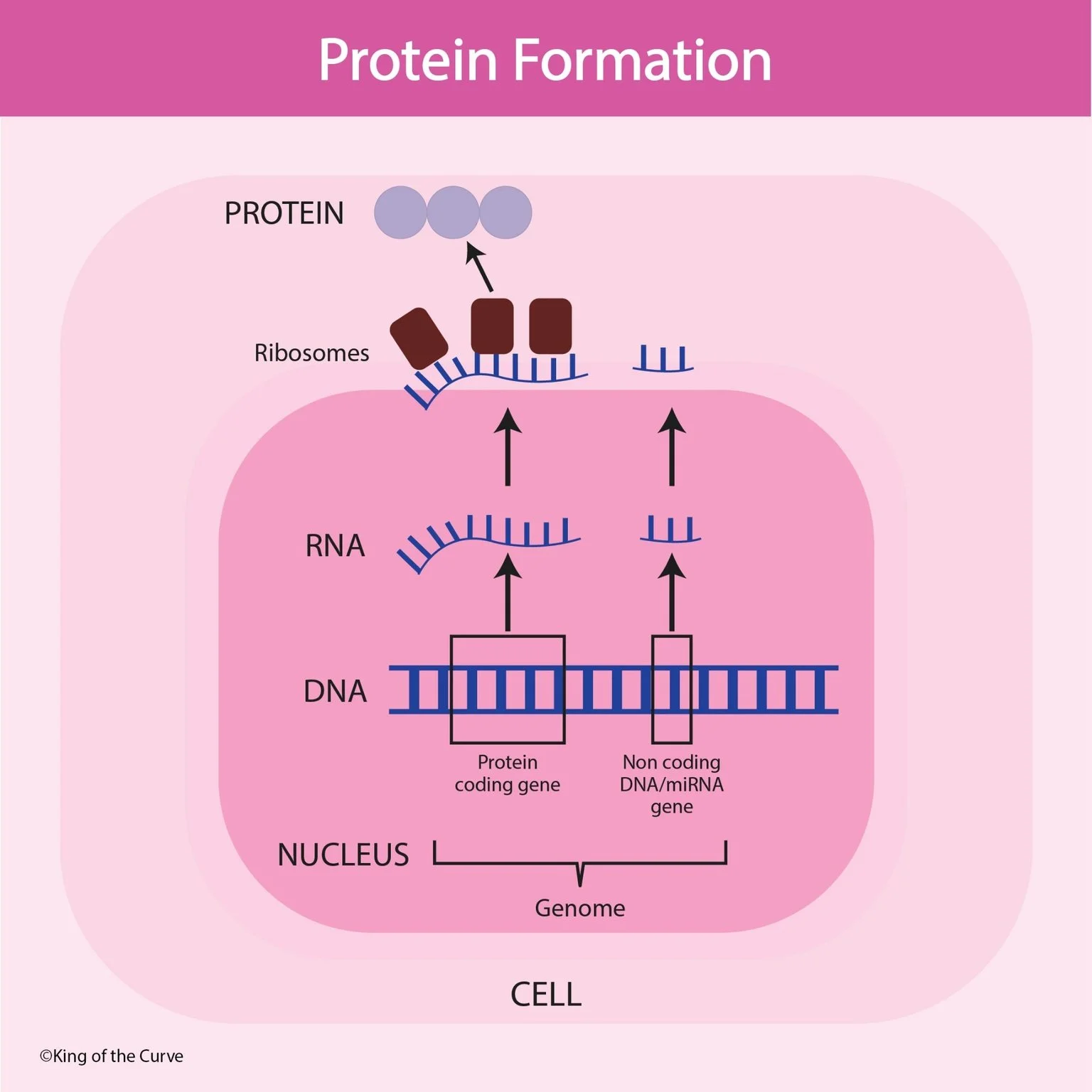
🧬 What Is Protein Formation?
Protein formation is the process by which cells use the information encoded in DNA to synthesize proteins. It occurs in two major steps:
Transcription: DNA → RNA
Translation: RNA → Protein
Only genes that encode proteins are translated, while many other DNA regions produce functional non-coding RNAs instead.
🧪 Step 1: DNA Stores Genetic Information
DNA resides inside the cell nucleus and contains thousands of genes.
Two major gene types include:
Protein-coding genes → produce messenger RNA (mRNA)
Non-coding genes → produce RNAs such as microRNA (miRNA), rRNA, and tRNA that regulate gene expression or assist protein synthesis.
DNA remains protected in the nucleus while copies of selected genes are made.
✍️ Step 2: Transcription (DNA → RNA)
During transcription:
RNA polymerase binds to a protein-coding gene.
One DNA strand serves as the template.
A complementary RNA molecule (mRNA) is synthesized.
This mRNA carries the genetic instructions from the nucleus to the cytoplasm.
Key enzyme: RNA Polymerase
🚚 Messenger RNA Leaves the Nucleus
Once transcription is complete:
mRNA is processed (capping, splicing, poly-A tail in eukaryotes).
Mature mRNA exits the nucleus through nuclear pores.
It travels to ribosomes in the cytoplasm.
🏭 Step 3: Translation (RNA → Protein)
Translation occurs at ribosomes.
During this process:
Ribosomes bind to mRNA.
Transfer RNAs (tRNAs) bring amino acids.
Codons on mRNA determine amino acid order.
Peptide bonds join amino acids together.
A growing polypeptide chain is formed.
Eventually, the completed chain folds into a functional protein.
🔬 Ribosomes: The Protein Factories
Ribosomes consist of:
Ribosomal RNA (rRNA)
Ribosomal proteins
They can be:
Free in the cytoplasm
Bound to the rough endoplasmic reticulum (RER)
Free ribosomes synthesize cytoplasmic proteins, while RER-bound ribosomes synthesize secreted and membrane proteins.
🧩 Role of Non-Coding RNA
Not every RNA becomes a protein.
Examples include:
miRNA: Regulates gene expression by degrading mRNA or preventing translation.
tRNA: Delivers amino acids to ribosomes.
rRNA: Forms the structural and catalytic core of ribosomes.
These RNAs are essential for proper protein synthesis and cellular regulation.
📊 DNA vs RNA vs Protein
| Feature | DNA | RNA | Protein |
|---|---|---|---|
| Function | Stores genetic information | Carries genetic instructions | Performs cellular functions |
| Sugar | Deoxyribose | Ribose | None |
| Location | Nucleus | Nucleus and cytoplasm | Throughout the cell |
| Composition | Nucleotides | Nucleotides | Amino acids |
📝 MCAT High-Yield Points
DNA → RNA → Protein is called the Central Dogma of Molecular Biology.
Transcription occurs in the nucleus.
Translation occurs at ribosomes.
mRNA carries genetic information.
tRNA delivers amino acids.
rRNA forms ribosomes.
Protein-coding genes produce proteins.
Non-coding genes regulate gene expression.
Mutations in DNA may alter protein structure and function.
🎯 Final Takeaway
Protein formation is the fundamental pathway by which genetic information becomes functional molecules. DNA stores the blueprint, RNA carries the instructions, and ribosomes assemble amino acids into proteins that allow cells to grow, communicate, and survive. Mastering transcription, translation, and the roles of different RNA molecules is essential for understanding genetics, molecular biology, and many disease processes tested on the MCAT.

Frequently Asked Questions (FAQs)
-
Aim for 4-6 focused hours, ensuring you incorporate breaks to avoid burnout.
-
Practice mindfulness techniques, take practice exams under realistic conditions, and maintain a balanced lifestyle.
-
Set short-term goals, seek support from mentors, and reward yourself for small achievements.
-
Regular exercise improves focus, reduces stress, and enhances overall mental clarity.
-
KOTC offers personalized learning tools, gamification features, and adaptive question banks to help students stay on track without burnout.