
🧠 Social Exclusion Examples: Understanding Ostracism, Rejection, and Isolation
Social exclusion occurs when an individual or group is prevented from fully participating in social relationships, activities, institutions, or opportunities. It can range from subtle behaviors, such as being ignored during a conversation, to more significant forms of rejection or discrimination. For the MCAT, social exclusion is especially relevant to psychology and sociology because it demonstrates how social environments can influence behavior, identity, emotional well-being, and access to resources.
🚪 Ostracism and Being Left Out
Ostracism is a common form of social exclusion in which a person is deliberately ignored or excluded by others. Examples include classmates intentionally leaving someone out of a study group, coworkers excluding a colleague from social activities, or friends repeatedly ignoring one member of the group. Even when no direct insult occurs, being ignored can threaten a person's sense of belonging and social connection.
👥 Rejection by Social Groups
Social rejection occurs when an individual is explicitly denied acceptance or membership in a group. A student might be rejected from a club, a peer group may refuse to associate with someone, or an individual may be told that they are not welcome at an event. Unlike subtle ostracism, rejection is generally more direct and makes the group's unwillingness to include the person clear.
🏫 Social Exclusion in School
Schools provide many examples of social inclusion and exclusion. A student may be excluded from lunch groups, sports, classroom activities, or social events. Persistent exclusion can affect social development and a student's sense of belonging. From an MCAT perspective, these situations illustrate how peer groups and social environments can influence attitudes, behaviors, self-concept, and interpersonal relationships.
💼 Exclusion in the Workplace
Social exclusion can also occur in professional environments. Examples include deliberately withholding important information from a coworker, excluding an employee from meetings, or repeatedly leaving someone out of informal workplace gatherings. These behaviors can reduce opportunities for social integration and professional participation, showing how social relationships can influence an individual's position within an organization.
🌐 Digital and Online Exclusion
Online interactions have created additional ways for social exclusion to occur. Someone might be removed from a group chat, ignored on social media, excluded from an online community, or deliberately left out of digital invitations. Although these interactions occur virtually, they can still affect real-world social relationships and perceptions of belonging.
🏛️ Structural Social Exclusion
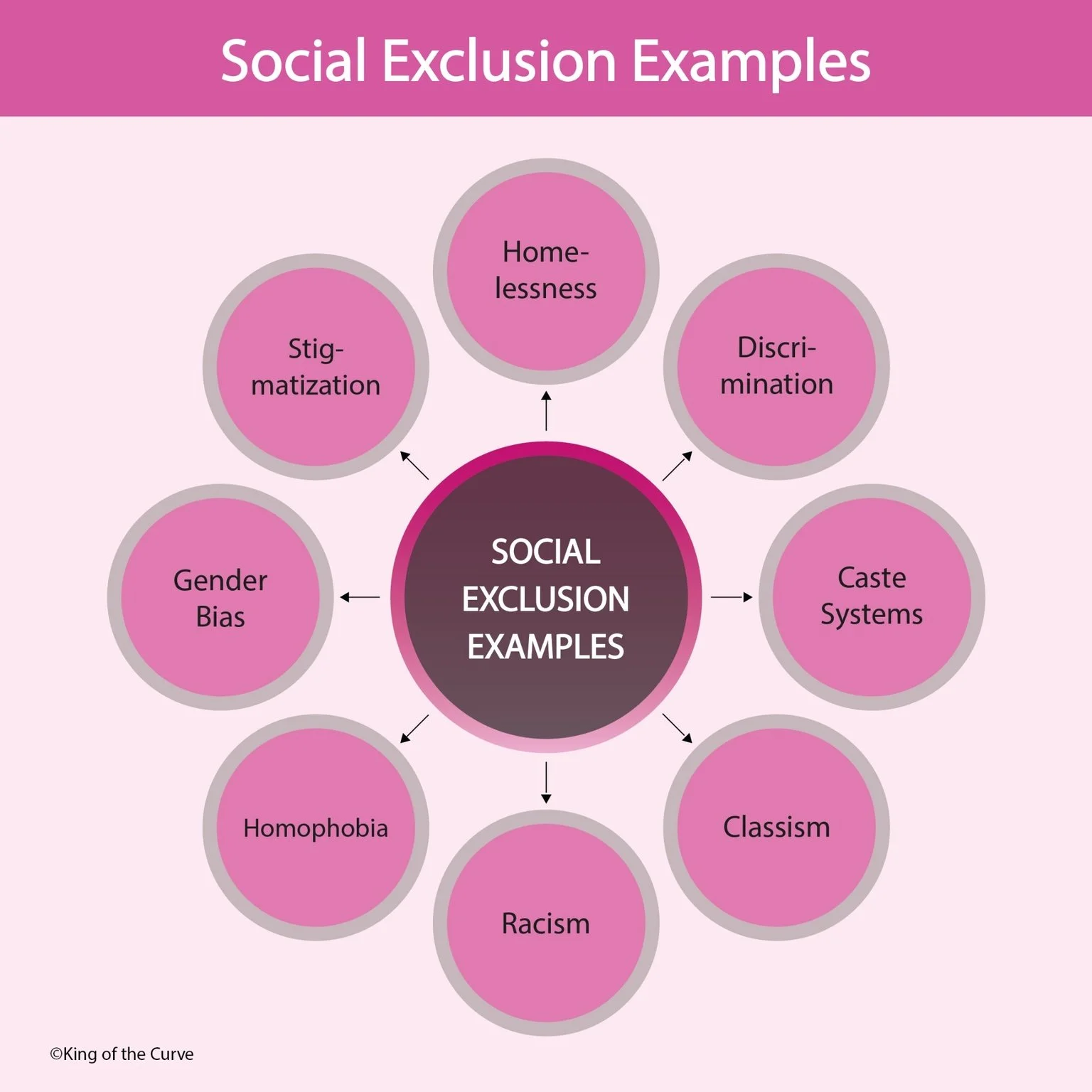
Social exclusion is not limited to interpersonal relationships. It can also occur at an institutional or societal level when certain populations face barriers to education, employment, healthcare, housing, political participation, or other resources. This broader form of exclusion is important for MCAT sociology because it connects individual experiences with social stratification, inequality, and institutional structures.
🔄 Social Exclusion vs. Social Isolation
Social exclusion and social isolation are related but not identical. Social exclusion generally involves barriers or actions that prevent participation, whereas social isolation describes having limited social contact or relationships. A person can therefore experience isolation without being intentionally excluded, while repeated exclusion can eventually contribute to social isolation.
| 🧠 Concept | 📘 Main Idea | 🎯 Example |
|---|---|---|
| Social exclusion | Prevented from participating | Excluded from a peer activity |
| Ostracism | Deliberately ignored | Group members refuse to acknowledge someone |
| Social rejection | Explicitly denied acceptance | Told they cannot join a group |
| Social isolation | Limited social contact | Having very few social interactions |
🎯 MCAT High-Yield Takeaway
For MCAT Psychology and Sociology questions, focus on identifying who or what is producing the barrier to social participation. Interpersonal exclusion may involve ostracism or rejection, while institutional exclusion can reflect broader social inequalities. Remember that social exclusion can influence belonging, identity, behavior, access to resources, and participation in society, making it a useful concept for connecting psychological processes with larger sociological structures.

Frequently Asked Questions (FAQs)
-
Aim for 4-6 focused hours, ensuring you incorporate breaks to avoid burnout.
-
Practice mindfulness techniques, take practice exams under realistic conditions, and maintain a balanced lifestyle.
-
Set short-term goals, seek support from mentors, and reward yourself for small achievements.
-
Regular exercise improves focus, reduces stress, and enhances overall mental clarity.
-
KOTC offers personalized learning tools, gamification features, and adaptive question banks to help students stay on track without burnout.