
🩸 Protein C and S in Coagulation Regulation
Blood clotting is a vital defense mechanism that prevents excessive bleeding after injury. However, if clot formation continues unchecked, it can lead to dangerous conditions such as deep vein thrombosis (DVT), pulmonary embolism (PE), or stroke. Fortunately, the body has built-in anticoagulant systems to maintain balance.
🧬 What Are Protein C and Protein S?
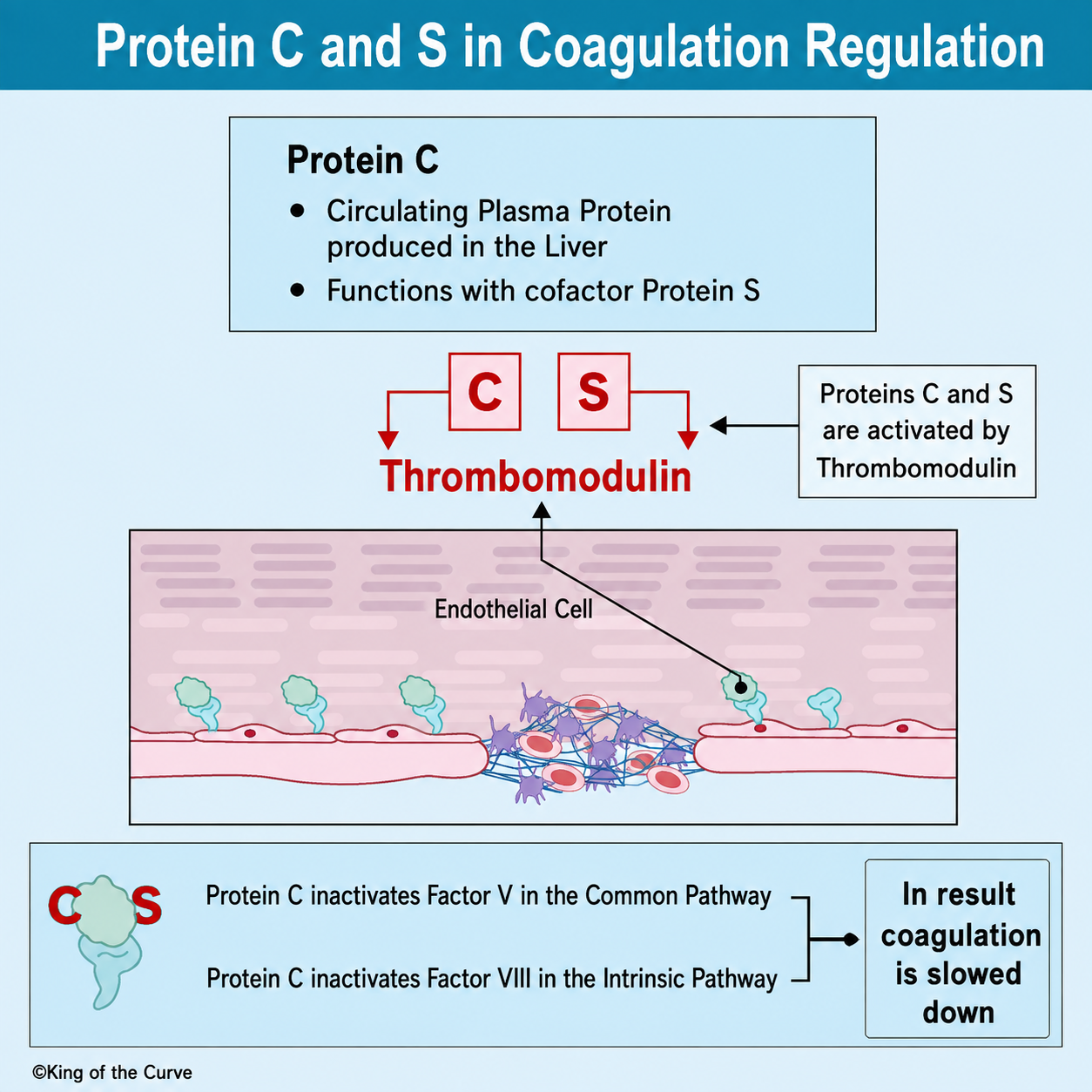
Protein C is a circulating plasma protein synthesized in the liver. On its own, it is inactive. Once activated, it works together with Protein S, which acts as its essential cofactor.
Together, these proteins help slow clot formation and protect against unwanted thrombosis.
Key facts:
Produced in the liver
Vitamin K-dependent proteins
Protein S functions as a cofactor for activated Protein C (APC)
Essential components of the body's natural anticoagulant system
⚙️ Activation by Thrombomodulin
Protein C becomes activated when thrombin binds to thrombomodulin, a receptor located on endothelial cells lining blood vessels.
This thrombin–thrombomodulin complex converts inactive Protein C into activated Protein C (APC).
Protein S then enhances APC's anticoagulant activity, allowing it to efficiently regulate clot formation.
🩸 How Protein C and Protein S Regulate Coagulation
Activated Protein C (APC), together with Protein S, slows coagulation by degrading two critical clotting cofactors:
✅ Factor Va
Factor Va is part of the common pathway and is required for converting prothrombin into thrombin.
APC inactivates Factor Va, reducing thrombin generation.
✅ Factor VIIIa
Factor VIIIa functions in the intrinsic pathway by assisting activation of Factor X.
APC also degrades Factor VIIIa, decreasing clot propagation.
📋 Summary of Protein C and Protein S Functions
| Component | Function |
|---|---|
| Protein C | Natural anticoagulant produced by the liver |
| Protein S | Cofactor that enhances activated Protein C activity |
| Thrombomodulin | Endothelial receptor that enables thrombin to activate Protein C |
| Factor Va | Inactivated by activated Protein C |
| Factor VIIIa | Inactivated by activated Protein C |
| Overall Effect | Slows coagulation and limits excessive clot formation |
🩺 Clinical Importance
Deficiency of Protein C or Protein S increases the risk of abnormal blood clotting.
Common clinical associations include:
Deep vein thrombosis (DVT)
Pulmonary embolism (PE)
Recurrent venous thrombosis
Hypercoagulable states
Warfarin-induced skin necrosis (particularly in Protein C deficiency)
Inherited deficiencies are relatively uncommon but clinically significant.
🎓 MCAT & Medical Exam High-Yield Tip
Remember this simple rule:
Protein C + Protein S = Inactivate Factors V and VIII → Slow Clotting
This concept frequently appears on the MCAT, USMLE, and other medical licensing examinations.
✅ Key Takeaways
Protein C is synthesized in the liver and circulates in plasma.
Protein S acts as the cofactor for activated Protein C.
Thrombin bound to thrombomodulin activates Protein C.
Activated Protein C inactivates Factors Va and VIIIa.
The result is decreased thrombin generation and reduced clot formation.
Deficiency of either protein predisposes patients to thrombosis.
Understanding the Protein C–Protein S pathway is essential for mastering coagulation physiology and recognizing disorders associated with hypercoagulability.

Frequently Asked Questions (FAQs)
-
Aim for 4-6 focused hours, ensuring you incorporate breaks to avoid burnout.
-
Practice mindfulness techniques, take practice exams under realistic conditions, and maintain a balanced lifestyle.
-
Set short-term goals, seek support from mentors, and reward yourself for small achievements.
-
Regular exercise improves focus, reduces stress, and enhances overall mental clarity.
-
KOTC offers personalized learning tools, gamification features, and adaptive question banks to help students stay on track without burnout.