
🧬 Porphyrias: Understanding Disorders of Heme Synthesis
Porphyrias are a group of metabolic disorders caused by defects in the heme biosynthesis pathway. When one of the enzymes involved in heme production is deficient, toxic intermediates accumulate, leading to neurological or cutaneous symptoms depending on the type of porphyria.
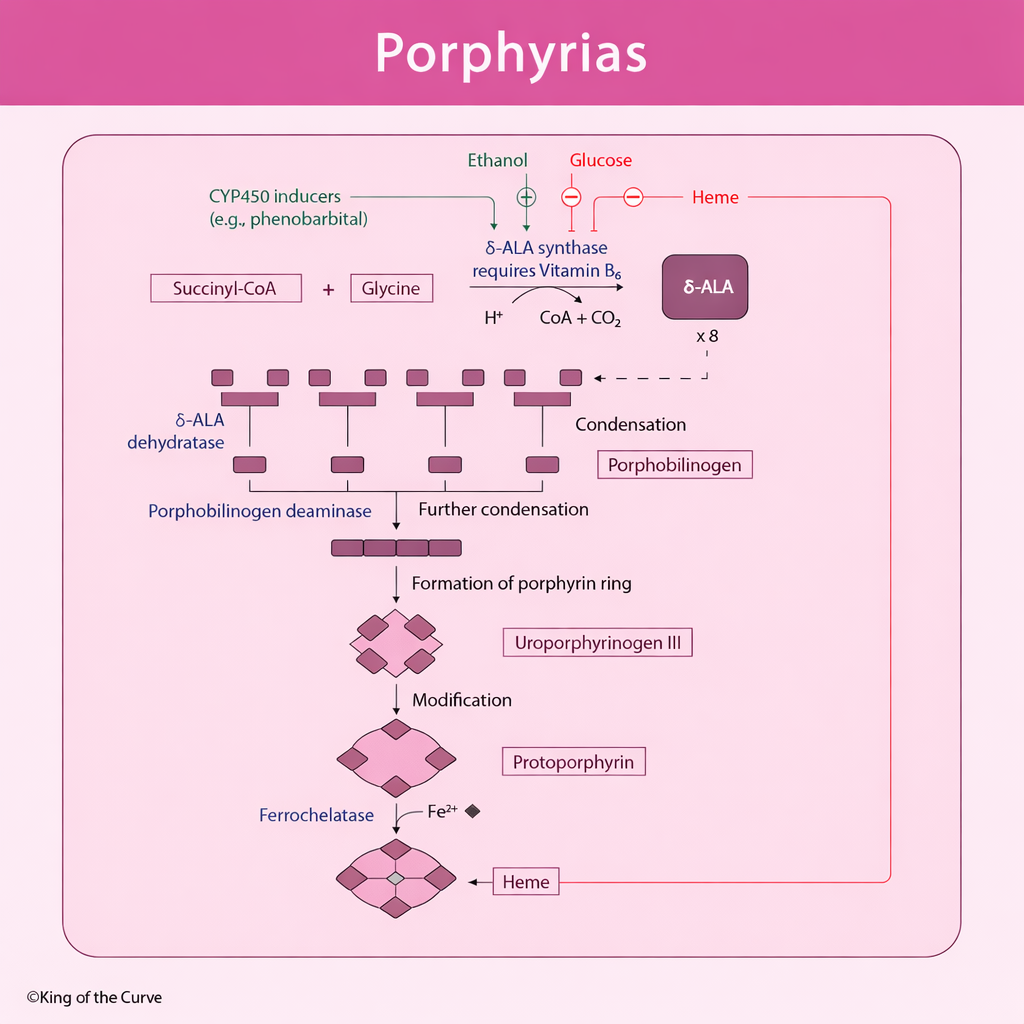
🧪 What Is Heme and Why Is It Important?
Heme is an essential component of:
Hemoglobin
Myoglobin
Cytochrome P450 enzymes
Catalase and peroxidases
It plays a vital role in oxygen transport, drug metabolism, and cellular respiration.
Heme is synthesized mainly in:
Liver (for CYP450 enzymes)
Bone marrow (for hemoglobin)
🔬 Step 1: The Rate-Limiting Step — δ-ALA Synthase
The pathway begins in mitochondria:
Succinyl-CoA + Glycine → δ-ALA
This reaction is catalyzed by δ-ALA synthase (ALAS) and requires Vitamin B₆ (pyridoxal phosphate).
🔁 Regulation of δ-ALA Synthase
This is the most important regulatory step:
⬆ Stimulators
Ethanol
CYP450 inducers (e.g., phenobarbital)
These increase heme demand → increase ALAS activity.
⬇ Inhibitors
Heme (negative feedback)
Glucose (therapeutic effect)
This explains why glucose loading helps in acute porphyria attacks.
🧱 Step 2: Formation of Porphobilinogen (PBG)
δ-ALA is converted into Porphobilinogen (PBG) by:
➡ δ-ALA dehydratase
Then:
➡ Porphobilinogen deaminase converts PBG into a linear tetrapyrrole chain.
Defects here can cause Acute Intermittent Porphyria (AIP).
🧬 Step 3: Formation of the Porphyrin Ring
The linear chain undergoes condensation and cyclization to form:
Uroporphyrinogen III
Modified to Protoporphyrin
This is where many cutaneous porphyrias occur.
⚙ Step 4: Final Step — Ferrochelatase
The final reaction inserts iron (Fe²⁺) into protoporphyrin:
Protoporphyrin + Fe²⁺ → Heme
Enzyme:
➡ Ferrochelatase
Deficiency causes:
Erythropoietic protoporphyria
Lead poisoning also inhibits this step.
🚨 What Happens in Porphyrias?
When an enzyme is defective:
Precursors accumulate
Toxic metabolites build up
Symptoms depend on where the block occurs
🧠 Acute Porphyrias (Neurovisceral)
Caused by buildup of:
δ-ALA
Porphobilinogen
Symptoms:
Severe abdominal pain
Neuropathy
Psychiatric symptoms
Dark urine
Example:
Acute Intermittent Porphyria
☀️ Cutaneous Porphyrias
Caused by buildup of:
Porphyrin intermediates
Symptoms:
Photosensitivity
Blistering
Skin fragility
Example:
Porphyria Cutanea Tarda
🍞 Why Glucose Helps in Acute Attacks
Glucose:
Suppresses δ-ALA synthase
Decreases toxic intermediate production
That is why treatment includes:
High-dose glucose
Hemin therapy (provides negative feedback)
🧠 High-Yield Exam Points
Rate-limiting enzyme: δ-ALA synthase
Requires Vitamin B₆
Heme inhibits ALAS (negative feedback)
Lead inhibits δ-ALA dehydratase & ferrochelatase
Glucose suppresses ALAS
CYP450 inducers trigger attacks
📌 Summary
Porphyrias are disorders of heme synthesis caused by enzyme deficiencies in the pathway.
Understanding:
The pathway steps
Regulatory mechanisms
Enzyme defects
Clinical correlations
is essential for diagnosing and managing these conditions.

Frequently Asked Questions (FAQs)
-
Aim for 4-6 focused hours, ensuring you incorporate breaks to avoid burnout.
-
Practice mindfulness techniques, take practice exams under realistic conditions, and maintain a balanced lifestyle.
-
Set short-term goals, seek support from mentors, and reward yourself for small achievements.
-
Regular exercise improves focus, reduces stress, and enhances overall mental clarity.
-
KOTC offers personalized learning tools, gamification features, and adaptive question banks to help students stay on track without burnout.