
Potassium Shifts: Movement Between ICF and ECF
Potassium (K⁺) is the most important intracellular cation in the human body. Nearly 98% of potassium is stored inside cells, making intracellular fluid (ICF) the primary reservoir. Only a small fraction remains in the extracellular fluid (ECF), but that fraction is critical for maintaining:
Normal cardiac rhythm
Neuromuscular function
Membrane excitability
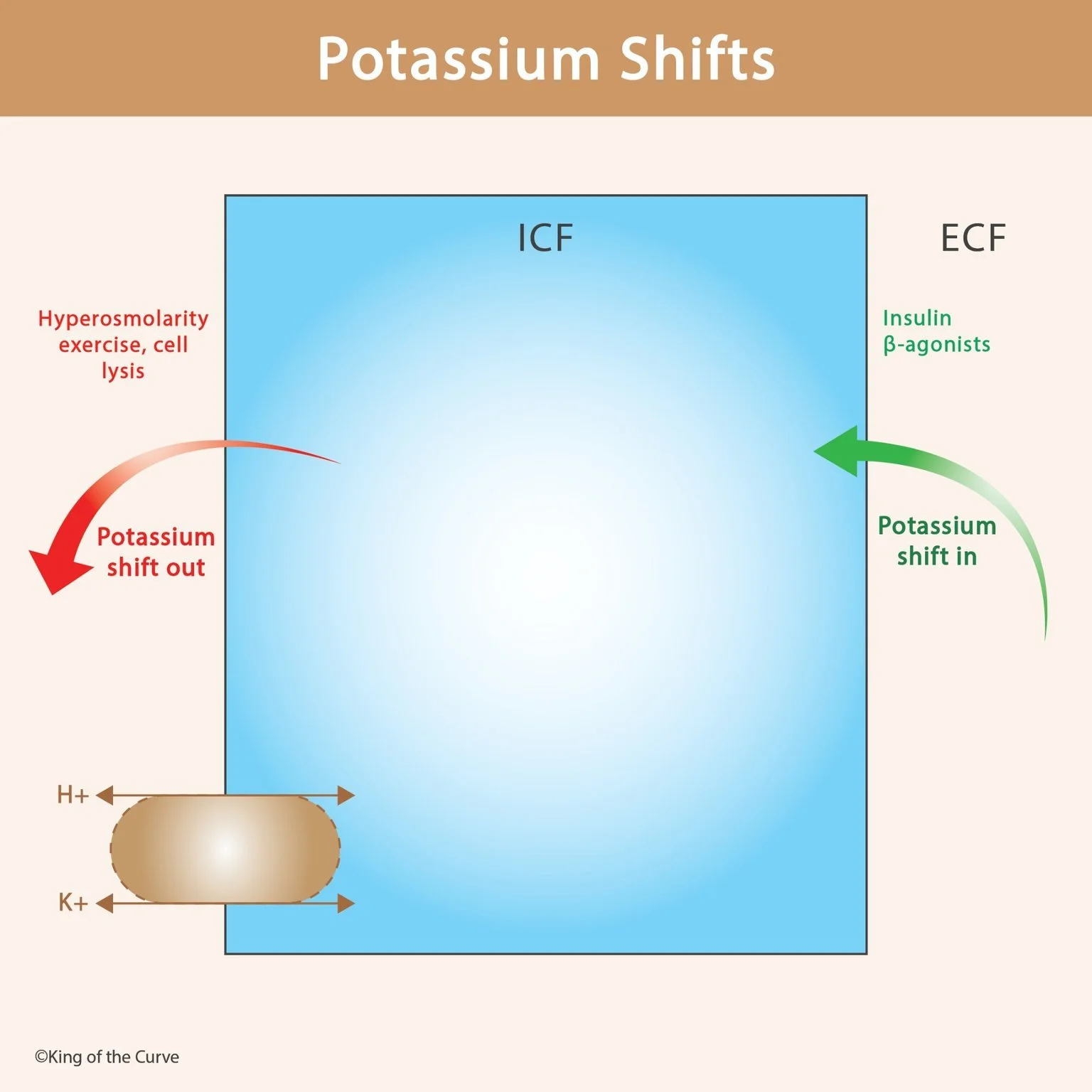
🧠 Understanding Potassium Shifts
Serum potassium concentration depends on two major factors:
Total body potassium
Distribution between ICF and ECF
A “potassium shift” refers to potassium moving:
Out of cells → into ECF (causing hyperkalemia)
Into cells → out of ECF (causing hypokalemia)
Importantly, these shifts do not always reflect a true change in total potassium, but rather redistribution.
🔴 Potassium Shift Out of Cells (ICF → ECF)
When potassium leaves cells, serum potassium rises, increasing the risk of hyperkalemia.
Major Causes
⚡ Hyperosmolarity
In hyperosmolar states (e.g., uncontrolled diabetes), water exits cells. Potassium follows, leading to increased extracellular potassium.
🏋️ Exercise
During intense muscle activity, potassium is released from skeletal muscle cells into the bloodstream temporarily.
💥 Cell Lysis
Conditions such as:
Tumor lysis syndrome
Rhabdomyolysis
Hemolysis
cause cell breakdown, releasing large amounts of intracellular potassium into the ECF.
🔄 H⁺/K⁺ Exchange in Acidosis
In metabolic acidosis, excess hydrogen ions (H⁺) move into cells for buffering. To maintain electroneutrality, potassium shifts out of cells.
➡️ Result: Hyperkalemia
🟢 Potassium Shift Into Cells (ECF → ICF)
When potassium moves into cells, serum potassium decreases, potentially causing hypokalemia.
Major Causes
💉 Insulin
Insulin activates the Na⁺/K⁺ ATPase pump, driving potassium into cells.
This is why insulin is used acutely to treat hyperkalemia.
🌬 β-Agonists
Drugs such as albuterol stimulate β₂ receptors, increasing Na⁺/K⁺ ATPase activity and promoting intracellular potassium uptake.
➡️ Result: Lower serum potassium
| Shift Direction | Effect on Serum K⁺ | Common Causes | Examples |
|---|---|---|---|
| 🔴 Out of cells (ICF → ECF) | ↑ Hyperkalemia | Hyperosmolarity, exercise, cell lysis, acidosis (H⁺/K⁺ exchange) | DKA, tumor lysis syndrome, rhabdomyolysis |
| 🟢 Into cells (ECF → ICF) | ↓ Hypokalemia | Insulin, β-agonists, alkalosis | Insulin therapy, albuterol use |
⭐ Clinical Significance
Potassium shifts are clinically important because abnormal serum potassium levels can lead to dangerous cardiac effects:
Hyperkalemia
Peaked T waves
Arrhythmias
Cardiac arrest
Hypokalemia
Muscle weakness
U waves
Ventricular arrhythmias
✅ Key Takeaway
Potassium balance is not just about intake and excretion—it also depends heavily on redistribution between intracellular and extracellular compartments.
Shift out → hyperkalemia
Shift in → hypokalemia

Frequently Asked Questions (FAQs)
-
Aim for 4-6 focused hours, ensuring you incorporate breaks to avoid burnout.
-
Practice mindfulness techniques, take practice exams under realistic conditions, and maintain a balanced lifestyle.
-
Set short-term goals, seek support from mentors, and reward yourself for small achievements.
-
Regular exercise improves focus, reduces stress, and enhances overall mental clarity.
-
KOTC offers personalized learning tools, gamification features, and adaptive question banks to help students stay on track without burnout.