
🧠 Pathophysiology of Prerenal Acute Kidney Injury (AKI)
Prerenal Acute Kidney Injury (AKI) is a form of kidney dysfunction that occurs when blood flow to the kidneys decreases. Unlike intrinsic or postrenal causes, prerenal AKI doesn’t involve direct damage to the kidney tissues it stems from reduced perfusion. When renal blood flow falls, the body activates compensatory mechanisms to maintain glomerular filtration and prevent kidney failure.
⚙️ How the Kidneys Compensate for Low Blood Flow
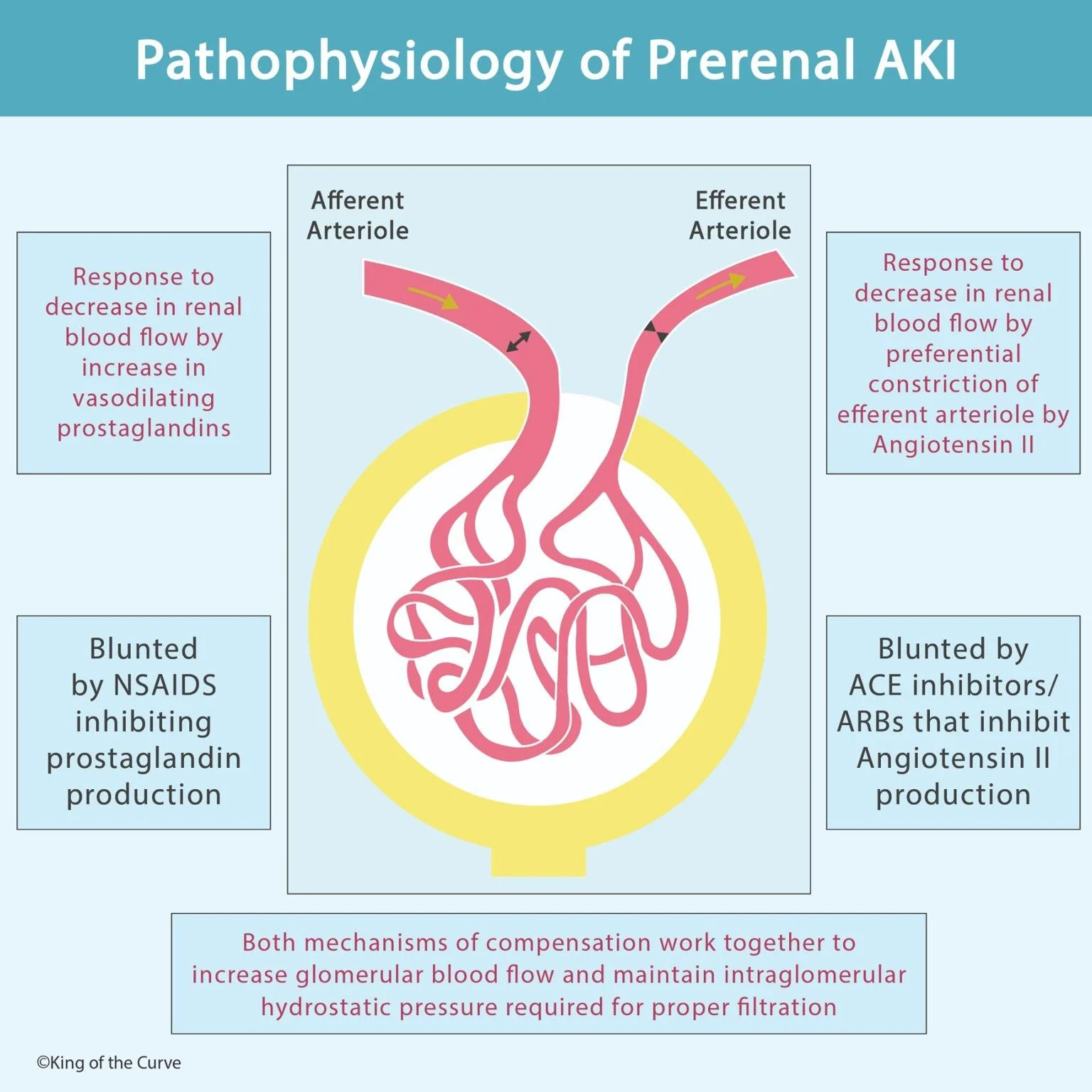
When renal perfusion decreases, the afferent arteriole dilates to increase blood flow into the glomerulus. This dilation is mediated by vasodilating prostaglandins. At the same time, the efferent arteriole constricts under the influence of angiotensin II, which helps maintain glomerular pressure and filtration rate. Together, these mechanisms sustain adequate kidney function despite reduced blood flow.
💊 How Medications Can Disrupt Compensation
Certain medications can blunt these compensatory responses. NSAIDs (Nonsteroidal Anti-Inflammatory Drugs) inhibit prostaglandin synthesis, reducing afferent arteriole dilation and worsening kidney perfusion. On the other hand, ACE inhibitors and ARBs suppress the production and effects of angiotensin II, leading to efferent arteriole dilation and a drop in filtration pressure. When both mechanisms are inhibited simultaneously, prerenal AKI risk increases dramatically.
📊 Table: Effects of Key Mechanisms and Medications
| Mechanism / Factor | Normal Function | Effect When Inhibited |
|---|---|---|
| Prostaglandins | Dilate afferent arteriole to maintain renal blood flow | Inhibited by NSAIDs, reducing blood flow and filtration |
| Angiotensin II | Constriction of efferent arteriole to sustain glomerular pressure | Inhibited by ACE inhibitors / ARBs, reducing filtration pressure |
| Combined Inhibition | Maintains balance between afferent and efferent arterioles | Leads to sharp decline in glomerular filtration and possible AKI |
🔬 The Role of Compensatory Mechanisms
The body’s dual compensation prostaglandin-mediated dilation and angiotensin II–induced constriction works synergistically to keep the kidneys functional under stress. This system maintains glomerular blood flow and intraglomerular hydrostatic pressure, both essential for proper filtration. However, when these mechanisms are disrupted, renal function declines rapidly, often leading to azotemia and elevated serum creatinine.
⚠️ Clinical Implications and Prevention
Recognizing medications and conditions that predispose patients to prerenal AKI is vital. Patients with heart failure, dehydration, or liver disease are at higher risk, especially when taking NSAIDs or ACE inhibitors. Early identification, hydration, and medication review are key steps in preventing permanent kidney injury.

Frequently Asked Questions (FAQs)
-
Aim for 4-6 focused hours, ensuring you incorporate breaks to avoid burnout.
-
Practice mindfulness techniques, take practice exams under realistic conditions, and maintain a balanced lifestyle.
-
Set short-term goals, seek support from mentors, and reward yourself for small achievements.
-
Regular exercise improves focus, reduces stress, and enhances overall mental clarity.
-
KOTC offers personalized learning tools, gamification features, and adaptive question banks to help students stay on track without burnout.