
🩺 Pancreatic Tumor Surgery: Before and After
Pancreatic tumor surgery, often referred to as a pancreaticoduodenectomy or Whipple procedure, is a complex but life-saving operation used to remove tumors located in the pancreas. The pancreas plays a key role in digestion and hormone regulation, so the surgical approach must be carefully designed to preserve as much function as possible.
⚙️ The Surgical Procedure Explained
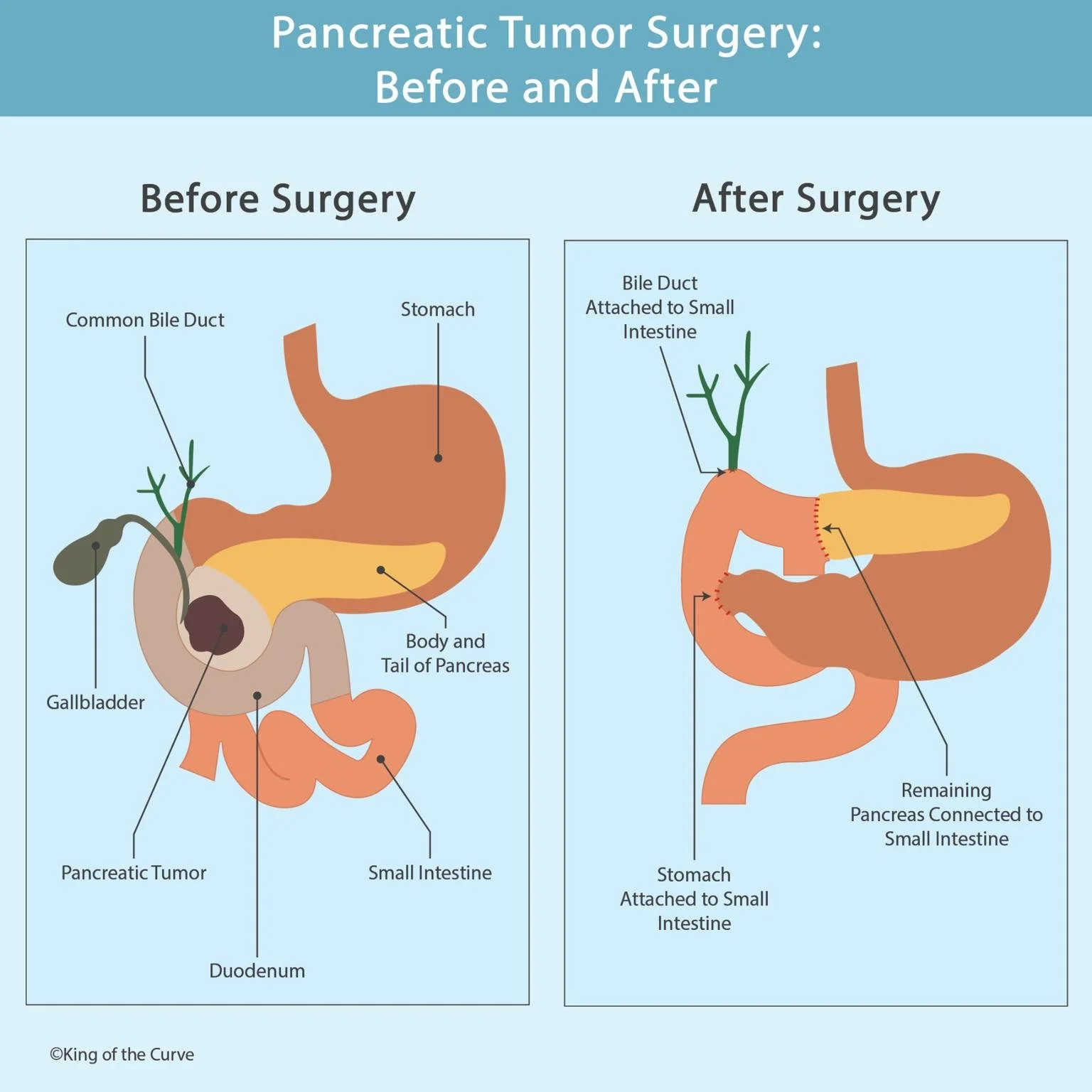
During surgery, the affected part of the pancreas is removed along with the duodenum, gallbladder, and a section of the bile duct. This process ensures that all cancerous or abnormal tissue is excised while minimizing damage to surrounding structures.
The “before surgery” illustration shows the normal anatomical arrangement, with the pancreatic tumor obstructing nearby ducts.
After surgery, the digestive tract is reconstructed — the remaining pancreas, stomach, and bile duct are connected to the small intestine. This allows digestive enzymes and bile to continue flowing normally.
🍽️ Life After Surgery
Post-surgery, patients often experience changes in digestion. Since the pancreas produces vital enzymes, its reduced size may affect how the body breaks down fats and proteins. Doctors may recommend enzyme supplements and dietary adjustments to support proper nutrition.
With appropriate medical care, many individuals regain a good quality of life after recovery.
📊 Summary Table: Key Surgical Changes
| Stage | Anatomical Structure | Description |
|---|---|---|
| Before Surgery | Pancreatic tumor present | Tumor in the head of the pancreas obstructs ducts. |
| After Surgery | Tumor removed | Diseased portion of the pancreas and duodenum excised. |
| Reconstruction | Digestive tract reconnected | Stomach, bile duct, and pancreas joined to small intestine. |
| Outcome | Normal flow restored | Bile and enzymes continue to aid digestion. |
💡 Recovery and Follow-Up Care
After pancreatic tumor surgery, patients stay under close observation to ensure the digestive system adapts to the new structure. Regular follow-ups, blood tests, and imaging scans are essential to monitor pancreatic function and detect any signs of recurrence.
🧬 The Importance of Early Detection
Pancreatic cancer is often diagnosed late due to subtle symptoms. Awareness and early medical evaluation for persistent abdominal discomfort or jaundice can significantly improve outcomes. Surgical advances continue to enhance survival rates and quality of life for patients undergoing this complex procedure.

Frequently Asked Questions (FAQs)
-
Aim for 4-6 focused hours, ensuring you incorporate breaks to avoid burnout.
-
Practice mindfulness techniques, take practice exams under realistic conditions, and maintain a balanced lifestyle.
-
Set short-term goals, seek support from mentors, and reward yourself for small achievements.
-
Regular exercise improves focus, reduces stress, and enhances overall mental clarity.
-
KOTC offers personalized learning tools, gamification features, and adaptive question banks to help students stay on track without burnout.