
🧬 Pathways of Hybridization: How New Species Emerge
Hybridization refers to the process by which two distinct species interbreed, resulting in offspring that combine genetic traits from both parent species. This fascinating mechanism plays a significant role in evolution, biodiversity, and adaptation. Depending on environmental and genetic factors, hybridization can lead to several outcomes ranging from the blending of species to the formation of entirely new ones.
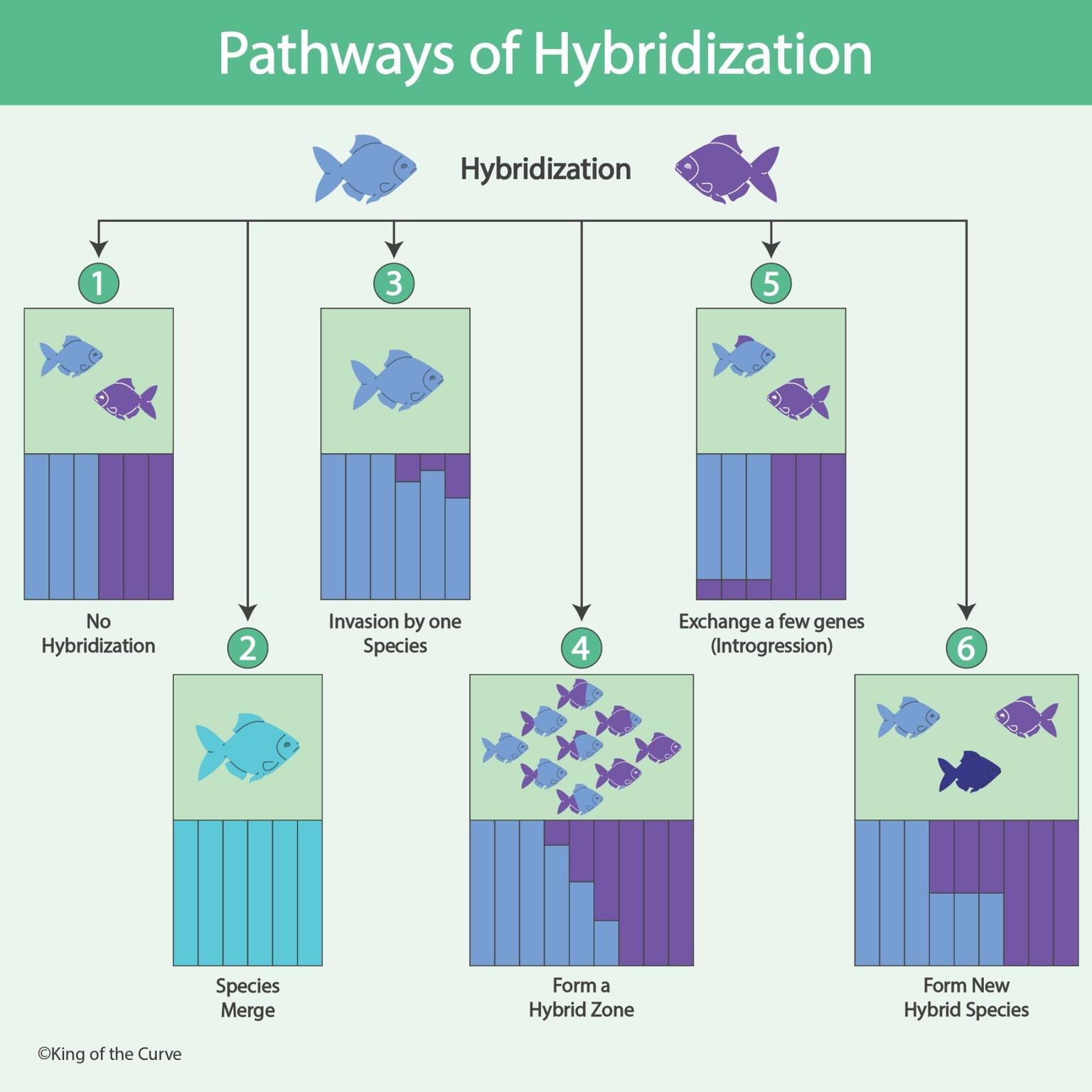
🌊 Step 1: No Hybridization
In this pathway, the two species remain completely isolated from one another, even if they coexist in the same habitat. Physical barriers, behavioral differences, or genetic incompatibilities prevent them from interbreeding. This results in no exchange of genes between the populations.
🐟 Step 2: Species Merge
Sometimes, environmental changes or population pressures can lead to the merging of species. When hybrid offspring are fertile and well-adapted, the gene pools of both species can blend into one unified population. Over time, distinct species boundaries disappear, leading to a single, mixed species.
🧪 Step 3: Invasion by One Species
In this case, one species becomes dominant and invades the habitat or genetic space of another. Hybridization still occurs, but the genetic material of the weaker species is gradually absorbed. Eventually, one species completely overtakes the other, reducing biodiversity in the ecosystem.
🧫 Step 4: Formation of a Hybrid Zone
When hybridization occurs only in overlapping regions between two species’ ranges, hybrid zones form. These zones act as natural laboratories for studying evolution, as hybrid individuals exhibit a mix of parental traits. The stability of these zones depends on reproductive success and environmental factors.
🧩 Step 5: Introgression (Exchange of a Few Genes)
In this pathway, only a few genes are exchanged between species through limited hybridization. This genetic exchange, known as introgression, can introduce beneficial traits such as resistance to disease or environmental adaptation without merging entire species. Introgression often strengthens populations over time.
🌱 Step 6: Formation of a New Hybrid Species
The most remarkable outcome of hybridization is the formation of a new hybrid species. When hybrids become reproductively isolated from their parent species and establish a stable population, a new lineage arises. This process contributes to evolutionary diversity and the emergence of entirely new organisms.
📊 Table: Summary of Hybridization Pathways
| Pathway | Description | Outcome |
|---|---|---|
| 1. No Hybridization | Species remain isolated | No genetic exchange |
| 2. Species Merge | Hybridization leads to blending | One unified species |
| 3. Invasion by One Species | One species dominates genetically | Loss of one species |
| 4. Hybrid Zone Formation | Hybrids exist in overlap regions | Stable hybrid populations |
| 5. Introgression | Exchange of select genes | Enhanced adaptability |
| 6. New Hybrid Species | Hybrids form distinct lineage | New species formed |
🌍 Conclusion
The pathways of hybridization reveal the complexity and creativity of evolution. From maintaining species boundaries to forming entirely new ones, hybridization continues to shape biodiversity on Earth. By studying these processes, scientists gain insight into the genetic and ecological dynamics that drive the natural world forward.

Frequently Asked Questions (FAQs)
-
Aim for 4-6 focused hours, ensuring you incorporate breaks to avoid burnout.
-
Practice mindfulness techniques, take practice exams under realistic conditions, and maintain a balanced lifestyle.
-
Set short-term goals, seek support from mentors, and reward yourself for small achievements.
-
Regular exercise improves focus, reduces stress, and enhances overall mental clarity.
-
KOTC offers personalized learning tools, gamification features, and adaptive question banks to help students stay on track without burnout.