
🧬 Large Intestine Anatomy: Structure and Function of the Colon
The large intestine is a critical component of the digestive system responsible for absorbing water, forming feces, and maintaining electrolyte balance. While the small intestine performs most nutrient absorption, the large intestine plays an essential role in processing waste and hosting beneficial gut bacteria. For MCAT biology and physiology, understanding the structural features of the large intestine such as haustra, taeniae coli, and epiploic appendages is important because these anatomical components influence colon motility, water absorption, and digestive health.
🧠 Overview of the Large Intestine
The large intestine begins at the cecum, where material exits the small intestine, and continues through the ascending, transverse, descending, and sigmoid colon before ending at the rectum. Its primary functions include water reabsorption, electrolyte balance, and the storage of undigested material before elimination. The colon also hosts a large population of microorganisms that help ferment undigested carbohydrates and produce certain vitamins.
🌀 Haustra: Segmented Pouches of the Colon
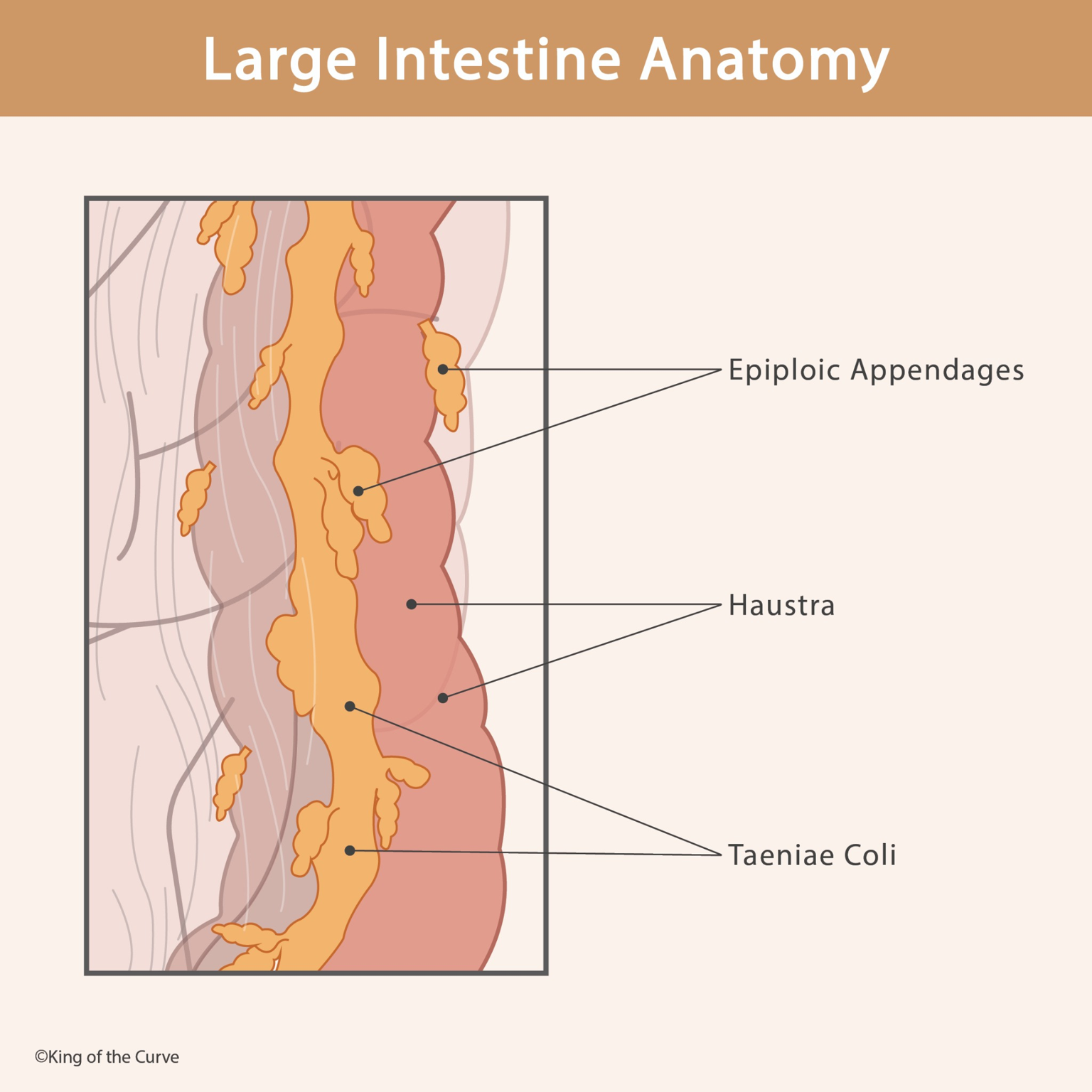
Haustra are the small pouch-like segments that give the large intestine its distinctive sacculated appearance. These structures are formed by the contraction of the longitudinal muscle bands of the colon. Haustra help move intestinal contents slowly through the large intestine, allowing time for water and electrolyte absorption while facilitating the gradual formation of fecal matter.
🧵 Taeniae Coli: Longitudinal Muscle Bands
Taeniae coli are three distinct bands of longitudinal smooth muscle that run along the length of the large intestine. These bands are shorter than the colon itself, which causes the colon wall to form the characteristic haustra. The coordinated contraction of taeniae coli contributes to colon motility and helps propel intestinal contents toward the rectum.
🧫 Epiploic Appendages
Epiploic appendages are small fat-filled pouches attached to the outer surface of the large intestine. Although their exact function is not completely understood, they are believed to serve as fat storage sites and protective cushioning structures for the colon. In certain cases, inflammation of these appendages can cause abdominal pain that mimics other gastrointestinal conditions.
💧 Water and Electrolyte Absorption
One of the most important roles of the large intestine is the reabsorption of water and electrolytes. As digestive material passes through the colon, water is gradually absorbed into the bloodstream, turning liquid intestinal contents into solid feces. This process is essential for maintaining proper hydration and electrolyte balance within the body.
📊 Key Structural Features of the Large Intestine
| Structure | Location | Function |
|---|---|---|
| Haustra | Colon wall | Segment colon and aid slow movement of contents |
| Taeniae coli | Longitudinal colon surface | Create colon contractions and haustra formation |
| Epiploic appendages | Outer colon surface | Fat storage and protective cushioning |
📚 MCAT Strategy: Recognizing Colon Anatomy
On the MCAT, questions related to the large intestine often appear in passages discussing digestive physiology, gastrointestinal motility, or microbiome interactions. Students may be asked to identify structural features such as haustra or taeniae coli and explain their role in digestion or colon movement. Recognizing these anatomical terms quickly can help interpret diagrams and experimental data presented in exam passages.
📈 Learning Anatomy with Visual Tools
Visual learning can greatly improve the understanding of anatomical structures. King of the Curve provides hundreds of illustrated science diagrams designed to simplify high-yield MCAT topics, helping students grasp complex anatomy and physiology concepts more efficiently. Explore more visual study tools at mcat.kingofthecurve.org, a leading resource for MCAT concept visuals and science learning support.

Frequently Asked Questions (FAQs)
-
Aim for 4-6 focused hours, ensuring you incorporate breaks to avoid burnout.
-
Practice mindfulness techniques, take practice exams under realistic conditions, and maintain a balanced lifestyle.
-
Set short-term goals, seek support from mentors, and reward yourself for small achievements.
-
Regular exercise improves focus, reduces stress, and enhances overall mental clarity.
-
KOTC offers personalized learning tools, gamification features, and adaptive question banks to help students stay on track without burnout.