
🧬 Ketone Bodies: The Body’s Alternative Energy Source
Ketone bodies are an important metabolic concept in biochemistry and MCAT preparation because they represent the body’s backup energy system when glucose availability is low. When carbohydrates are scarce such as during fasting, prolonged exercise, or certain disease states the liver converts fatty acids into ketone bodies that can be used by many tissues for energy. Understanding how ketone bodies are produced, transported, and utilized helps students grasp essential metabolic pathways and recognize conditions such as ketosis and diabetic ketoacidosis, which are commonly discussed in MCAT biochemistry passages.
🧠 What Are Ketone Bodies?
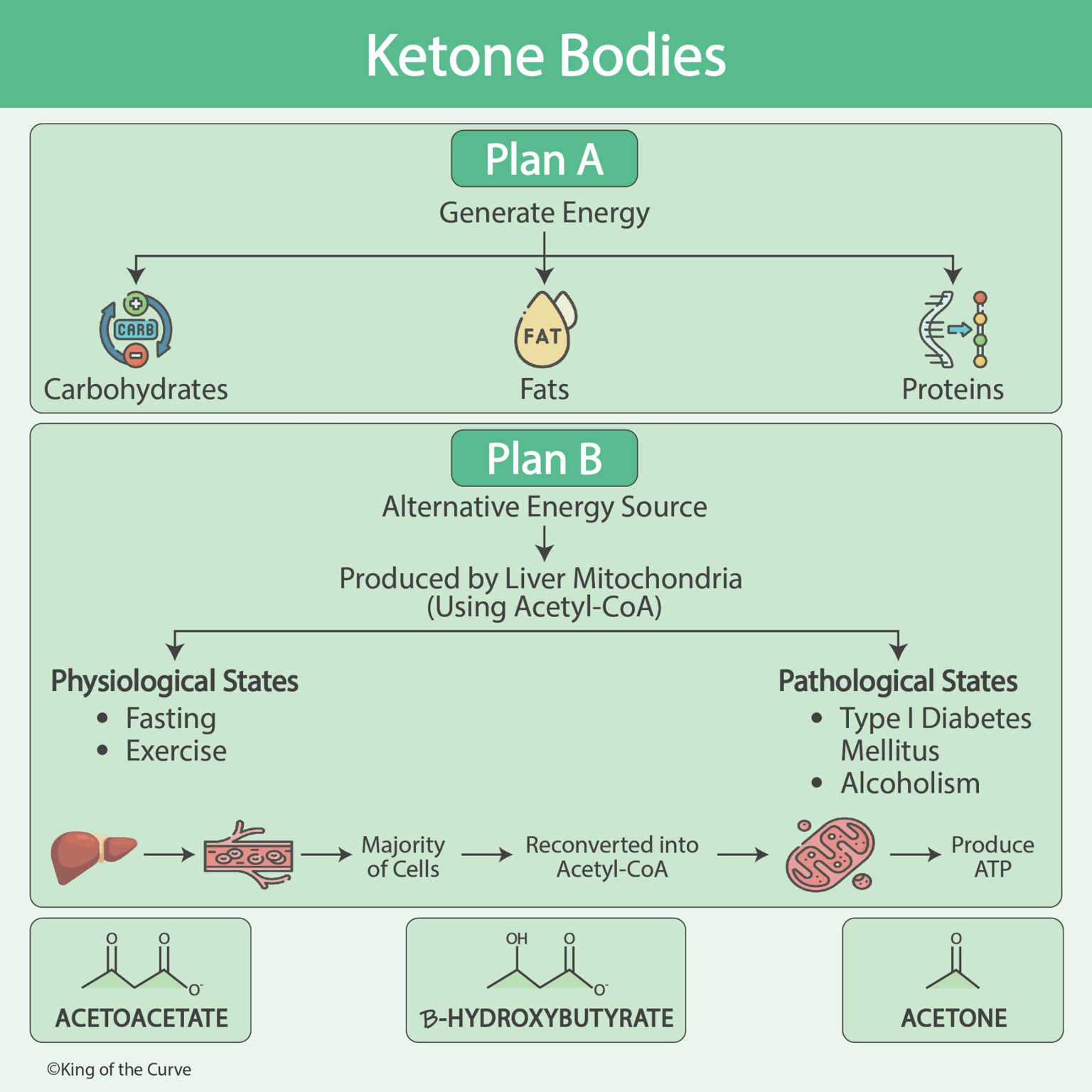
Ketone bodies are small molecules produced in the mitochondria of liver cells during periods when glucose levels are low. They function as an alternative fuel source for tissues that normally rely on glucose, including the brain, muscles, and heart. The three primary ketone bodies are acetoacetate, β-hydroxybutyrate, and acetone, each formed through metabolic pathways involving acetyl-CoA derived from fatty acid breakdown.
⚡ Why the Body Produces Ketone Bodies
The body primarily generates energy through carbohydrate metabolism, but when carbohydrate stores become depleted, fatty acids begin to supply most of the energy. During this process, large amounts of acetyl-CoA accumulate in the liver. When acetyl-CoA exceeds the capacity of the citric acid cycle, it is converted into ketone bodies, which can then circulate through the bloodstream and be used by other tissues.
🏃 Physiological Conditions That Trigger Ketone Production
Ketone body production occurs in several normal physiological states. One common example is fasting, when glucose availability drops and the body shifts toward fat metabolism. Another example is prolonged exercise, where glycogen stores become depleted and alternative energy sources are required. In these cases, ketone bodies help maintain ATP production and support vital organs.
⚠️ Pathological Conditions Involving Ketones
Although ketone production can be beneficial in certain situations, excessive ketone accumulation can become dangerous. Conditions such as Type 1 diabetes mellitus can cause extremely high ketone production due to insulin deficiency. This can lead to diabetic ketoacidosis, a serious medical condition characterized by metabolic acidosis and dehydration. Alcoholism can also increase ketone formation due to altered metabolic pathways in the liver.
🔄 How Ketone Bodies Are Used for Energy
Once produced in the liver, ketone bodies enter the bloodstream and travel to various tissues. Most cells can convert ketone bodies back into acetyl-CoA, which then enters the citric acid cycle to generate ATP. Interestingly, the liver itself cannot use ketone bodies for energy because it lacks the necessary enzyme for their metabolism.
📊 Major Ketone Bodies and Their Roles
| Ketone Body | Function | Key Feature |
|---|---|---|
| Acetoacetate | Primary ketone body used in energy metabolism | Converted to acetyl-CoA |
| β-Hydroxybutyrate | Major circulating ketone during ketosis | Highly efficient energy source |
| Acetone | Byproduct of ketone metabolism | Excreted in breath |
📚 MCAT Strategy: Recognizing Ketone Metabolism
On the MCAT, ketone body metabolism often appears in passages involving fasting, metabolic disorders, or energy regulation. Students may be asked to identify the conditions that increase ketone production or determine how ketone bodies are used in ATP generation. Recognizing that ketones originate from acetyl-CoA produced by fatty acid oxidation in the liver can help quickly answer many metabolism-related questions.
📈 Learning Metabolism with Visual Tools
Biochemical pathways can be complex, but visual learning can make them easier to understand. King of the Curve provides hundreds of illustrated diagrams that summarize high-yield MCAT concepts, helping students quickly grasp topics like ketone metabolism and energy regulation. Explore more visual study tools at mcat.kingofthecurve.org, a leading resource for MCAT concept visuals and science learning support.

Frequently Asked Questions (FAQs)
-
Aim for 4-6 focused hours, ensuring you incorporate breaks to avoid burnout.
-
Practice mindfulness techniques, take practice exams under realistic conditions, and maintain a balanced lifestyle.
-
Set short-term goals, seek support from mentors, and reward yourself for small achievements.
-
Regular exercise improves focus, reduces stress, and enhances overall mental clarity.
-
KOTC offers personalized learning tools, gamification features, and adaptive question banks to help students stay on track without burnout.