
🔗 Gap Junctions: Structure, Function, and Cell-to-Cell Communication
Gap junctions are specialized connections that create direct communication channels between neighboring cells. They allow small molecules and ions to move from the cytoplasm of one cell directly into another, helping groups of cells coordinate their activity rapidly.
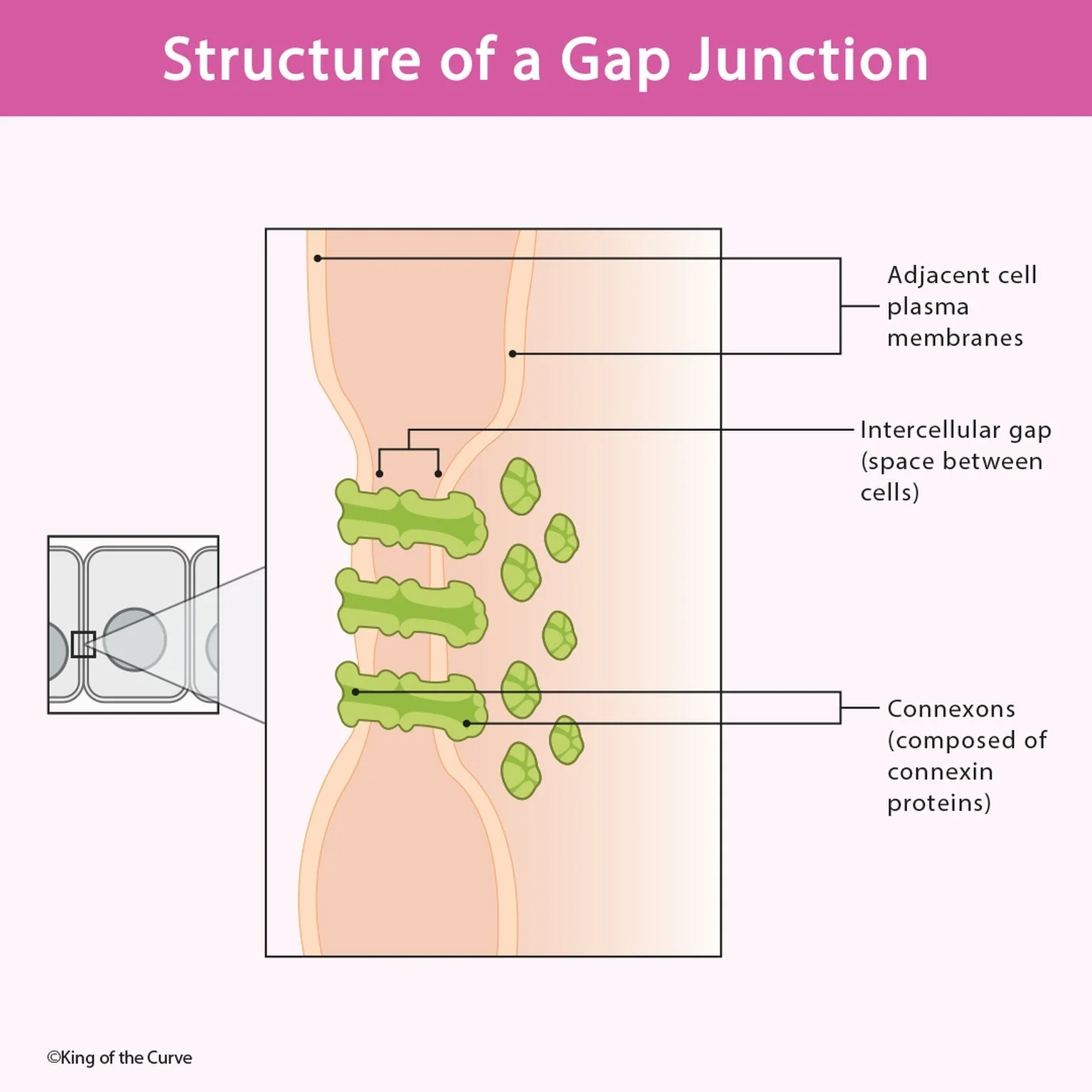
🔬 Structure of a Gap Junction
Gap junctions form where the plasma membranes of two adjacent cells come very close together. Each cell contributes a channel called a connexon. When connexons from neighboring cells align, they create a continuous aqueous channel connecting the two cytoplasms.
🧩 Connexons and Connexins
Each connexon, also called a hemichannel, is composed of six connexin protein subunits arranged around a central pore. A connexon in one cell docks with a connexon in the neighboring cell to form a complete intercellular channel. This arrangement enables controlled movement between cells without substances first entering the extracellular fluid.
⚡ What Can Pass Through Gap Junctions?
Gap junction channels permit the passage of ions and small signaling molecules. Depending on the connexin type and cellular context, molecules such as Ca²⁺ and certain small second messengers can pass between cells. Large proteins, nucleic acids, and organelles generally cannot pass through these narrow channels.
❤️ Gap Junctions in Cardiac Muscle
Gap junctions are especially important in cardiac muscle, where they are concentrated within intercalated discs. Ions moving through these channels allow electrical activity to spread rapidly between neighboring cardiomyocytes, helping the myocardium contract in a coordinated manner.
💪 Gap Junctions in Smooth Muscle
Many types of smooth muscle also use gap junctions to coordinate contraction. Electrical signals can spread from cell to cell, allowing groups of smooth muscle cells to respond together. This coupling is particularly important in tissues where synchronized contractions are required.
📊 Gap Junctions vs Other Cell Junctions
| 🔗 Junction | 🧬 Main Protein / Structure | 🎯 Primary Function | 💬 Communication Between Cells? |
|---|---|---|---|
| Gap junction | Connexins forming connexons | Direct transfer of ions and small molecules | Yes |
| Tight junction | Claudins and occludins | Creates a paracellular barrier between cells | No |
| Desmosome | Cadherin-family adhesion proteins | Provides strong mechanical attachment | No |
| Adherens junction | Cadherins linked to actin | Cell-cell adhesion and tissue organization | No |
🚪 Regulation of Gap Junction Channels
Gap junctions are not permanently open. Their permeability can change in response to factors such as intracellular pH, calcium concentration, membrane voltage, and phosphorylation. This regulation allows cells to modify intercellular communication according to physiological conditions.
🎯 MCAT High-Yield Takeaway
For the MCAT, remember: connexins → connexons → gap junction channels. Six connexins form one connexon, and two aligned connexons one from each adjacent cell form a complete gap-junction channel. Gap junctions enable direct intercellular communication and are particularly important for electrical coupling in cardiac and certain smooth muscle tissues.

Frequently Asked Questions (FAQs)
-
Aim for 4-6 focused hours, ensuring you incorporate breaks to avoid burnout.
-
Practice mindfulness techniques, take practice exams under realistic conditions, and maintain a balanced lifestyle.
-
Set short-term goals, seek support from mentors, and reward yourself for small achievements.
-
Regular exercise improves focus, reduces stress, and enhances overall mental clarity.
-
KOTC offers personalized learning tools, gamification features, and adaptive question banks to help students stay on track without burnout.