
🧠 Extrinsic Innervation of the Gut
The gastrointestinal (GI) tract is regulated by a complex neural network that ensures coordinated digestion, absorption, and motility. While the enteric nervous system (ENS) can function independently, extrinsic innervation from the autonomic nervous system plays a crucial modulatory role.
🔌 What Is Extrinsic Innervation?
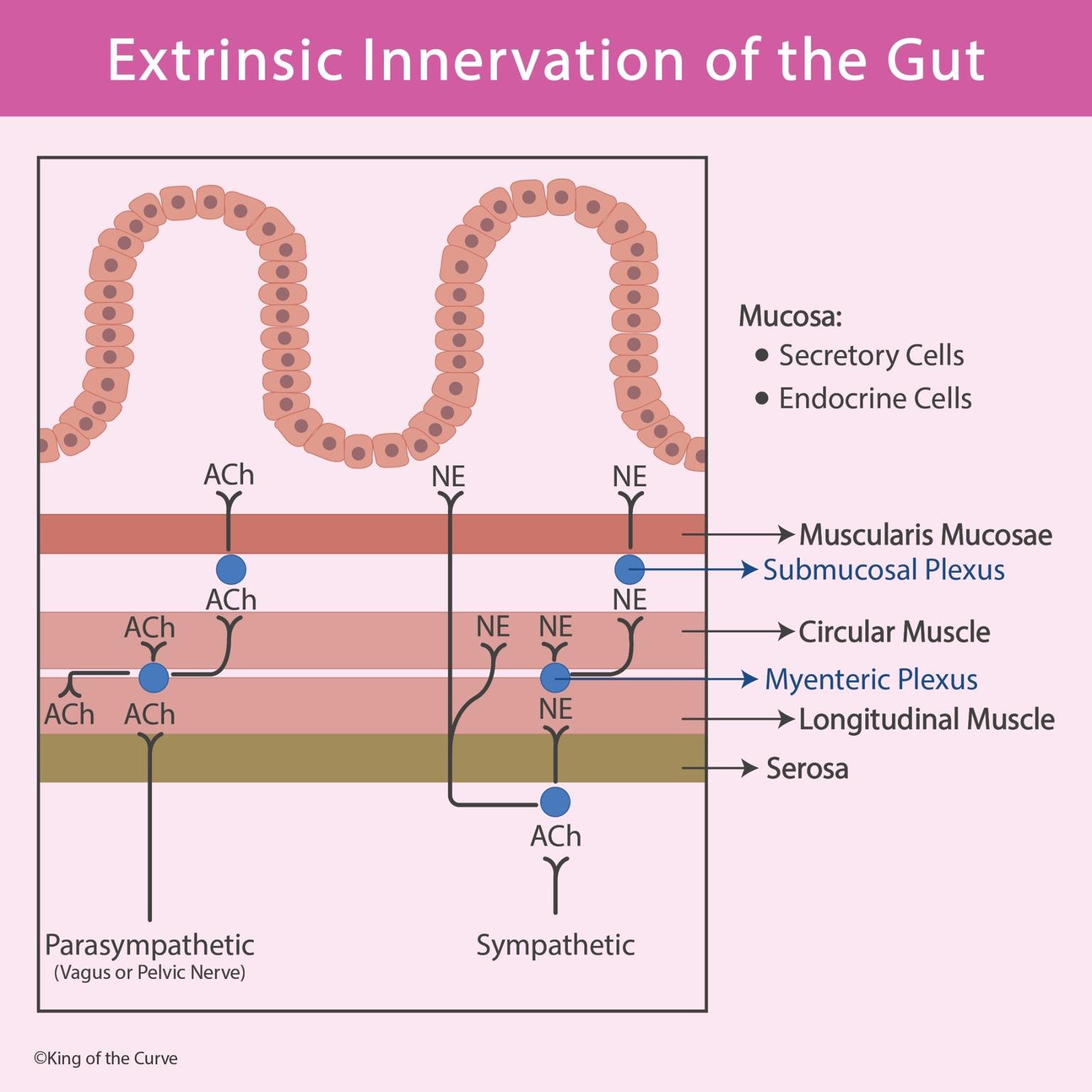
Extrinsic innervation refers to nerve inputs originating outside the gut wall, primarily from the parasympathetic and sympathetic nervous systems. These inputs do not initiate digestion but modify the activity of enteric plexuses to adapt GI function to the body’s physiological state.
🌿 Parasympathetic Control (Rest-and-Digest)
Parasympathetic innervation of the gut is mediated by the vagus nerve (foregut and midgut) and pelvic splanchnic nerves (hindgut). These nerves release acetylcholine (ACh), which enhances gastrointestinal motility, increases secretions, and promotes blood flow—supporting digestion and nutrient absorption.
⚡ Sympathetic Control (Fight-or-Flight)
Sympathetic fibers reach the GI tract via prevertebral ganglia and release norepinephrine (NE). Sympathetic activation generally inhibits gut activity, decreasing peristalsis, reducing secretions, and constricting blood vessels to divert blood toward vital organs during stress.
🧩 Role of Enteric Plexuses
Extrinsic nerves act indirectly through the submucosal (Meissner) plexus and myenteric (Auerbach) plexus. The submucosal plexus regulates secretion and blood flow, while the myenteric plexus primarily controls smooth muscle contraction and gut motility.
🧪 Neurotransmitters Involved
The two key neurotransmitters shown in the diagram are acetylcholine (ACh) and norepinephrine (NE). ACh stimulates gut activity, whereas NE suppresses it. Their balanced action ensures appropriate digestive responses under varying conditions.
📊 Parasympathetic vs Sympathetic Effects on the Gut
| Feature | Parasympathetic | Sympathetic |
|---|---|---|
| Primary nerves | Vagus & pelvic nerves | Thoracic splanchnic nerves |
| Neurotransmitter | Acetylcholine (ACh) | Norepinephrine (NE) |
| Effect on motility | Increases peristalsis | Decreases motility |
| Effect on secretion | Increases secretion | Decreases secretion |
| Blood flow | Vasodilation | Vasoconstriction |
| Functional state | Rest and digest | Fight or flight |
🩺 Clinical Relevance
Understanding extrinsic innervation is essential in clinical medicine. Conditions such as ileus, diabetic autonomic neuropathy, and stress-related GI dysfunction arise from disrupted autonomic control, highlighting the importance of balanced parasympathetic and sympathetic signaling.

Frequently Asked Questions (FAQs)
-
Aim for 4-6 focused hours, ensuring you incorporate breaks to avoid burnout.
-
Practice mindfulness techniques, take practice exams under realistic conditions, and maintain a balanced lifestyle.
-
Set short-term goals, seek support from mentors, and reward yourself for small achievements.
-
Regular exercise improves focus, reduces stress, and enhances overall mental clarity.
-
KOTC offers personalized learning tools, gamification features, and adaptive question banks to help students stay on track without burnout.