
✝️ Examples of Christian Sects: An Overview
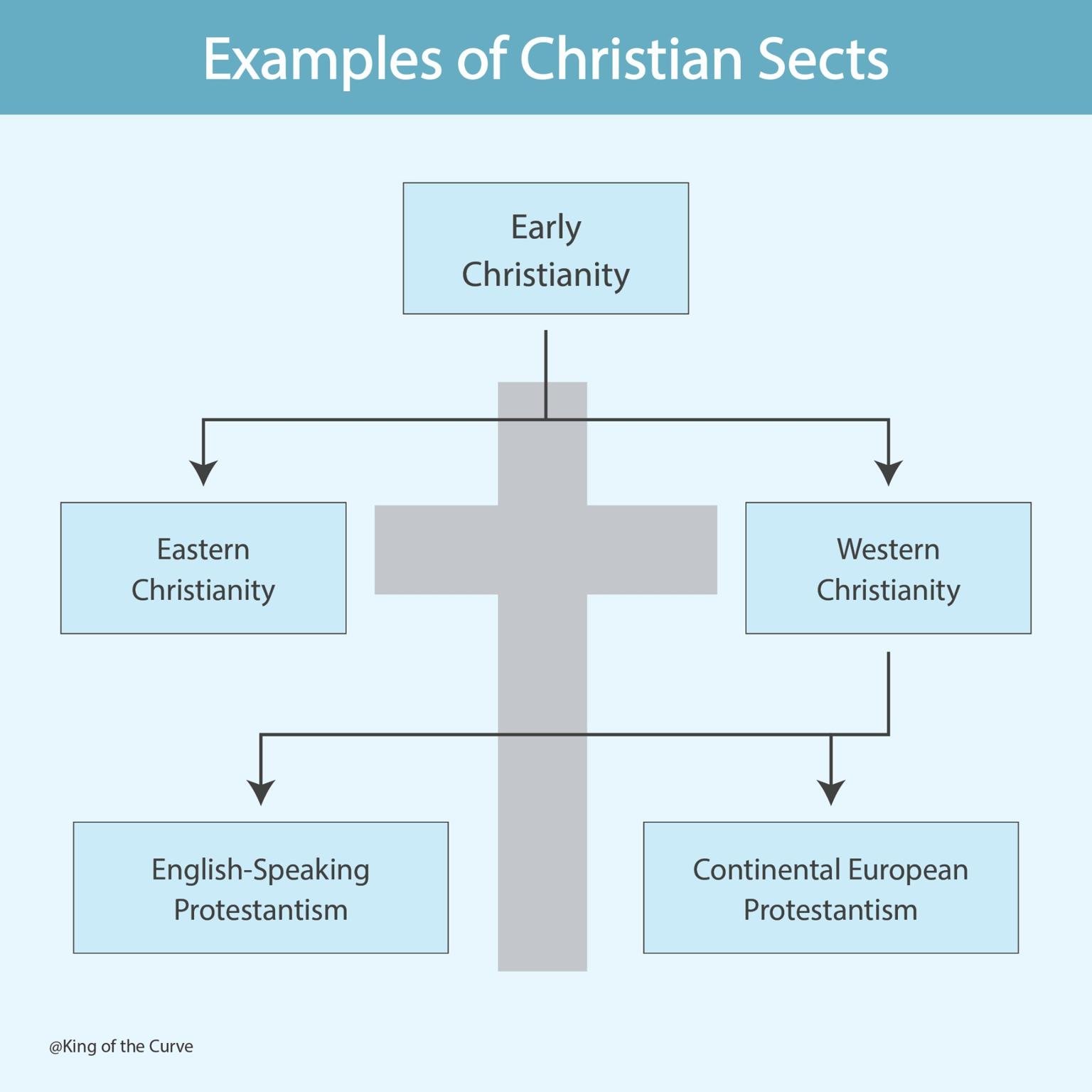
Christianity is one of the world’s largest and most diverse religions. Over centuries, historical events, theological debates, and cultural influences have led to the formation of various Christian sects and traditions. The diagram above provides a simplified view of how major branches of Christianity developed from early Christian communities.
🌱 Early Christianity
Early Christianity emerged in the 1st century CE, rooted in the teachings of Jesus Christ and his apostles. Initially, Christian communities were relatively unified, sharing core beliefs about Jesus’ life, teachings, death, and resurrection. As Christianity spread across different regions, cultural and linguistic differences began to shape theological interpretations and church practices.
🌍 Eastern and Western Christianity
By the first millennium, Christianity broadly divided into Eastern Christianity and Western Christianity.
Eastern Christianity developed primarily in the Greek-speaking regions of the Eastern Roman (Byzantine) Empire and emphasized liturgical tradition, mysticism, and continuity with early church practices.
Western Christianity evolved in Latin-speaking Europe and became more centralized, eventually dominated by the Roman Catholic Church.
📖 Unity and Diversity in Christian Traditions
Although Christianity has developed into many sects, these divisions often reflect differences in geography, governance, and interpretation rather than entirely separate belief systems. Core doctrines such as belief in Jesus Christ, the importance of the Bible, and concepts of salvation remain central across most Christian traditions. The branching shown in the diagram highlights how historical contexts shaped the structure and practices of the Church over time.
🧭 Why Understanding Christian Sects Matters
Learning about Christian sects is important for understanding world history, culture, and interfaith dialogue. From art and philosophy to politics and education, different Christian traditions have influenced societies in unique ways. Recognizing these distinctions helps foster respect, reduces misconceptions, and provides insight into how religious ideas evolve within changing social environments.
🧪 Epoetin vs Endogenous Erythropoietin
| Branch of Christianity | Region of Origin | Key Characteristics |
|---|---|---|
| Early Christianity | Middle East | Apostolic teachings, shared early beliefs |
| Eastern Christianity | Eastern Europe, Middle East | Strong liturgy, tradition, mystical theology |
| Western Christianity | Western Europe | Centralized authority, Latin tradition |
| English-Speaking Protestantism | England and its colonies | Emphasis on scripture, reform, vernacular worship |
| Continental European Protestantism | Mainland Europe | Lutheran and Reformed theology, church reform movements |
🔄 The Rise of Protestantism
During the 16th century, reform movements within Western Christianity led to the emergence of Protestantism. These movements sought to reform church practices and emphasized scripture, faith, and individual belief.
Protestantism later diversified into regional traditions:
English-speaking Protestantism, including Anglicanism and later denominations such as Methodists and Baptists.
Continental European Protestantism, which includes Lutheran and Reformed (Calvinist) traditions that developed across mainland Europe.
📌 Understanding the Big Picture
While the diagram presents a simplified structure, Christianity today includes hundreds of denominations worldwide. Despite differences in theology and practice, most Christian traditions share core beliefs centered on Jesus Christ and the Bible.
Understanding these major branches helps provide historical and cultural context for how Christianity has evolved into its many forms today.

Frequently Asked Questions (FAQs)
-
Aim for 4-6 focused hours, ensuring you incorporate breaks to avoid burnout.
-
Practice mindfulness techniques, take practice exams under realistic conditions, and maintain a balanced lifestyle.
-
Set short-term goals, seek support from mentors, and reward yourself for small achievements.
-
Regular exercise improves focus, reduces stress, and enhances overall mental clarity.
-
KOTC offers personalized learning tools, gamification features, and adaptive question banks to help students stay on track without burnout.