
🩸 Epoetin: Recombinant Erythropoietin (EPO)
Epoetin is a recombinant form of erythropoietin (EPO), a naturally occurring hormone that plays a crucial role in red blood cell production. It is widely used in clinical practice to manage various forms of anemia, particularly when endogenous EPO production is insufficient.
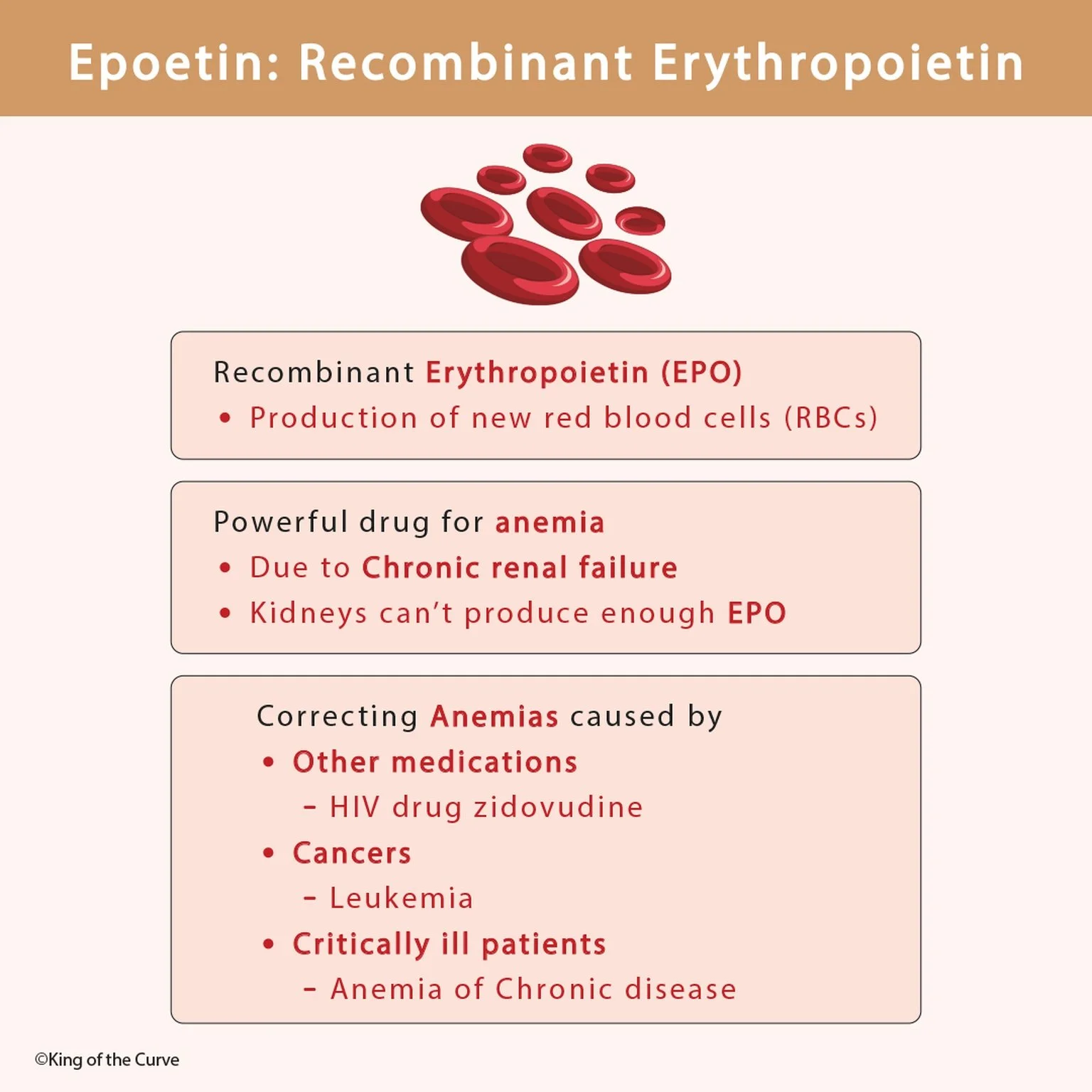
🔬 What Is Erythropoietin?
Erythropoietin is a glycoprotein hormone primarily produced by the kidneys in response to hypoxia. Its main function is to stimulate the bone marrow to increase the production of red blood cells (RBCs).
When kidney function is impaired, EPO production decreases leading to anemia.
💉 What Is Epoetin?
Epoetin is a recombinant (synthetic) version of erythropoietin designed to mimic the physiological effects of natural EPO.
Primary function:
Stimulates erythropoiesis → increases RBC count
🩺 Clinical Uses of Epoetin
1. Anemia Due to Chronic Kidney Disease (CKD)
Kidneys cannot produce enough endogenous EPO
Epoetin replaces deficient EPO and corrects anemia
2. Medication-Induced Anemia
Especially associated with zidovudine (AZT) in HIV patients
Epoetin helps restore normal hemoglobin levels
3. Cancer-Related Anemia
Seen in conditions such as leukemia
Also used in chemotherapy-associated anemia
4. Anemia of Chronic Disease
Common in critically ill patients
Improves oxygen-carrying capacity and reduces transfusion need
📊 How Epoetin Works in the Body
After administration, epoetin binds to erythropoietin receptors on erythroid progenitor cells in the bone marrow. This activates intracellular signaling pathways that promote cell survival, proliferation, and differentiation into mature red blood cells. As a result, hemoglobin levels rise, improving oxygen delivery to tissues and reducing symptoms such as fatigue, dyspnea, and exercise intolerance commonly seen in anemic patients.
Epoetin therapy is most effective when anemia is due to insufficient hormone production rather than nutrient deficiency. Therefore, iron, vitamin B₁₂, and folate levels should be assessed before and during treatment to ensure an optimal hematologic response.
🧪 Epoetin vs Endogenous Erythropoietin
| Feature | Endogenous Erythropoietin | Epoetin (Recombinant EPO) |
|---|---|---|
| Source | Produced by kidneys | Recombinant DNA technology |
| Trigger | Hypoxia | Exogenous administration |
| Primary role | Stimulates RBC production | Replaces deficient EPO |
| Clinical availability | Reduced in CKD | Widely used as therapy |
| Regulation | Physiologic feedback | Dose-controlled medically |
⚠️ Key Clinical Considerations
Adequate iron stores are required for optimal response
Overcorrection can increase the risk of:
Hypertension
Thromboembolic events
Hemoglobin levels should be closely monitored

Frequently Asked Questions (FAQs)
-
Aim for 4-6 focused hours, ensuring you incorporate breaks to avoid burnout.
-
Practice mindfulness techniques, take practice exams under realistic conditions, and maintain a balanced lifestyle.
-
Set short-term goals, seek support from mentors, and reward yourself for small achievements.
-
Regular exercise improves focus, reduces stress, and enhances overall mental clarity.
-
KOTC offers personalized learning tools, gamification features, and adaptive question banks to help students stay on track without burnout.