
🩸 Disseminated Intravascular Coagulation (DIC): Key Findings and Clinical Significance
Disseminated Intravascular Coagulation (DIC) is a serious and complex disorder in which the body’s normal clotting process becomes dangerously overactive. Instead of forming clots only where needed, widespread clotting occurs throughout the bloodstream. This leads to two major problems: excessive clot formation and depletion of clotting factors, which increases the risk of severe bleeding.
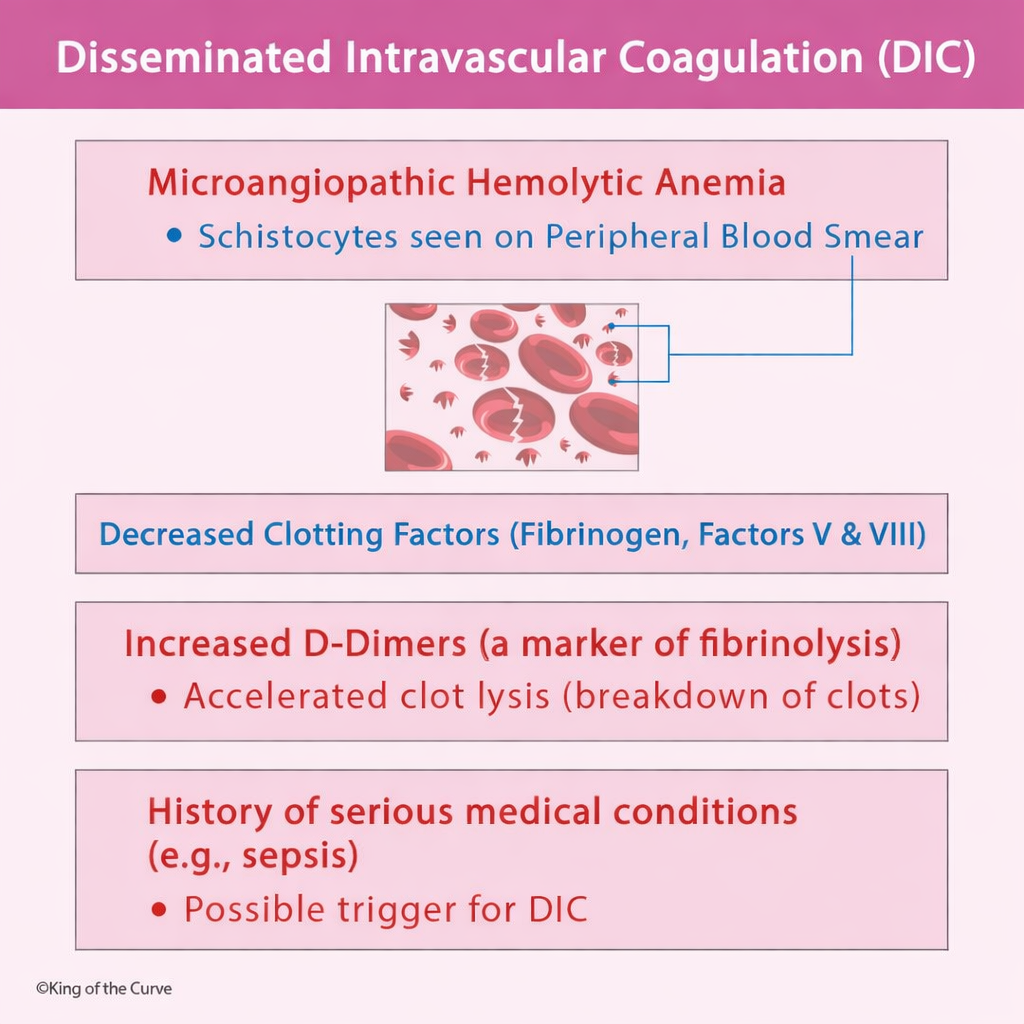
🔬 Microangiopathic Hemolytic Anemia in DIC
One of the hallmark features of DIC is microangiopathic hemolytic anemia, which occurs when red blood cells are damaged as they pass through small blood vessels filled with fibrin strands and microthrombi.
Because of this mechanical destruction, patients may develop anemia rapidly, contributing to fatigue, weakness, and reduced oxygen delivery to tissues.
🧫 Schistocytes on Peripheral Blood Smear
A classic laboratory clue in DIC is the presence of schistocytes (fragmented red blood cells) seen on a peripheral blood smear.
Schistocytes form because red blood cells are literally torn apart when traveling through vessels obstructed by abnormal clotting. Their appearance supports the diagnosis of a thrombotic microangiopathic process such as DIC.
🧪 Decreased Clotting Factors and Fibrinogen Consumption
In DIC, clotting occurs on a massive scale, which consumes essential clotting proteins and platelets. This leads to:
Low fibrinogen levels
Reduced clotting factors, especially Factors V and VIII
Prolonged clotting times (PT and aPTT)
As a result, patients paradoxically experience both clotting and bleeding at the same time.
📈 Increased D-Dimers: Marker of Fibrinolysis
Another key laboratory finding is elevated D-dimer levels, which reflect increased fibrin breakdown.
Because the body attempts to dissolve the widespread clots, fibrinolysis becomes highly active. This produces large amounts of fibrin degradation products, including D-dimers.
High D-dimers are therefore a strong indicator of ongoing clot formation and clot breakdown.
⚠️ Accelerated Clot Lysis and Bleeding Risk
The hyperactivation of fibrinolysis contributes to accelerated clot lysis. This worsens bleeding risk, since clots that should remain stable are broken down too quickly.
Clinically, this may present as:
Oozing from IV sites
Mucosal bleeding
Petechiae or bruising
Internal hemorrhage in severe cases
🏥 Underlying Conditions That Trigger DIC
DIC is almost always triggered by a major systemic insult. Common causes include:
Sepsis (most common trigger)
Severe trauma or burns
Malignancy (especially acute promyelocytic leukemia)
Placental abruption or amniotic fluid embolism
Severe liver disease
Recognizing the underlying trigger is critical for effective management.
🚑 Why Early Recognition of DIC Matters
DIC is a medical emergency requiring prompt diagnosis and treatment. Management focuses on:
Treating the underlying cause (e.g., antibiotics for sepsis)
Supporting coagulation with platelets or plasma if bleeding occurs
Monitoring fibrinogen and clotting parameters closely
Without early intervention, DIC can lead to organ failure, catastrophic bleeding, and death.
📊 Summary Table: Key Features of DIC
| Feature | Clinical/Lab Finding | Significance |
|---|---|---|
| Microangiopathic hemolytic anemia | RBC destruction | Leads to anemia and schistocytes |
| Schistocytes | Seen on blood smear | Suggests mechanical RBC fragmentation |
| Decreased clotting factors | Low fibrinogen, Factors V & VIII | Causes bleeding tendency |
| Increased D-dimers | Elevated fibrin breakdown products | Marker of fibrinolysis |
| Accelerated clot lysis | Rapid clot breakdown | Worsens hemorrhage risk |
| Triggering conditions | Sepsis, trauma, malignancy | Underlying cause must be treated |
✅ Final Thoughts
Disseminated Intravascular Coagulation is a dangerous imbalance of clotting and bleeding driven by systemic illness. The combination of schistocytes, low clotting factors, and high D-dimers provides essential diagnostic clues. Early recognition and treatment of the underlying cause are the most important steps in improving outcomes.

Frequently Asked Questions (FAQs)
-
Aim for 4-6 focused hours, ensuring you incorporate breaks to avoid burnout.
-
Practice mindfulness techniques, take practice exams under realistic conditions, and maintain a balanced lifestyle.
-
Set short-term goals, seek support from mentors, and reward yourself for small achievements.
-
Regular exercise improves focus, reduces stress, and enhances overall mental clarity.
-
KOTC offers personalized learning tools, gamification features, and adaptive question banks to help students stay on track without burnout.