
Biliary sludge is a mixture of microscopic particles suspended in bile. It usually collects in the gallbladder and may disappear, persist, or contribute to gallstone formation.
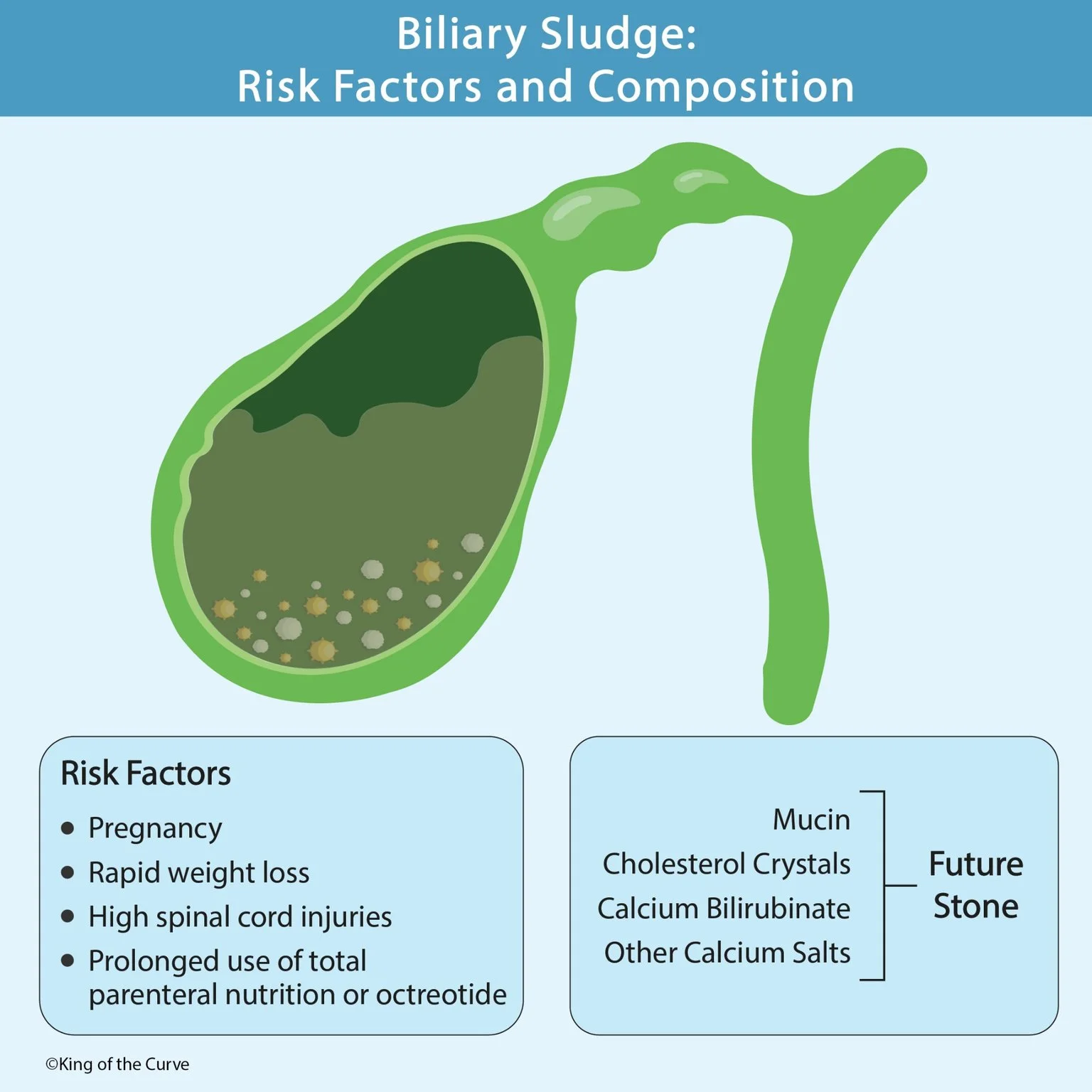
🔍 What Is Biliary Sludge?
Sludge forms when substances in bile precipitate and accumulate as sediment. Changes in bile composition and reduced gallbladder emptying can encourage this process.
Unlike gallstones, sludge consists of fine particles rather than distinct, solid stones.
🧪 Main Components
Biliary sludge commonly contains:
Mucin: A mucus matrix that traps particles.
Cholesterol crystals: Cholesterol that has precipitated from bile.
Calcium bilirubinate: A compound formed from calcium and bilirubin.
Other calcium salts: Additional mineral deposits.
The proportions vary between individuals.
⚙️ Why Does It Form?
Bile normally carries cholesterol and other substances in a dissolved or dispersed state. When this balance changes, crystals can form.
If the gallbladder empties less frequently, these particles have more time to settle and aggregate.
📊 Major Risk Factors
| Risk Factor | Connection to Biliary Sludge |
|---|---|
| Pregnancy | Hormonal changes affect bile composition and slow gallbladder emptying |
| Rapid weight loss | Increases cholesterol delivery into bile and may reduce gallbladder emptying |
| Prolonged fasting | Reduces meal-related stimulation of gallbladder contraction |
| Total parenteral nutrition | Reduced intestinal stimulation can promote bile stasis |
| Octreotide therapy | Can inhibit gallbladder contraction |
| High spinal cord injury | Associated with increased sludge formation, although gallbladder contractility may remain normal |
🤰 Pregnancy and Rapid Weight Loss
Pregnancy can increase cholesterol in bile and reduce gallbladder emptying. Pregnancy-associated sludge may resolve after delivery.
Rapid weight loss can also increase cholesterol secretion into bile, creating conditions that favor crystal formation.
🍽️ Fasting, Parenteral Nutrition, and Octreotide
Eating normally stimulates gallbladder contraction. Prolonged fasting or intravenous nutrition can reduce this digestive stimulation, allowing bile to remain stored longer.
Octreotide can also suppress gallbladder contraction and increase the likelihood of sludge.
🪨 Does Sludge Always Become Gallstones?
No. Sludge may resolve, recur, or progress to gallstones. Some cases are associated with biliary pain, cholecystitis, or pancreatitis.
The infographic’s “Future Stone” label is too definite. “May contribute to gallstone formation” is more accurate.
🩻 How Is It Detected?
Ultrasound commonly identifies sludge as sediment within the gallbladder, usually without acoustic shadowing.
Its importance depends on symptoms and associated findings. Sludge alone does not establish inflammation or obstruction.

Frequently Asked Questions (FAQs)
-
Aim for 4-6 focused hours, ensuring you incorporate breaks to avoid burnout.
-
Practice mindfulness techniques, take practice exams under realistic conditions, and maintain a balanced lifestyle.
-
Set short-term goals, seek support from mentors, and reward yourself for small achievements.
-
Regular exercise improves focus, reduces stress, and enhances overall mental clarity.
-
KOTC offers personalized learning tools, gamification features, and adaptive question banks to help students stay on track without burnout.