
The adrenal cortex is the outer portion of each adrenal gland, located above the kidneys. It produces steroid hormones that help regulate blood pressure, metabolism, stress responses, and aspects of sexual development. Beneath the cortex lies the adrenal medulla, which produces epinephrine and norepinephrine rather than steroid hormones.
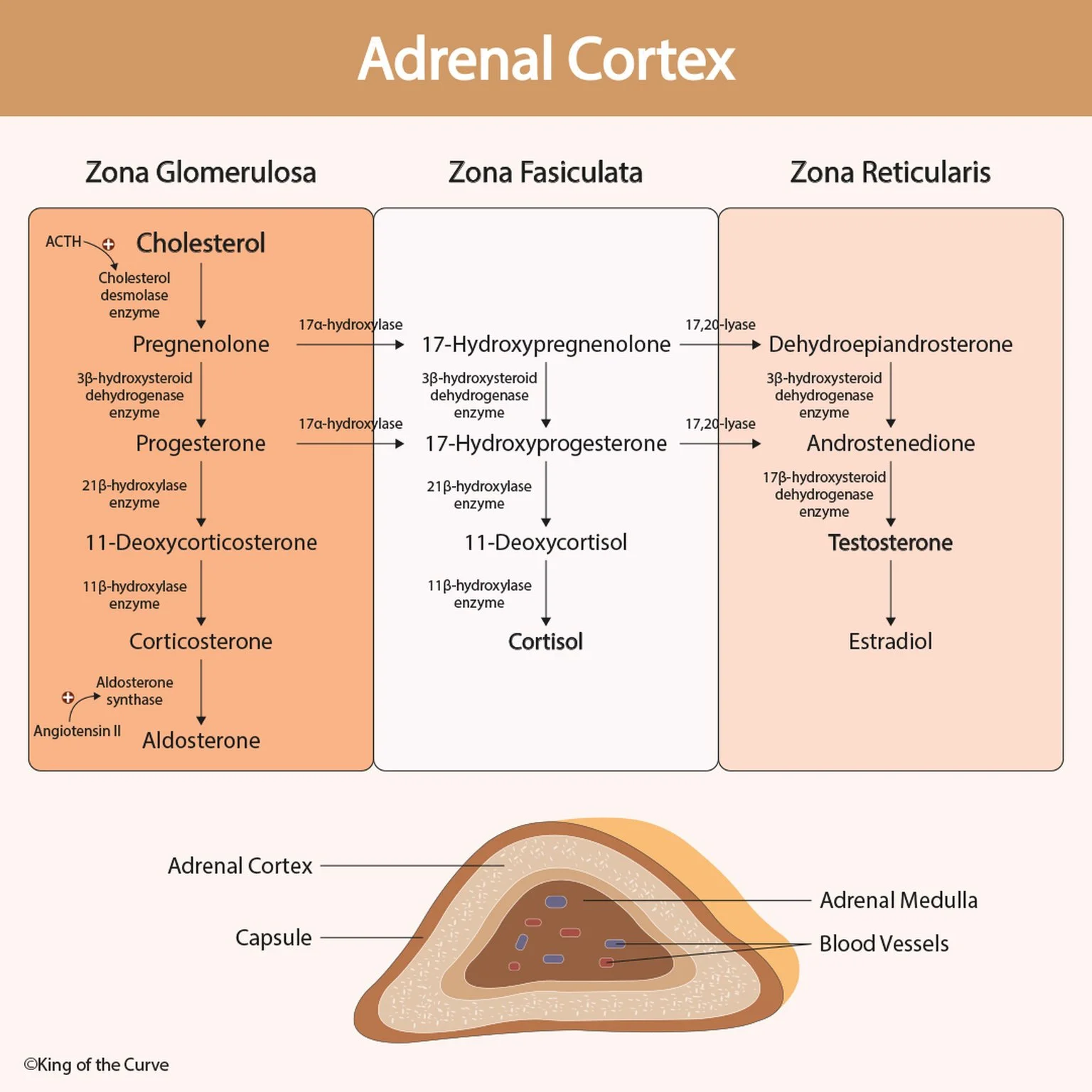
🧱 The Three Layers of the Adrenal Cortex
From the outside inward, the adrenal cortex contains the zona glomerulosa, zona fasciculata, and zona reticularis. Their main products are aldosterone, cortisol, and adrenal androgens, respectively. The mnemonic “GFR: Salt, Sugar, Sex” connects each layer with its major hormone function, although these hormones have broader effects throughout the body.
🧈 Why Steroid Production Starts With Cholesterol
All adrenal steroid hormones originate from cholesterol. Cholesterol side-chain cleavage enzyme, also called cholesterol desmolase, converts cholesterol into pregnenolone, an early precursor shared by the steroid pathways. Different combinations of enzymes then direct each cortical layer toward its characteristic hormone products.
🧂 Zona Glomerulosa: Aldosterone Production
The outermost layer, the zona glomerulosa, produces aldosterone. This mineralocorticoid increases renal sodium reabsorption and potassium secretion, helping regulate extracellular fluid volume and blood pressure. Its secretion is controlled mainly by angiotensin II and blood potassium levels, while ACTH has a smaller, usually transient influence.
📊 Comparing the Adrenal Cortex Layers
Each cortical layer has a distinct location, hormone output, and pattern of regulation. The table summarizes these differences without treating the zones as completely separate organs. Their specialized enzyme expression explains how the same starting material—cholesterol—can produce different hormonal outcomes.
| Layer | Location | Main Hormone Products | Main Regulation | Major Role |
|---|---|---|---|---|
| Zona glomerulosa | Outermost cortex | Aldosterone | Angiotensin II and potassium | Sodium balance, potassium excretion, and blood pressure |
| Zona fasciculata | Middle cortex | Cortisol | ACTH | Metabolism and stress responses |
| Zona reticularis | Innermost cortex | DHEA, DHEA-S, and androstenedione | ACTH | Production of androgen precursors |
🍬 Zona Fasciculata: Cortisol Production
The zona fasciculata is the thickest cortical layer and the principal site of cortisol production. Cortisol helps maintain fuel availability, supports cardiovascular function, and influences immune and inflammatory activity. ACTH from the anterior pituitary stimulates its production as part of the hypothalamic–pituitary–adrenal axis.
⚡ Zona Reticularis: Adrenal Androgen Production
The innermost cortical layer, the zona reticularis, mainly produces DHEA, DHEA-S, and androstenedione. These hormones provide precursors that other tissues can convert into more potent sex steroids. Therefore, a pathway showing testosterone and estradiol should not imply that they are the main hormones normally secreted by this adrenal layer.
⚙️ How Enzymes Determine Hormone Output
Enzyme distribution determines which steroid pathways a cortical cell can complete. The zona glomerulosa lacks significant 17α-hydroxylase activity, preventing it from producing cortisol and adrenal androgens through the usual pathways. Aldosterone synthase supports aldosterone production, while enzymes including 21-hydroxylase and 11β-hydroxylase participate in cortisol synthesis.
🧠 Why Hormone Regulation Differs Between Layers
ACTH is especially important for cortisol and adrenal androgen production, whereas aldosterone responds primarily to signals related to circulation and potassium balance. This distinction connects the adrenal cortex with both stress physiology and kidney function. Remembering “ACTH for cortisol and androgens; angiotensin II and potassium for aldosterone” provides a useful foundation for understanding adrenal regulation.

Frequently Asked Questions (FAQs)
-
Aim for 4-6 focused hours, ensuring you incorporate breaks to avoid burnout.
-
Practice mindfulness techniques, take practice exams under realistic conditions, and maintain a balanced lifestyle.
-
Set short-term goals, seek support from mentors, and reward yourself for small achievements.
-
Regular exercise improves focus, reduces stress, and enhances overall mental clarity.
-
KOTC offers personalized learning tools, gamification features, and adaptive question banks to help students stay on track without burnout.