
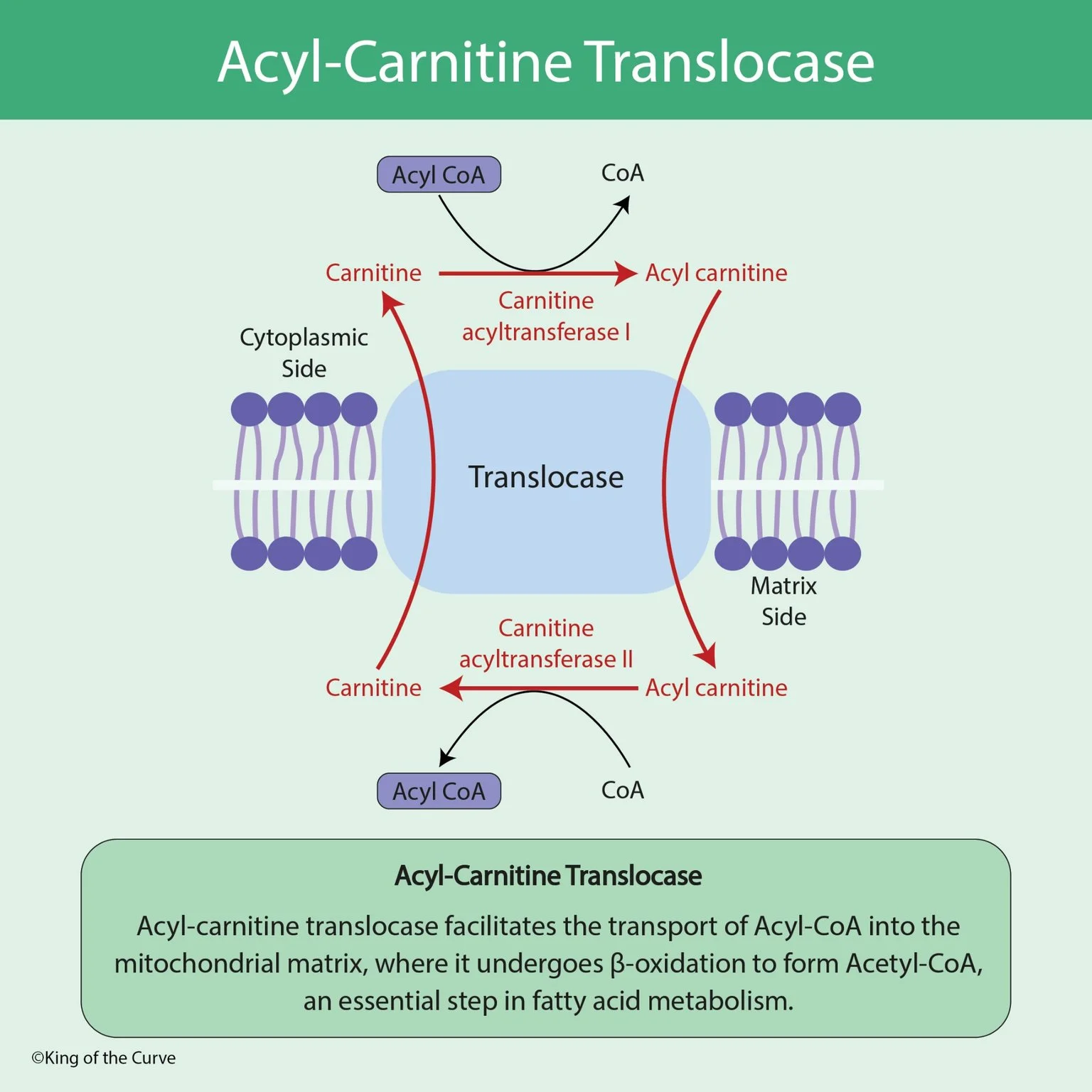
Carnitine–acylcarnitine translocase, or CACT, is a transport protein in the inner mitochondrial membrane. It helps move long-chain fatty acyl groups into the mitochondrial matrix for energy production. Crucially, it transports acylcarnitine rather than acyl-CoA directly, forming one part of the carnitine shuttle.
🚧 Why Long-Chain Fatty Acids Need a Shuttle
Long-chain fatty acids are activated to fatty acyl-CoA before mitochondrial oxidation. However, long-chain acyl-CoA cannot directly cross the inner mitochondrial membrane. The carnitine shuttle temporarily transfers its acyl group onto carnitine, allowing that group to cross the membrane and then be reattached to CoA inside the matrix.
🔄 How CPT I Forms Acylcarnitine
Carnitine palmitoyltransferase I, commonly called CPT I or CPT1, is located in the outer mitochondrial membrane. It transfers the fatty acyl group from acyl-CoA to carnitine, producing acylcarnitine and releasing free CoA. This prepares the fatty acyl group for transport across the inner membrane.
🚪 How Translocase Exchanges Molecules
CACT moves acylcarnitine into the mitochondrial matrix while moving free carnitine outward. This exchange links incoming fatty acyl groups with the recycling of carnitine. The transporter moves the molecules across the membrane; it does not perform the chemical reactions carried out by CPT I and CPT II.
📊 The Three Main Carnitine Shuttle Components
The shuttle works through coordinated transfer, transport, and regeneration steps. CPT I forms acylcarnitine, CACT carries it across the inner membrane, and CPT II regenerates acyl-CoA inside the matrix. Keeping their locations and functions separate makes the pathway easier to understand.
| Component | Location | Main Function |
|---|---|---|
| CPT I | Outer mitochondrial membrane | Transfers the acyl group from acyl-CoA to carnitine |
| Carnitine–acylcarnitine translocase | Inner mitochondrial membrane | Exchanges incoming acylcarnitine for outgoing free carnitine |
| CPT II | Matrix-facing side of the inner mitochondrial membrane | Transfers the acyl group from acylcarnitine to matrix CoA |
⚙️ How CPT II Regenerates Acyl-CoA
Once acylcarnitine reaches the matrix side, CPT II transfers its fatty acyl group onto a matrix CoA molecule. This reaction produces fatty acyl-CoA and releases free carnitine. The regenerated acyl-CoA can enter β-oxidation, while carnitine becomes available for transport back across the inner membrane.
♻️ Why Carnitine Is Recycled
Carnitine acts as a reusable carrier rather than a fuel consumed during fatty acid oxidation. After CPT II removes its acyl group, the free carnitine returns outward through CACT in exchange for another incoming acylcarnitine molecule. This recycling allows the shuttle to continue transferring fatty acyl groups into the matrix.
🔋 How the Shuttle Supports Fatty Acid Oxidation
Transport into the matrix makes long-chain fatty acyl-CoA available to the enzymes of mitochondrial β-oxidation. The shuttle therefore connects fatty acids outside the inner membrane with the machinery that breaks them down inside. A transport defect can restrict this energy pathway even when fatty acids are available elsewhere in the cell.
🩺 What Happens in Translocase Deficiency?
Carnitine–acylcarnitine translocase deficiency is an inherited disorder that impairs mitochondrial long-chain fatty acid oxidation. It can cause hypoketotic hypoglycemia—low blood glucose with inappropriately low ketone production—as well as liver dysfunction, muscle weakness, and serious cardiac problems. Severe cases often appear shortly after birth, demonstrating how important this transporter is for normal energy metabolism.

Frequently Asked Questions (FAQs)
-
Aim for 4-6 focused hours, ensuring you incorporate breaks to avoid burnout.
-
Practice mindfulness techniques, take practice exams under realistic conditions, and maintain a balanced lifestyle.
-
Set short-term goals, seek support from mentors, and reward yourself for small achievements.
-
Regular exercise improves focus, reduces stress, and enhances overall mental clarity.
-
KOTC offers personalized learning tools, gamification features, and adaptive question banks to help students stay on track without burnout.