
🩸 Thrombopoietin Receptor Agonists for Thrombocytopenia
Thrombopoietin receptor agonists (TPO-RAs) are medications that stimulate platelet production. They activate the thrombopoietin receptor, also called c-Mpl, promoting the development and maturation of megakaryocytes in the bone marrow. Because megakaryocytes produce platelets, this mechanism can increase circulating platelet counts.
🩸 Understanding Thrombocytopenia
Thrombocytopenia means an abnormally low platelet count. Because platelets are essential for primary hemostasis, severe thrombocytopenia can increase the risk of bleeding. Causes include decreased platelet production, increased destruction, sequestration, and consumption.
💉 Romiplostim
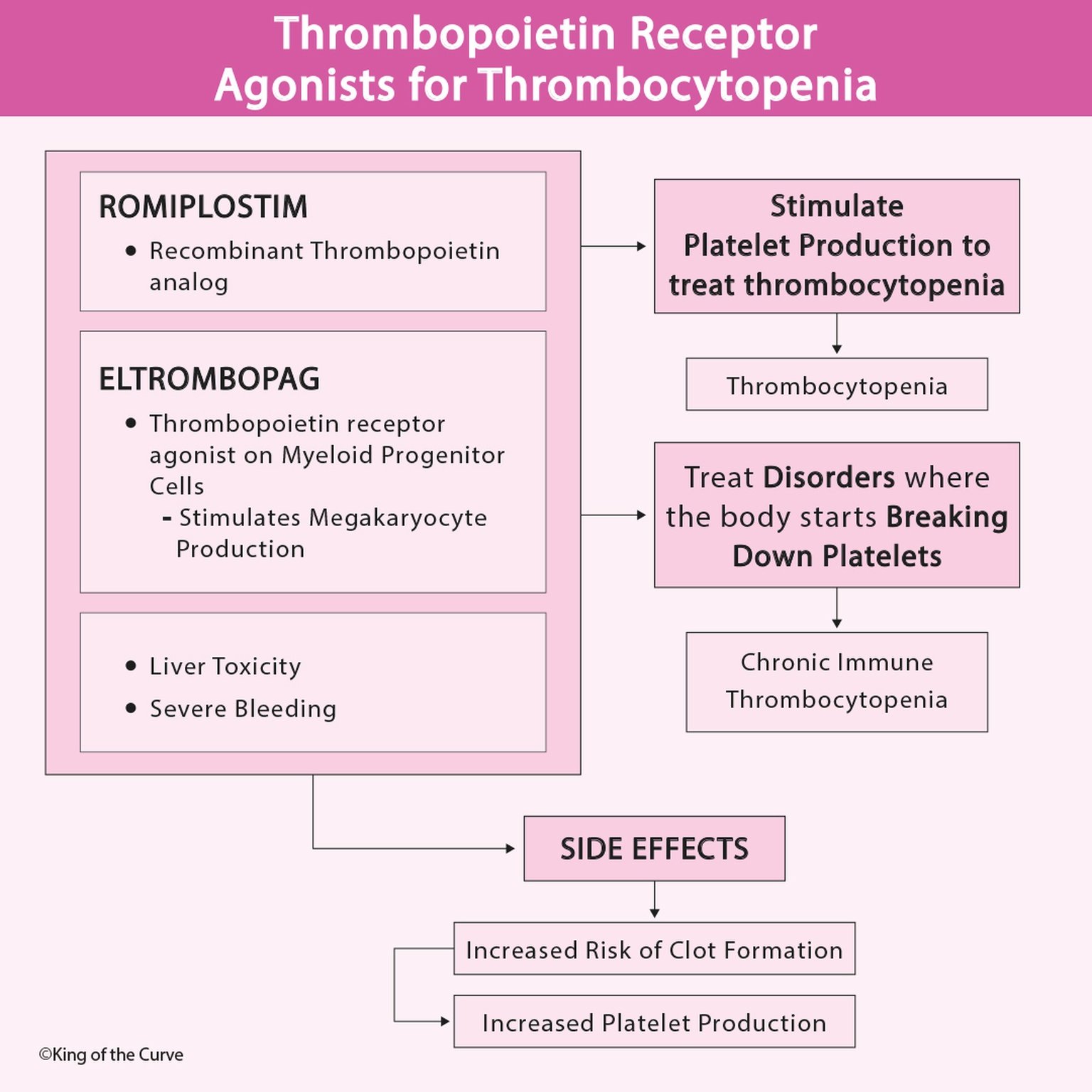
Romiplostim is a thrombopoietin receptor agonist used to increase platelet production. It is a peptide-Fc fusion protein (“peptibody”) rather than recombinant thrombopoietin itself. By activating the TPO receptor, it stimulates megakaryocyte proliferation and differentiation, ultimately increasing platelet production.
💊 Eltrombopag
Eltrombopag is an orally administered, small-molecule thrombopoietin receptor agonist. It binds to the transmembrane domain of the TPO receptor and promotes signaling that stimulates megakaryocyte proliferation and differentiation. Unlike romiplostim, eltrombopag is not a thrombopoietin analog.
🛡️ Role in Immune Thrombocytopenia
TPO receptor agonists can be used in immune thrombocytopenia (ITP), a condition characterized by immune-mediated platelet destruction along with impaired platelet production. Rather than directly stopping antibody-mediated destruction, these medications primarily help compensate by increasing platelet production.
⚙️ Mechanism at a Glance
| 💊 Drug | 🧬 Drug Type | ⚙️ Main Action | 🎯 Important Point |
|---|---|---|---|
| Romiplostim | Peptide-Fc fusion protein | Activates the thrombopoietin (TPO) receptor | Stimulates megakaryocyte development and platelet production |
| Eltrombopag | Small-molecule TPO receptor agonist | Activates TPO receptor signaling | Oral medication; can cause hepatotoxicity |
⚠️ Important Adverse Effects
An excessive rise in platelet production can increase the risk of thrombotic or thromboembolic complications. Eltrombopag is also associated with hepatotoxicity, so liver function may require monitoring. The therapeutic goal is generally to achieve a platelet count sufficient to reduce clinically important bleeding rather than simply normalize the platelet count.
🧠 High-Yield Distinction
A useful distinction is that TPO receptor agonists address thrombocytopenia by increasing platelet production. They do not primarily work by suppressing the immune system or directly preventing platelet destruction. This mechanism helps distinguish them from treatments such as corticosteroids and IVIG used in immune thrombocytopenia.
🎯 MCAT & Medical Science Takeaway
Remember the pathway: TPO receptor activation → megakaryocyte proliferation and maturation → increased platelet production. Romiplostim and eltrombopag both stimulate this pathway but are structurally different drugs. Also note that the infographic’s description of romiplostim as a “recombinant thrombopoietin analog” is not the most accurate wording; describing it as a TPO receptor agonist/peptide-Fc fusion protein is more precise.

Frequently Asked Questions (FAQs)
-
Aim for 4-6 focused hours, ensuring you incorporate breaks to avoid burnout.
-
Practice mindfulness techniques, take practice exams under realistic conditions, and maintain a balanced lifestyle.
-
Set short-term goals, seek support from mentors, and reward yourself for small achievements.
-
Regular exercise improves focus, reduces stress, and enhances overall mental clarity.
-
KOTC offers personalized learning tools, gamification features, and adaptive question banks to help students stay on track without burnout.