
🫀 Structures and Ligaments of the Omentum
The omentum is a specialized fold of peritoneum that plays an important role in supporting abdominal organs, facilitating blood supply, and protecting against infection. It is closely associated with the stomach, duodenum, colon, liver, and spleen, as shown in the diagram.
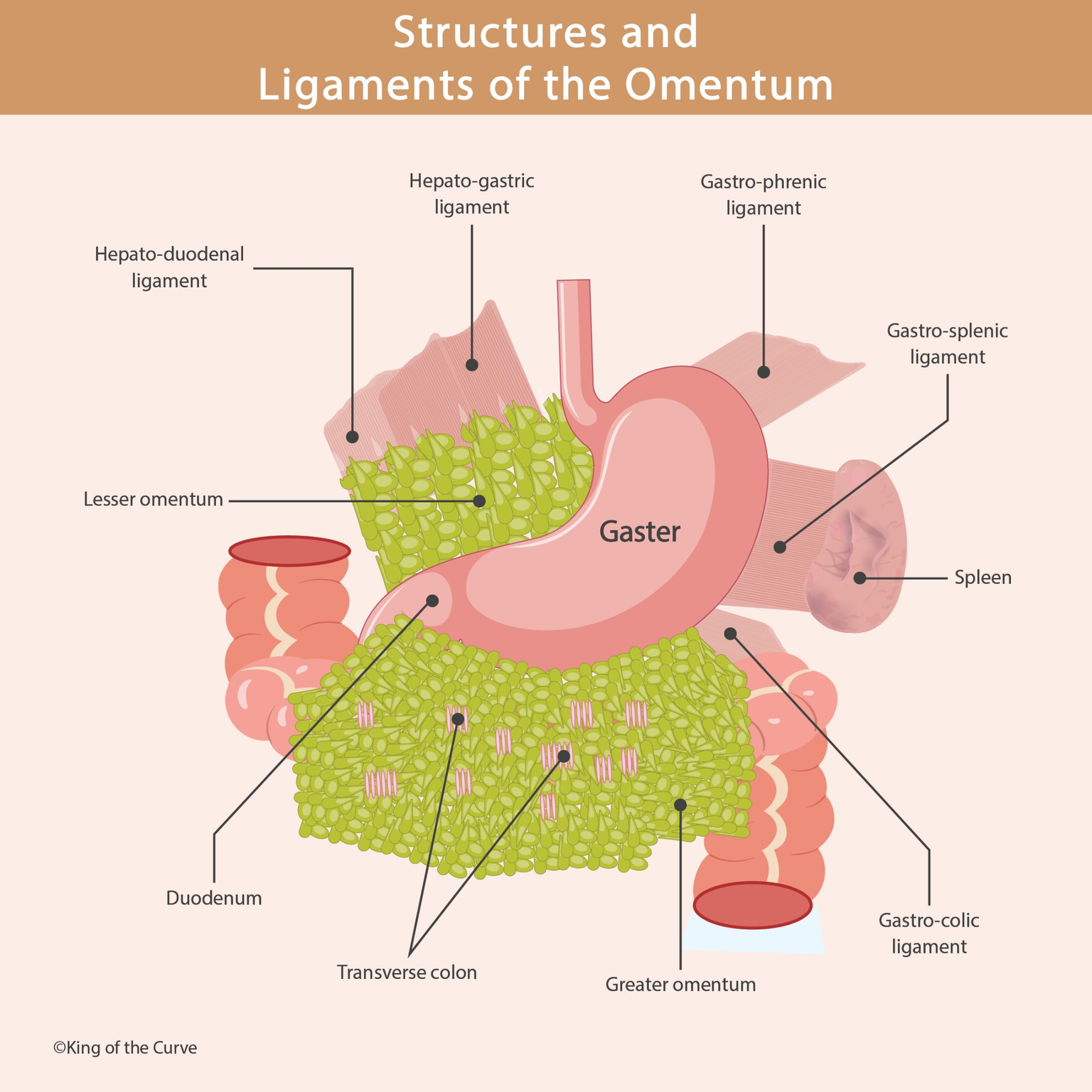
📌 Overview of the Omentum
The omentum is divided into two main parts: the lesser omentum and the greater omentum. Both originate from the stomach but differ in their attachments, structure, and functions. Together, they help stabilize abdominal organs and serve as conduits for blood vessels, nerves, and lymphatics.
🔹 Lesser Omentum
The lesser omentum extends from the lesser curvature of the stomach and the first part of the duodenum to the liver. It consists of two important ligaments: the hepato-gastric ligament and the hepato-duodenal ligament. The hepato-duodenal ligament is especially significant because it contains the portal triad—portal vein, hepatic artery, and bile duct.
🔹 Greater Omentum
The greater omentum is a large, fatty, apron-like structure hanging from the greater curvature of the stomach. It drapes over the intestines and attaches to the transverse colon. Due to its rich fat content and immune cells, it is often called the “policeman of the abdomen” because it can migrate to sites of infection or inflammation.
🔗 Ligaments Associated with the Stomach
Several ligaments connect the stomach to surrounding organs. These include the gastro-phrenic ligament (stomach to diaphragm), gastro-splenic ligament (stomach to spleen), and gastro-colic ligament (stomach to transverse colon). These ligaments are all derived from the peritoneum and contribute to organ stability.
🧬 Functional Importance
Beyond structural support, the omentum plays a role in immune defense, fat storage, and wound isolation. Its ability to adhere to inflamed areas helps limit the spread of infection within the peritoneal cavity, which is clinically significant in abdominal infections.
🧾 Summary Table: Structures and Ligaments of the Omentum
| Structure / Ligament | Attachment | Key Function |
|---|---|---|
| Lesser omentum | Stomach & duodenum → liver | Conveys vessels and stabilizes stomach |
| Hepato-gastric ligament | Stomach → liver | Part of lesser omentum |
| Hepato-duodenal ligament | Duodenum → liver | Contains portal triad |
| Greater omentum | Greater curvature → transverse colon | Protection, fat storage, immune role |
| Gastro-phrenic ligament | Stomach → diaphragm | Supports stomach |
| Gastro-splenic ligament | Stomach → spleen | Contains splenic vessels |
| Gastro-colic ligament | Stomach → transverse colon | Part of greater omentum |
✅ Key Takeaway
The omentum is more than just a fold of peritoneum—it is a dynamic structure essential for support, protection, vascular supply, and immune defense within the abdominal cavity. Understanding its ligaments and attachments is crucial in anatomy, surgery, and clinical practice.

Frequently Asked Questions (FAQs)
-
Aim for 4-6 focused hours, ensuring you incorporate breaks to avoid burnout.
-
Practice mindfulness techniques, take practice exams under realistic conditions, and maintain a balanced lifestyle.
-
Set short-term goals, seek support from mentors, and reward yourself for small achievements.
-
Regular exercise improves focus, reduces stress, and enhances overall mental clarity.
-
KOTC offers personalized learning tools, gamification features, and adaptive question banks to help students stay on track without burnout.