
🧠 Social Cognition Theory: A High-Yield MCAT Guide
Social cognition theory explains how personal factors, behavior, and the environment continuously influence one another. Rather than viewing behavior as the result of only internal thoughts or external circumstances, the theory emphasizes an ongoing interaction among all three. For the MCAT, this concept is especially relevant to psychology questions involving learning, behavior change, self-efficacy, observation, and environmental influences.
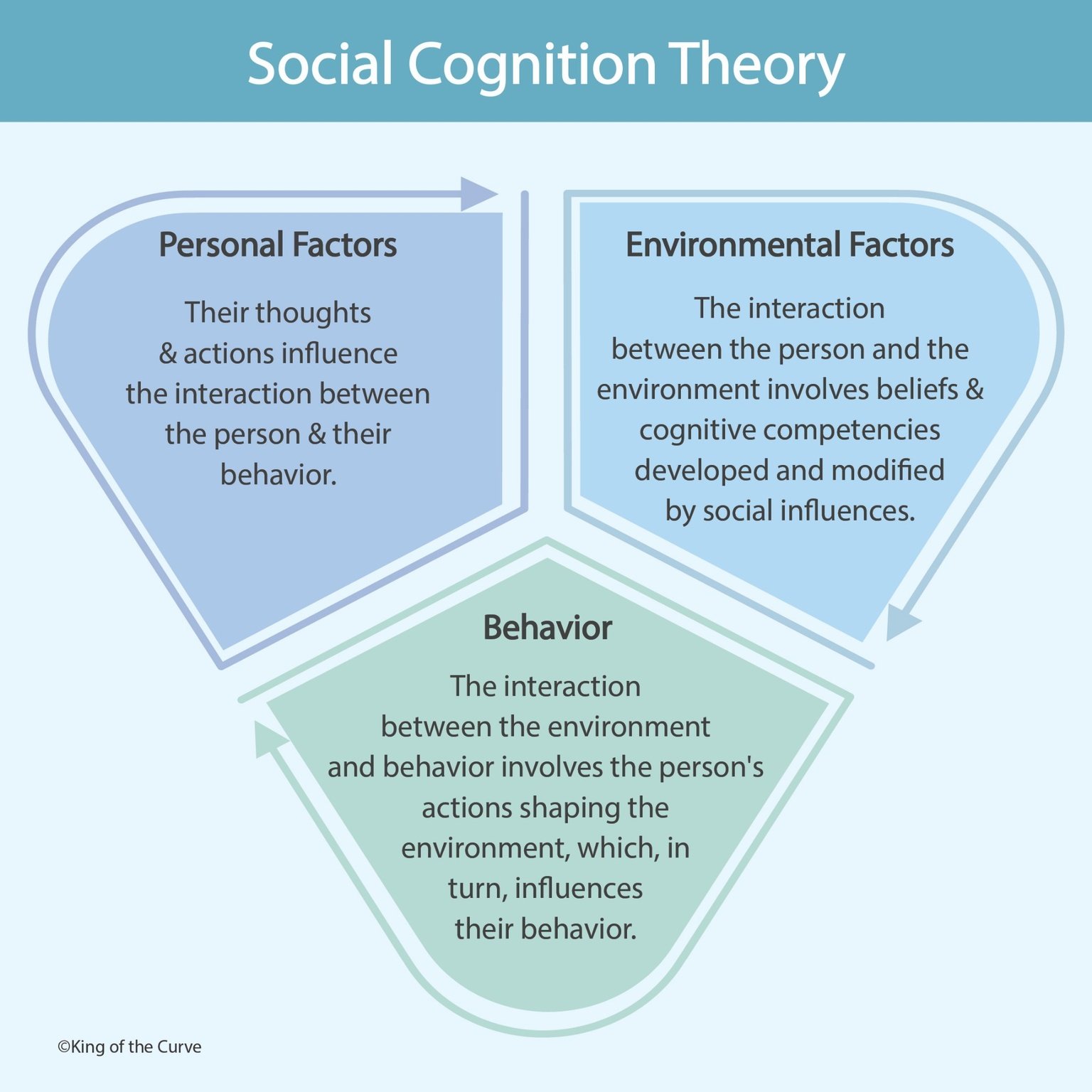
🔄 Reciprocal Determinism
A central concept in Albert Bandura’s social cognitive theory is reciprocal determinism. This principle states that personal or cognitive factors, behavior, and environmental factors have bidirectional influences on one another. A person's beliefs can affect how they behave, their behavior can alter their environment, and environmental experiences can subsequently change their thoughts and future behavior.
👤 Personal Factors
Personal factors include an individual's thoughts, beliefs, expectations, emotions, knowledge, and cognitive abilities. These internal characteristics influence how a person interprets situations and chooses to behave. At the same time, experiences resulting from behavior and environmental feedback can modify these personal factors, making the relationship reciprocal rather than one-directional.
🌎 Environmental Factors
Environmental factors include the social and physical surroundings in which behavior occurs. Family members, peers, cultural expectations, rewards, punishments, and observed behaviors can all influence an individual's actions and beliefs. Social cognitive theory therefore recognizes that learning does not occur independently of the environment.
🚶 Behavior
Behavior represents the actions an individual performs. Importantly, people do not simply respond passively to their environments—their actions can actively modify their surroundings. For example, a student who begins attending a study group changes their learning environment, while the encouragement and feedback received from that group can influence the student's future studying behavior.
👀 Observational Learning
Another major component of social cognitive theory is observational learning, sometimes called modeling. People can learn new behaviors by watching others rather than experiencing every consequence themselves. Attention, retention, reproduction, and motivation are important processes involved in observational learning. This concept helps explain why parents, peers, teachers, and other models can strongly influence behavior.
💪 Self-Efficacy
Self-efficacy refers to a person's belief in their ability to successfully perform a particular behavior or accomplish a task. High self-efficacy can increase persistence, motivation, and willingness to confront challenges, whereas low self-efficacy may lead someone to avoid difficult tasks. Self-efficacy is therefore an important personal factor within Bandura's framework.
📊 Three-Way Interaction at a Glance
| 🧠 Component | 📘 What It Includes | 🎯 Example |
|---|---|---|
| Personal factors | Thoughts, beliefs, expectations, emotions | Believing you can improve your MCAT score |
| Behavior | Individual actions | Following a consistent study schedule |
| Environment | Social and physical surroundings | Joining a supportive study group |
Each component can influence the other two, producing the reciprocal relationship at the heart of social cognitive theory.
🎯 MCAT High-Yield Takeaway
For MCAT questions, associate Bandura → social cognitive theory → observational learning + self-efficacy + reciprocal determinism. If a passage describes a person's beliefs affecting behavior, behavior changing the environment, and the environment feeding back to influence the person, think reciprocal determinism. The key idea is not simply that environment causes behavior—it is that person, behavior, and environment dynamically influence one another.

Frequently Asked Questions (FAQs)
-
Aim for 4-6 focused hours, ensuring you incorporate breaks to avoid burnout.
-
Practice mindfulness techniques, take practice exams under realistic conditions, and maintain a balanced lifestyle.
-
Set short-term goals, seek support from mentors, and reward yourself for small achievements.
-
Regular exercise improves focus, reduces stress, and enhances overall mental clarity.
-
KOTC offers personalized learning tools, gamification features, and adaptive question banks to help students stay on track without burnout.