
🧠 Smell Pathway (Olfactory Pathway)
The sense of smell, or olfaction, is unique among sensory systems because it provides a direct connection between the external environment and the brain without first relaying through the thalamus. The olfactory pathway plays a crucial role not only in smell perception but also in emotion, memory, and behavior.
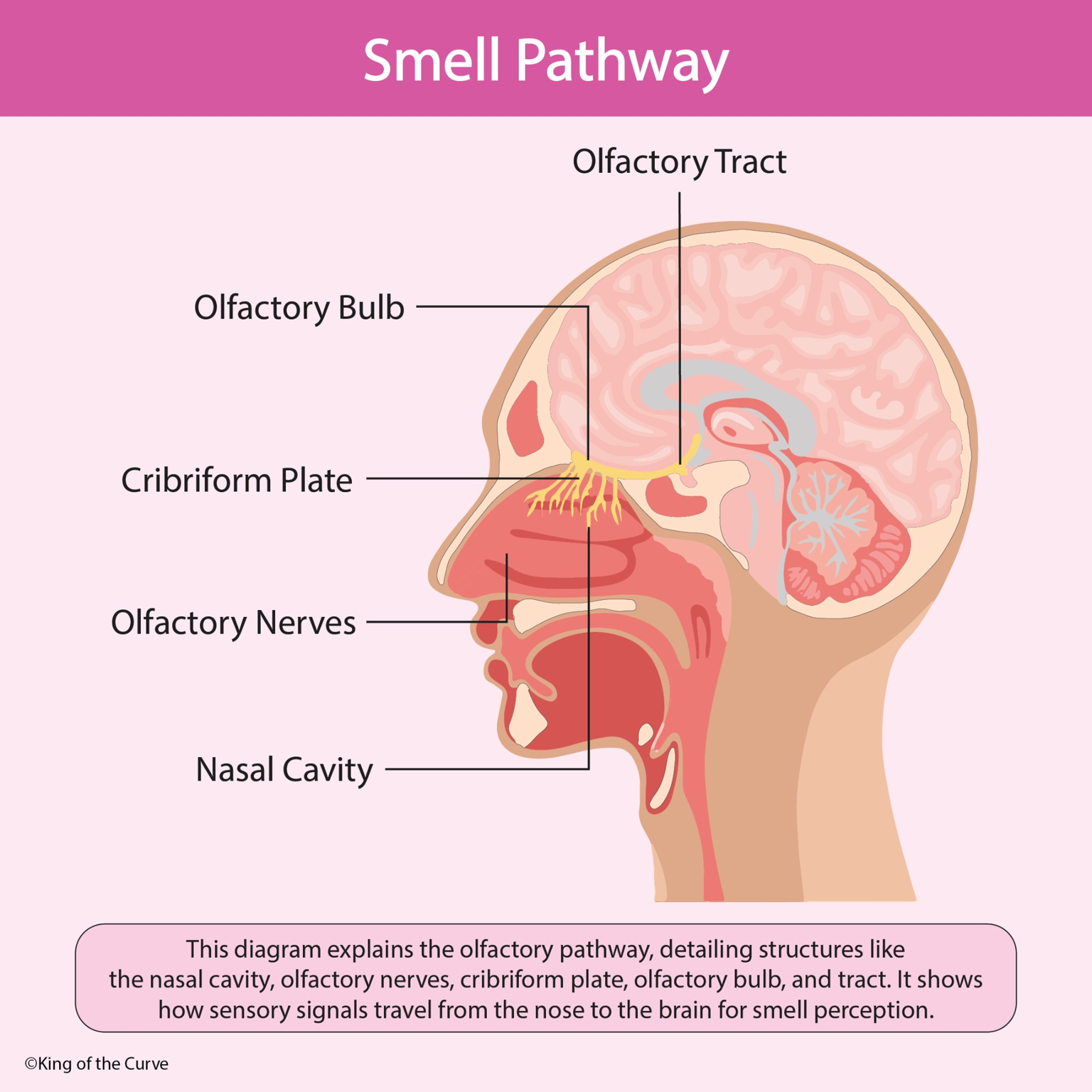
👃 Origin of Smell Sensation
Smell begins in the nasal cavity, specifically in the olfactory epithelium located at the roof of the nasal cavity. This specialized epithelium contains olfactory receptor neurons, supporting cells, and basal cells. Odorant molecules dissolve in mucus and bind to receptors on the cilia of olfactory neurons, initiating sensory transduction.
🧬 Olfactory Nerves and Cribriform Plate
The axons of olfactory receptor neurons bundle together to form the olfactory nerves (cranial nerve I). These nerve fibers pass through small openings in the cribriform plate of the ethmoid bone, making them susceptible to damage during head trauma. Injury here can result in anosmia.
🧠 Olfactory Bulb: First Synapse
After crossing the cribriform plate, olfactory nerve fibers synapse in the olfactory bulb. Within the bulb, signals are processed in glomeruli, where olfactory neurons connect with mitral and tufted cells, allowing early odor discrimination.
🔗 Olfactory Tract and Central Connections
Mitral cell axons form the olfactory tract, which carries signals to higher brain centers. Unlike other sensory systems, olfactory signals bypass the thalamus initially and project directly to the primary olfactory cortex, amygdala, and entorhinal cortex.
📊 Components of the Olfactory Pathway (Table)
| Structure | Location | Function |
|---|---|---|
| Olfactory Epithelium | Roof of nasal cavity | Detects odorant molecules |
| Olfactory Nerves (CN I) | Pass through cribriform plate | Transmit smell signals to brain |
| Cribriform Plate | Ethmoid bone | Allows olfactory nerve passage |
| Olfactory Bulb | Inferior frontal lobe | First synapse & signal processing |
| Olfactory Tract | Extends posteriorly from bulb | Carries signals to cortex |
| Primary Olfactory Cortex | Temporal lobe & limbic areas | Conscious smell perception |
| Amygdala & Hippocampus | Limbic system | Emotion & memory association |
💭 Link to Emotion and Memory
Because the olfactory pathway connects directly to the limbic system, odors are strongly linked to emotions and memories. This explains why smells can instantly evoke powerful recollections or emotional responses.
⚠️ Clinical Correlation
Damage to the olfactory pathway may occur due to head trauma, infections, tumors, or neurodegenerative diseases. Fracture of the cribriform plate is a common cause of anosmia.
📌 Key Takeaway
The olfactory pathway is a direct, fast, and emotionally significant sensory system that bypasses the thalamus and connects closely with memory and emotion centers.

Frequently Asked Questions (FAQs)
-
Aim for 4-6 focused hours, ensuring you incorporate breaks to avoid burnout.
-
Practice mindfulness techniques, take practice exams under realistic conditions, and maintain a balanced lifestyle.
-
Set short-term goals, seek support from mentors, and reward yourself for small achievements.
-
Regular exercise improves focus, reduces stress, and enhances overall mental clarity.
-
KOTC offers personalized learning tools, gamification features, and adaptive question banks to help students stay on track without burnout.