
🔹 Role Strain vs. Role Conflict: Understanding the Difference
In everyday life, we all occupy multiple social roles. You might be a student, employee, friend, sibling, athlete, or parent sometimes all at once. While roles help structure society and give us identity, they can also create stress.
🔹 What Is Role Strain?
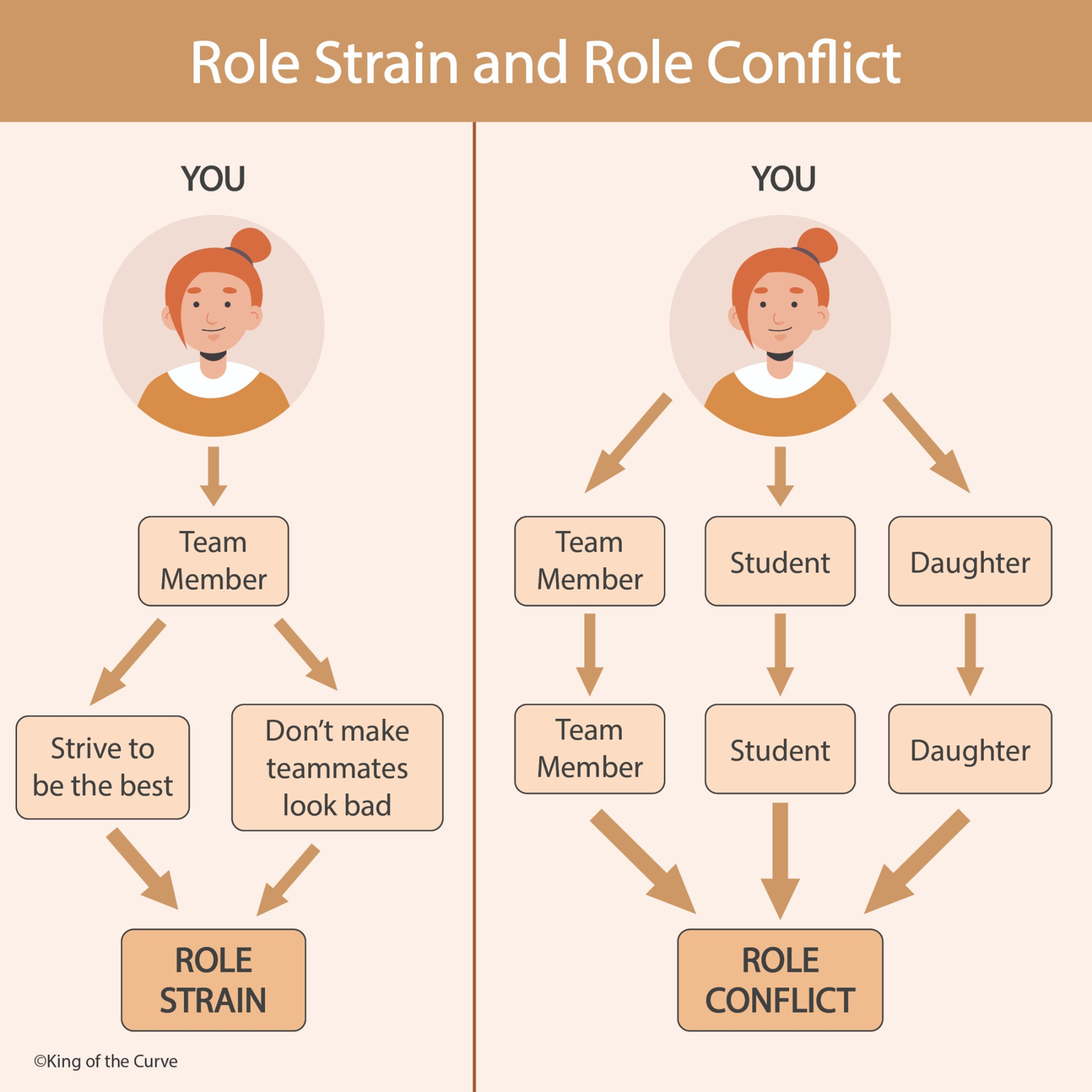
Role strain occurs when there are conflicting expectations within the same role.
In other words, you’re experiencing stress because different demands inside one role compete with each other.
Example:
You are a team member.
As a team member, you are expected to:
Strive to be the best performer
Support your teammates
Avoid making others look bad
But what if outperforming others makes your teammates look bad?
Now you’re stuck between competing expectations — all within the same role.
That tension is role strain.
Key Idea:
One role. Conflicting expectations.
🔹 What Is Role Conflict?
Role conflict occurs when the expectations of different roles clash with each other.
This happens when fulfilling one role makes it difficult to fulfill another.
Example:
You are:
A team member
A student
A daughter
Each role has its own expectations:
Your team needs you at practice.
Your school requires you to study for exams.
Your family expects you to attend a gathering.
You cannot be in three places at once.
The pressure between these separate roles creates role conflict.
Key Idea:
Multiple roles. Competing demands.
🔹 Why These Concepts Matter
Understanding role strain and role conflict helps explain:
Academic stress
Workplace burnout
Family tension
Time-management struggles
Mental health challenges
Modern life increases the likelihood of role conflict because we often juggle many responsibilities simultaneously.
🔹 Psychological Impact
Both role strain and role conflict can lead to:
Stress
Anxiety
Fatigue
Reduced performance
Burnout
If chronic, they may contribute to larger mental health concerns.
🔹 Real-Life Applications
In School
A student may struggle between:
Getting perfect grades
Maintaining friendships
Participating in extracurricular activities
In the Workplace
An employee may experience:
Role strain: Balancing productivity with teamwork
Role conflict: Work responsibilities vs. family obligations
In Parenting
Parents often face:
Role conflict between career and caregiving
Role strain in balancing discipline with emotional support
🔹 Quick Comparison
| Feature | Role Strain | Role Conflict |
|---|---|---|
| Number of roles involved | One | Two or more |
| Source of tension | Conflicting expectations within a role | Competing demands between roles |
| Example | Team member expectations clash | Student vs. family vs. athlete responsibilities |
🔹 Final Takeaway
Role strain and role conflict are normal parts of social life. The key difference is simple:
Role strain = stress within one role
Role conflict = stress between multiple roles
Recognizing these patterns can help you manage stress more effectively and set healthy boundaries.

Frequently Asked Questions (FAQs)
-
Aim for 4-6 focused hours, ensuring you incorporate breaks to avoid burnout.
-
Practice mindfulness techniques, take practice exams under realistic conditions, and maintain a balanced lifestyle.
-
Set short-term goals, seek support from mentors, and reward yourself for small achievements.
-
Regular exercise improves focus, reduces stress, and enhances overall mental clarity.
-
KOTC offers personalized learning tools, gamification features, and adaptive question banks to help students stay on track without burnout.