
🩸 Regulation of Erythropoiesis in Hypoxia
Erythropoiesis is the process by which red blood cells (erythrocytes) are produced in the bone marrow. These cells are essential for transporting oxygen from the lungs to tissues throughout the body. Because oxygen delivery is critical for survival, the body tightly regulates red blood cell production based on oxygen availability.
1️⃣ Understanding Hypoxia
Hypoxia refers to a state of low oxygen levels in tissues. This can occur due to high altitude, lung disease, anemia, or cardiovascular disorders. When oxygen levels fall, the body activates adaptive mechanisms to restore adequate oxygen delivery. One of the most important responses is increasing red blood cell production.
2️⃣ The Kidney as an Oxygen Sensor
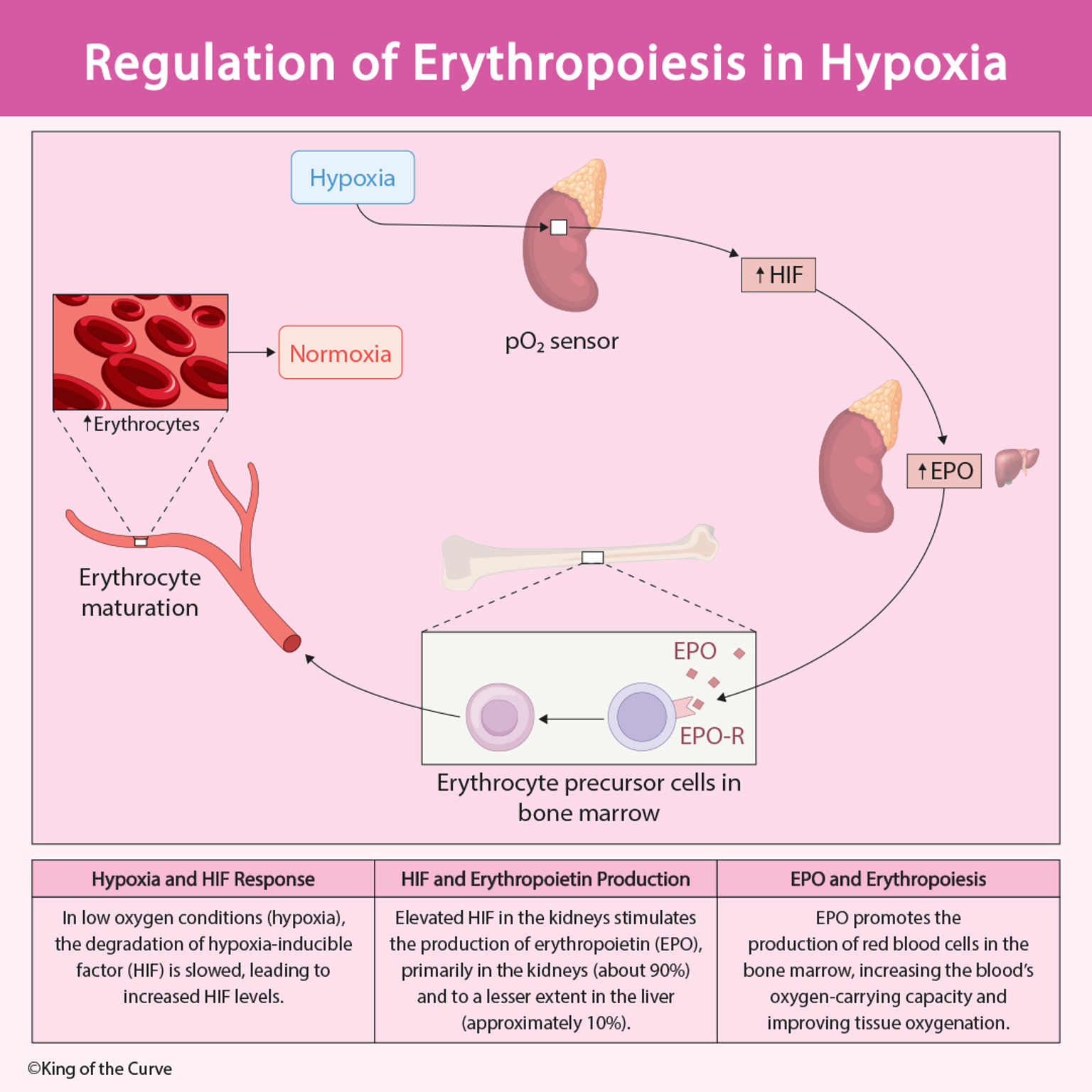
The kidneys play a central role in sensing oxygen levels in the blood. Specialized cells in the kidney monitor partial pressure of oxygen (pO₂). When oxygen levels drop, these cells trigger molecular changes that activate the hypoxia response pathway.
3️⃣ Role of Hypoxia-Inducible Factor (HIF)
Under normal oxygen conditions (normoxia), hypoxia-inducible factor (HIF) is rapidly degraded. However, during hypoxia, HIF degradation slows, allowing HIF to accumulate inside cells. Elevated HIF acts as a transcription factor, turning on genes that help the body adapt to low oxygen conditions.
4️⃣ Stimulation of Erythropoietin (EPO) Production
One of the key genes activated by HIF is erythropoietin (EPO). Approximately 90% of EPO is produced in the kidneys, with a smaller contribution from the liver. Increased HIF levels stimulate greater EPO production, which is then released into the bloodstream.
5️⃣ EPO and Bone Marrow Activation
EPO travels through circulation to the bone marrow, where it binds to erythropoietin receptors (EPO-R) on erythrocyte precursor cells. This binding promotes survival, proliferation, and differentiation of these precursor cells into mature red blood cells.
6️⃣ Increased Oxygen-Carrying Capacity
As red blood cell numbers rise, the blood’s oxygen-carrying capacity increases. Hemoglobin within erythrocytes binds oxygen in the lungs and delivers it to tissues. This compensatory increase helps restore oxygen balance and counteract the effects of hypoxia.
7️⃣ Return to Normoxia and Feedback Regulation
Once oxygen levels improve, HIF degradation resumes. Reduced HIF levels decrease EPO production, slowing red blood cell synthesis. This negative feedback loop ensures that erythropoiesis remains balanced and prevents excessive red blood cell production (polycythemia).
8️⃣ Clinical Relevance
Disruptions in this pathway can lead to disease. Chronic kidney disease can impair EPO production, resulting in anemia. Conversely, tumors that overproduce EPO or mutations in the HIF pathway can cause excessive erythrocytosis. Synthetic EPO is also used therapeutically to treat anemia but may be misused in athletic doping.
9️⃣ Summary of the Hypoxia–EPO–Erythropoiesis Pathway
In hypoxia, reduced oxygen levels stabilize HIF in the kidneys. HIF stimulates EPO production, which activates bone marrow erythrocyte precursor cells. This increases red blood cell production, enhances oxygen delivery, and ultimately restores tissue oxygenation through a tightly regulated feedback mechanism.

Frequently Asked Questions (FAQs)
-
Aim for 4-6 focused hours, ensuring you incorporate breaks to avoid burnout.
-
Practice mindfulness techniques, take practice exams under realistic conditions, and maintain a balanced lifestyle.
-
Set short-term goals, seek support from mentors, and reward yourself for small achievements.
-
Regular exercise improves focus, reduces stress, and enhances overall mental clarity.
-
KOTC offers personalized learning tools, gamification features, and adaptive question banks to help students stay on track without burnout.