
🧠 Understanding RAAS System Inhibitors for the MCAT
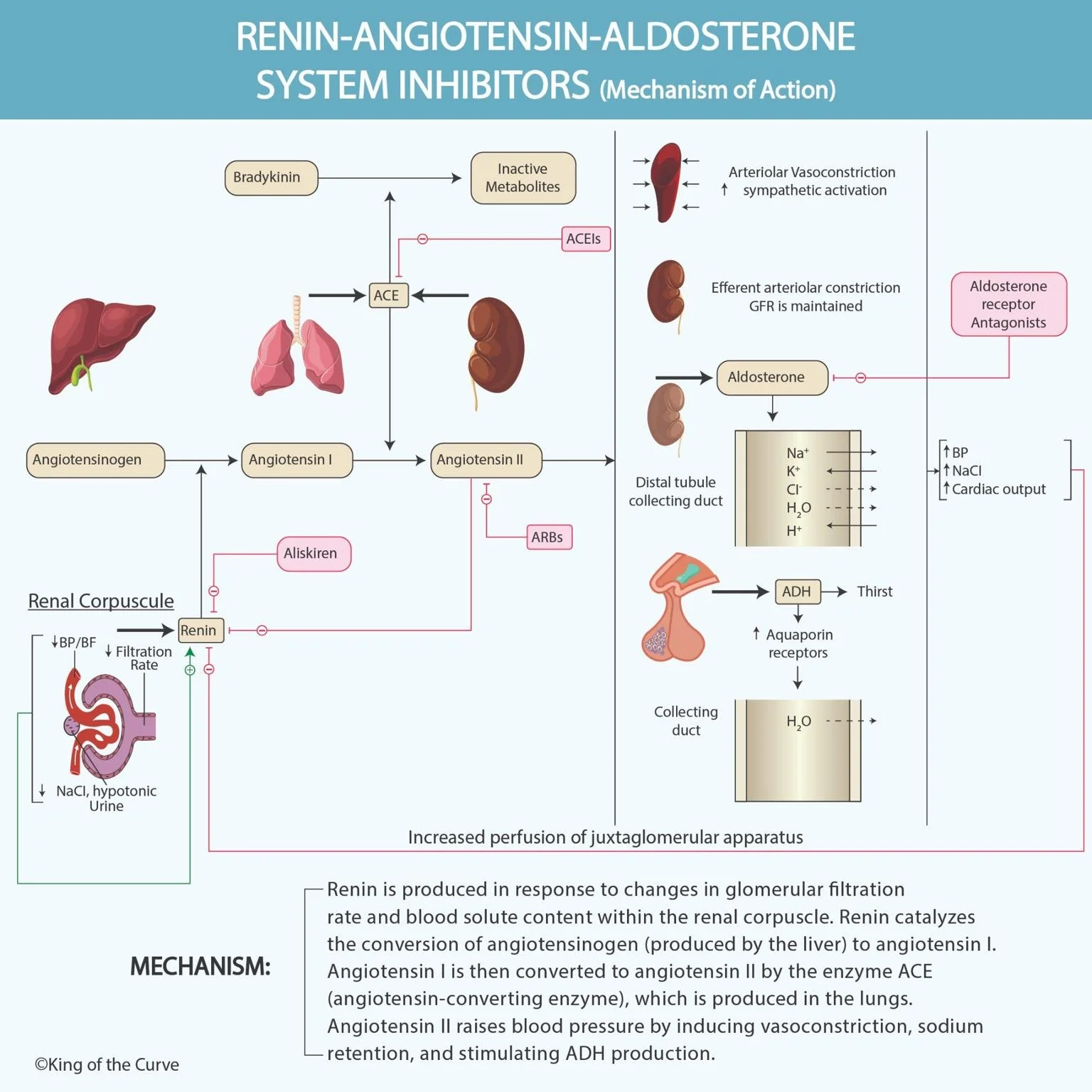
The Renin–Angiotensin–Aldosterone System (RAAS) is one of the most important physiological pathways tested on the MCAT, especially in cardiovascular and renal physiology. Because the RAAS pathway influences blood pressure, fluid balance, and electrolyte handling, understanding how different drug classes inhibit this system is essential. King of the Curve's visual provides a clear map of the enzymes, hormones, and receptor targets within the pathway and shows exactly where therapeutic blockers exert their effects.
🩸 How the RAAS Pathway Normally Works
The RAAS pathway begins in the kidneys, where juxtaglomerular cells release renin in response to decreased blood pressure, reduced sodium content, or sympathetic activation. Renin converts angiotensinogen (from the liver) into angiotensin I, which is then transformed into angiotensin II by ACE (angiotensin-converting enzyme) located primarily in the lungs. Angiotensin II has powerful effects: vasoconstriction, aldosterone release, increased thirst, ADH activation, and stronger sodium and water retention.
💊 Where RAAS Inhibitors Take Action
RAAS inhibitors target different points along this cascade. ACE inhibitors (ACEIs) prevent the conversion of angiotensin I to angiotensin II and also block bradykinin breakdown leading to vasodilation. ARBs (angiotensin receptor blockers) prevent angiotensin II from binding to its receptor on blood vessels and adrenal tissue. Aldosterone antagonists interfere with sodium retention at the distal nephron, while renin inhibitors like aliskiren act at the very start of the pathway by preventing angiotensinogen conversion altogether.
⚡ Clinical Effects and Why They Matter
The net effect of RAAS inhibition is decreased vascular resistance, reduced sodium and water retention, lowered blood pressure, and reduced cardiac workload. On the MCAT, these mechanisms appear in questions about hypertension, heart failure, electrolyte balance, and renal compensation. Understanding the pathway helps you predict side effects, such as hyperkalemia from reduced aldosterone activity or dry cough from bradykinin accumulation with ACE inhibitors.
📊 High-Yield Table: RAAS Drug Classes and Their Targets
| Drug Class | Target | Key Effect | MCAT Connection |
|---|---|---|---|
| ACE Inhibitors (ACEIs) | ACE enzyme | ↓ Angiotensin II, ↑ bradykinin | Cough, vasodilation, ↓ BP |
| ARBs | Angiotensin II receptor | Blocks angiotensin II action | No bradykinin effect → no cough |
| Renin Inhibitors | Renin | Prevents angiotensin I formation | ↓ Entire RAAS activation |
| Aldosterone Antagonists | Aldosterone receptor | ↓ Na⁺ retention, ↓ H₂O retention, ↑ K⁺ | Hyperkalemia risk; distally acting |
| ADH/Thirst Modulation | Downstream effects | ↓ Aquaporin insertion | Fluid balance, osmolarity |
🧪 RAAS in MCAT Passages
MCAT passages often use clinical scenarios hypertension, dehydration, hemorrhage, or renal artery stenosis to test your understanding of RAAS activation. A common question asks why renin increases during decreased renal perfusion or what happens to electrolyte levels when aldosterone is blocked. When you understand the pathway visually, these questions become predictable pattern-recognition prompts rather than memorization challenges.
📚 Mastering Complex Pathways With KOTC
King of the Curve’s illustrated breakdowns turn complicated biochemical pathways into intuitive visual stories. Pairing this RAAS graphic with the Adaptive Q-Bank, daily questions, and guided science support at kingofthecurve.org/studyscience makes long-term retention easier and prepares you for the integrative thinking the MCAT demands. Once you learn where each inhibitor acts, RAAS becomes one of the most manageable high yield systems on the exam.

Frequently Asked Questions (FAQs)
-
Aim for 4-6 focused hours, ensuring you incorporate breaks to avoid burnout.
-
Practice mindfulness techniques, take practice exams under realistic conditions, and maintain a balanced lifestyle.
-
Set short-term goals, seek support from mentors, and reward yourself for small achievements.
-
Regular exercise improves focus, reduces stress, and enhances overall mental clarity.
-
KOTC offers personalized learning tools, gamification features, and adaptive question banks to help students stay on track without burnout.