
🧠 Comparing Proactive and Retroactive Interference in Memory Recall
Memory is not a perfect recording system—it is dynamic, flexible, and sometimes unreliable. One of the key reasons we forget information is due to interference, where different memories compete with one another. Two major types of interference are proactive interference and retroactive interference.
🔄 What Is Interference in Memory?
Interference occurs when information in memory disrupts the ability to recall other information. This typically happens when similar pieces of information overlap.
There are two main types:
Proactive interference (old → new)
Retroactive interference (new → old)
⏪ Proactive Interference
Definition:
Proactive interference happens when older memories interfere with the recall of newer information.
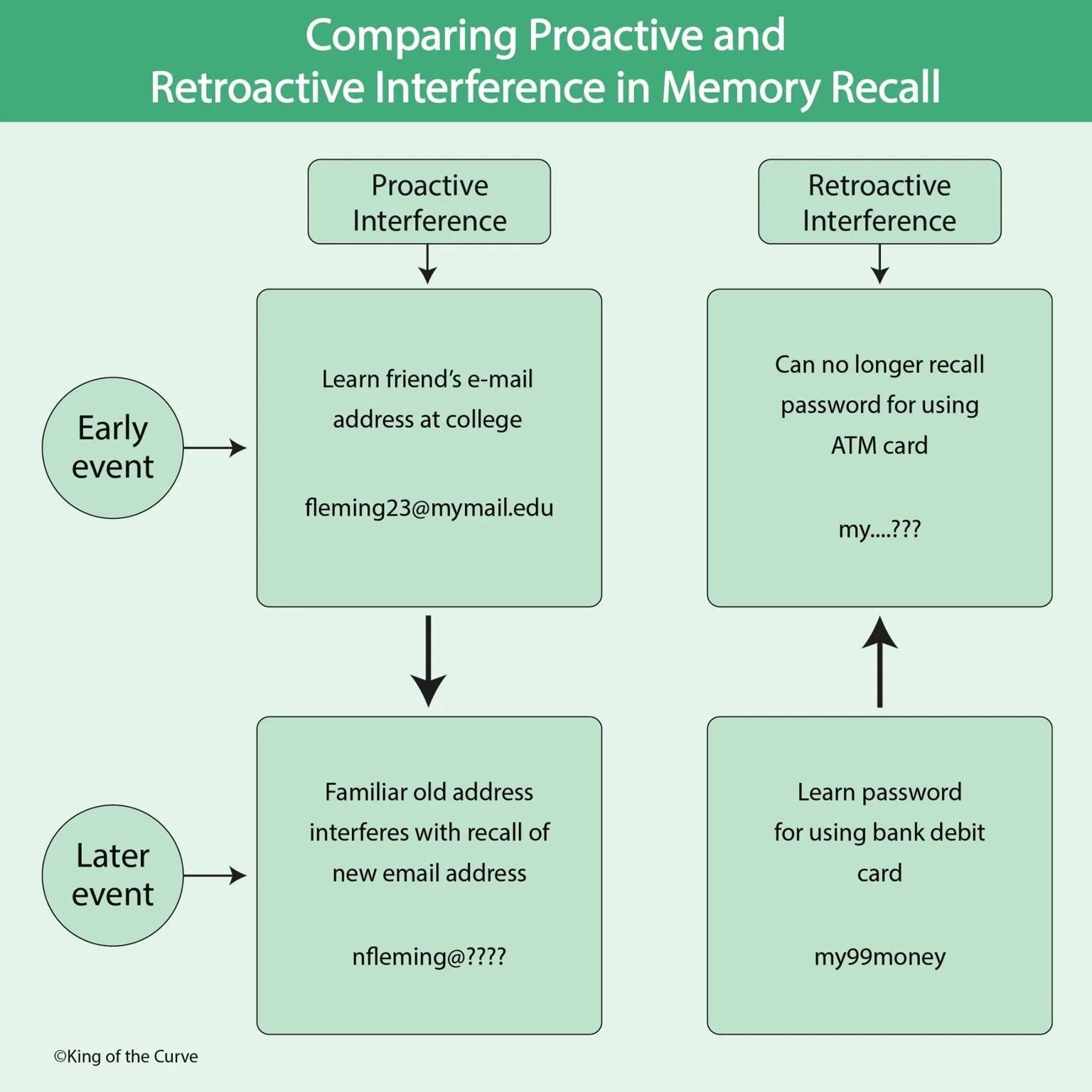
🧩 Example from the Diagram:
You learn a new email address in college: fleming23@mymail.edu
However, your old, familiar email address keeps interfering
Result: You struggle to recall the new one (e.g., nfleming@????)
🔑 Key Idea:
Old information makes it harder to remember new information
📌 Real-Life Examples:
Typing your old password instead of a newly created one
Writing your previous home address on a form
⏩ Retroactive Interference
Definition:
Retroactive interference occurs when new information interferes with the recall of older information.
🧩 Example from the Diagram:
You originally knew your ATM password
Then you learn a new password: my99money
Result: You can no longer recall the old one (my…???)
🔑 Key Idea:
New information makes it harder to remember old information
📌 Real-Life Examples:
Forgetting your old phone number after getting a new one
Struggling to recall previous login details after updating them
⚖️ Proactive vs Retroactive Interference (Quick Comparison)
| Feature | Proactive Interference | Retroactive Interference |
|---|---|---|
| Direction | Old → New | New → Old |
| Problem | Old memories interfere with new ones | New memories overwrite old ones |
| Example | Old email blocks new email recall | New password blocks old password recall |
| Common Situation | Habit-based memory | Updating information |
🧠 Why Does This Matter?
Understanding interference helps explain:
Why studying similar topics back-to-back can be confusing
Why repetition and spaced learning improve memory
Why changing habits (like passwords) can be frustrating
💡 Tips to Reduce Interference
Use spaced repetition instead of cramming
Change context when learning new information
Practice retrieval regularly
Avoid learning very similar material consecutively
📌 Final Thoughts
Both proactive and retroactive interference highlight an important truth about memory:
Memories interact with each other—they don’t exist in isolation.
By understanding how interference works, you can improve your learning strategies, retain information more effectively, and avoid common memory pitfalls.

Frequently Asked Questions (FAQs)
-
Aim for 4-6 focused hours, ensuring you incorporate breaks to avoid burnout.
-
Practice mindfulness techniques, take practice exams under realistic conditions, and maintain a balanced lifestyle.
-
Set short-term goals, seek support from mentors, and reward yourself for small achievements.
-
Regular exercise improves focus, reduces stress, and enhances overall mental clarity.
-
KOTC offers personalized learning tools, gamification features, and adaptive question banks to help students stay on track without burnout.