
🩸 Classification of Anemia by MCV: A Complete Guide
Anemia is a common clinical condition characterized by a reduced number of red blood cells or hemoglobin. One of the most effective ways to classify anemia is by using Mean Corpuscular Volume (MCV), which measures the average size of red blood cells.
📏 What Is MCV?
Mean Corpuscular Volume (MCV) indicates the average size of red blood cells (RBCs).
Low MCV → Small cells (microcytic)
Normal MCV → Normal-sized cells (normocytic)
High MCV → Large cells (macrocytic)
🔍 Types of Anemia Based on MCV
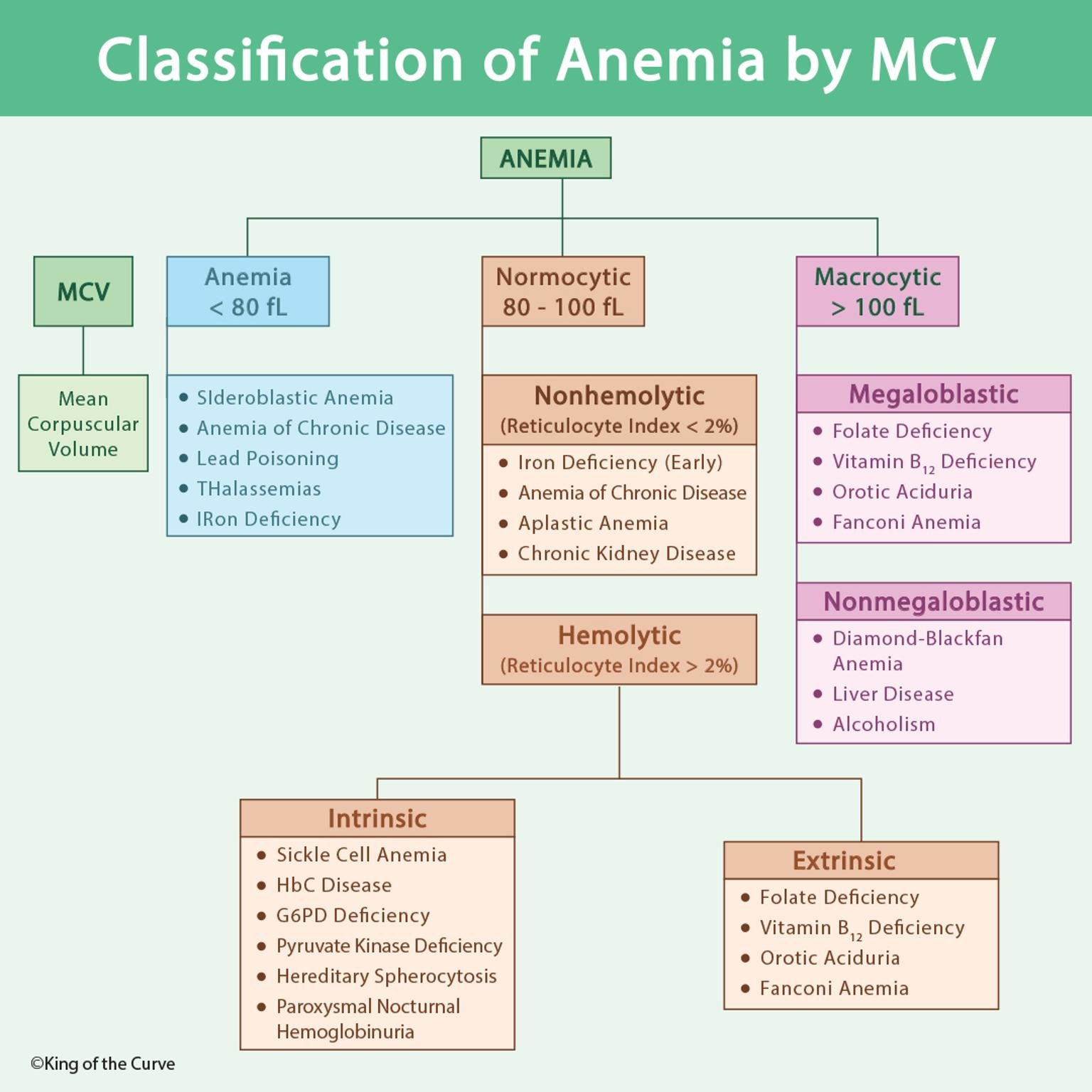
🔵 Microcytic Anemia (MCV < 80 fL)
Microcytic anemia is characterized by small red blood cells, usually due to impaired hemoglobin synthesis.
Common Causes:
Iron deficiency anemia
Thalassemias
Anemia of chronic disease
Sideroblastic anemia
Lead poisoning
👉 Most common cause: Iron deficiency
🟤 Normocytic Anemia (MCV 80–100 fL)
Normocytic anemia involves normal-sized RBCs but reduced in number. It is often divided based on the reticulocyte index.
📉 Nonhemolytic (Reticulocyte Index < 2%)
Early iron deficiency
Anemia of chronic disease
Aplastic anemia
Chronic kidney disease
📈 Hemolytic (Reticulocyte Index > 2%)
Indicates increased RBC destruction or loss.
Intrinsic Causes:
Sickle cell anemia
G6PD deficiency
Hereditary spherocytosis
Pyruvate kinase deficiency
Paroxysmal nocturnal hemoglobinuria
Extrinsic Causes:
Autoimmune hemolysis
Mechanical destruction (e.g., prosthetic valves)
Infections
🟣 Macrocytic Anemia (MCV > 100 fL)
Macrocytic anemia is characterized by large red blood cells and is divided into two main types:
🧬 Megaloblastic
Caused by impaired DNA synthesis.
Vitamin B₁₂ deficiency
Folate deficiency
Orotic aciduria
Fanconi anemia
🍷 Nonmegaloblastic
Not related to DNA synthesis issues.
Liver disease
Alcoholism
Diamond-Blackfan anemia
🧠 Why MCV Classification Matters
Classifying anemia by MCV helps:
Narrow differential diagnoses quickly
Guide lab testing (iron studies, B₁₂ levels, etc.)
Improve treatment accuracy
🏥 Clinical Application
Low MCV → Think iron deficiency or thalassemia
Normal MCV → Check reticulocyte count
High MCV → Evaluate B₁₂ and folate levels
This structured approach is especially useful for MCAT, USMLE, and clinical practice.
📊 Quick Summary Table
| Type | MCV Range | Key Causes |
|---|---|---|
| Microcytic | < 80 fL | Iron deficiency, thalassemia, lead poisoning |
| Normocytic | 80-100 fL | Chronic disease, hemolysis, kidney disease |
| Macrocytic | > 100 fL | Vitamin B12 deficiency, folate deficiency, liver disease |
✅ Final Thoughts
MCV-based classification is a powerful tool for understanding anemia. By breaking it down into microcytic, normocytic, and macrocytic types, clinicians can efficiently identify causes and initiate appropriate management.

Frequently Asked Questions (FAQs)
-
Aim for 4-6 focused hours, ensuring you incorporate breaks to avoid burnout.
-
Practice mindfulness techniques, take practice exams under realistic conditions, and maintain a balanced lifestyle.
-
Set short-term goals, seek support from mentors, and reward yourself for small achievements.
-
Regular exercise improves focus, reduces stress, and enhances overall mental clarity.
-
KOTC offers personalized learning tools, gamification features, and adaptive question banks to help students stay on track without burnout.