
🧬 Prader–Willi Syndrome: Causes, Symptoms & Management
Prader–Willi Syndrome (PWS) is a rare genetic condition that affects multiple systems in the body. It is known for its impact on growth, metabolism, behavior, and hormone production. Early diagnosis and comprehensive care can significantly improve long-term outcomes for individuals with PWS.
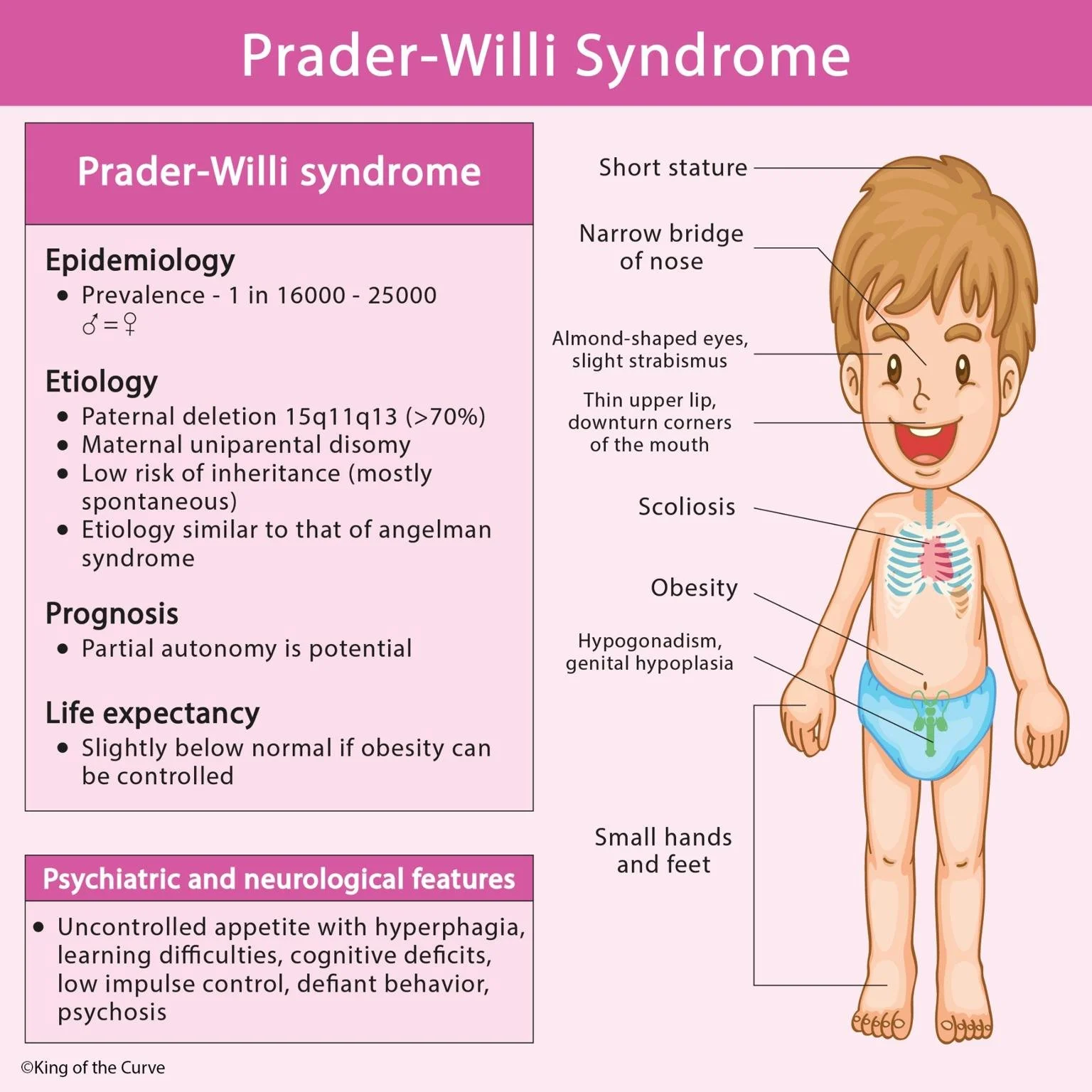
📊 Epidemiology
Prader–Willi Syndrome occurs in approximately 1 in 16,000–25,000 births worldwide.
It affects males and females equally, with no known racial or ethnic predisposition.
🔬 Etiology (Causes)
PWS is caused by loss of function of specific genes on the paternal chromosome 15q11–q13.
The main mechanisms include:
🔸 Paternal deletion of the region (most common)
🔸 Maternal uniparental disomy (UPD) — both chromosome copies come from the mother
🔸 Imprinting defects causing improper gene expression
These genetic disruptions lead to abnormal development of the hypothalamus, affecting hunger, hormone regulation, and behavior.
🧠 Key Characteristics & Symptoms
Individuals with PWS may experience a combination of physical, behavioral, and metabolic symptoms:
👶 Physical Features
Almond-shaped eyes
Narrow bridge of the nose
Short stature
Small hands and feet
Thin upper lip & downturned mouth corners
Scoliosis
Obesity (due to relentless appetite)
🧩 Behavioral & Cognitive Features
Hyperphagia (uncontrolled hunger)
Learning difficulties
Low muscle tone in infancy
Temper outbursts
Obsessive-compulsive behaviors
Low impulse control
Risk of psychosis in adolescence/adulthood
⚥ Hormonal Abnormalities
Hypogonadism
Delayed or incomplete puberty
Low growth hormone
Reduced metabolic rate
🧪 Diagnosis
Diagnosis is typically confirmed through genetic testing, including:
Methylation analysis
FISH (fluorescent in situ hybridization)
Microarray
Early testing is essential for prompt intervention.
❤️ Prognosis
With early treatment and structured lifelong management, many individuals with PWS achieve partial independence.
However, obesity-related complications (diabetes, heart disease, sleep apnea) remain the major risk factors affecting life expectancy.
📆 Life Expectancy
Life expectancy is slightly below average, but greatly improved when:
Obesity is controlled
Behavioral issues are managed
Hormonal therapies are maintained
Sleep disturbances are treated
📚 Summary Table: Prader–Willi Syndrome at a Glance
| Category | Key Information |
|---|---|
| Prevalence | 1 in 16,000–25,000 worldwide |
| Genetic Cause | Paternal 15q11–q13 deletion, maternal UPD, or imprinting defects |
| Major Physical Signs | Short stature, obesity, small hands/feet, almond-shaped eyes |
| Behavioral Symptoms | Hyperphagia, learning difficulties, emotional dysregulation |
| Hormonal Issues | Hypogonadism, low growth hormone, delayed puberty |
| Prognosis | Partial autonomy possible with early intervention |
| Life Expectancy | Slightly reduced; improved with obesity control |
🏥 Management & Treatment Strategies
🧴 Medical Care
Growth hormone therapy
Sex hormone replacement
Thyroid treatment if needed
🍎 Nutritional Support
Strict calorie monitoring
Scheduled meals
Limited access to food
🧘 Behavioral & Emotional Care
Cognitive behavioral therapy
Structured routines
Environmental controls to reduce triggers
📣 Final Thoughts & Call to Action
Prader–Willi Syndrome is complex, but with early diagnosis, structured care, and a supportive environment, individuals can live healthier and more independent lives.

Frequently Asked Questions (FAQs)
-
Aim for 4-6 focused hours, ensuring you incorporate breaks to avoid burnout.
-
Practice mindfulness techniques, take practice exams under realistic conditions, and maintain a balanced lifestyle.
-
Set short-term goals, seek support from mentors, and reward yourself for small achievements.
-
Regular exercise improves focus, reduces stress, and enhances overall mental clarity.
-
KOTC offers personalized learning tools, gamification features, and adaptive question banks to help students stay on track without burnout.