
🧬 Porphyria Disorders: Understanding Acute Intermittent Porphyria and Heme Synthesis
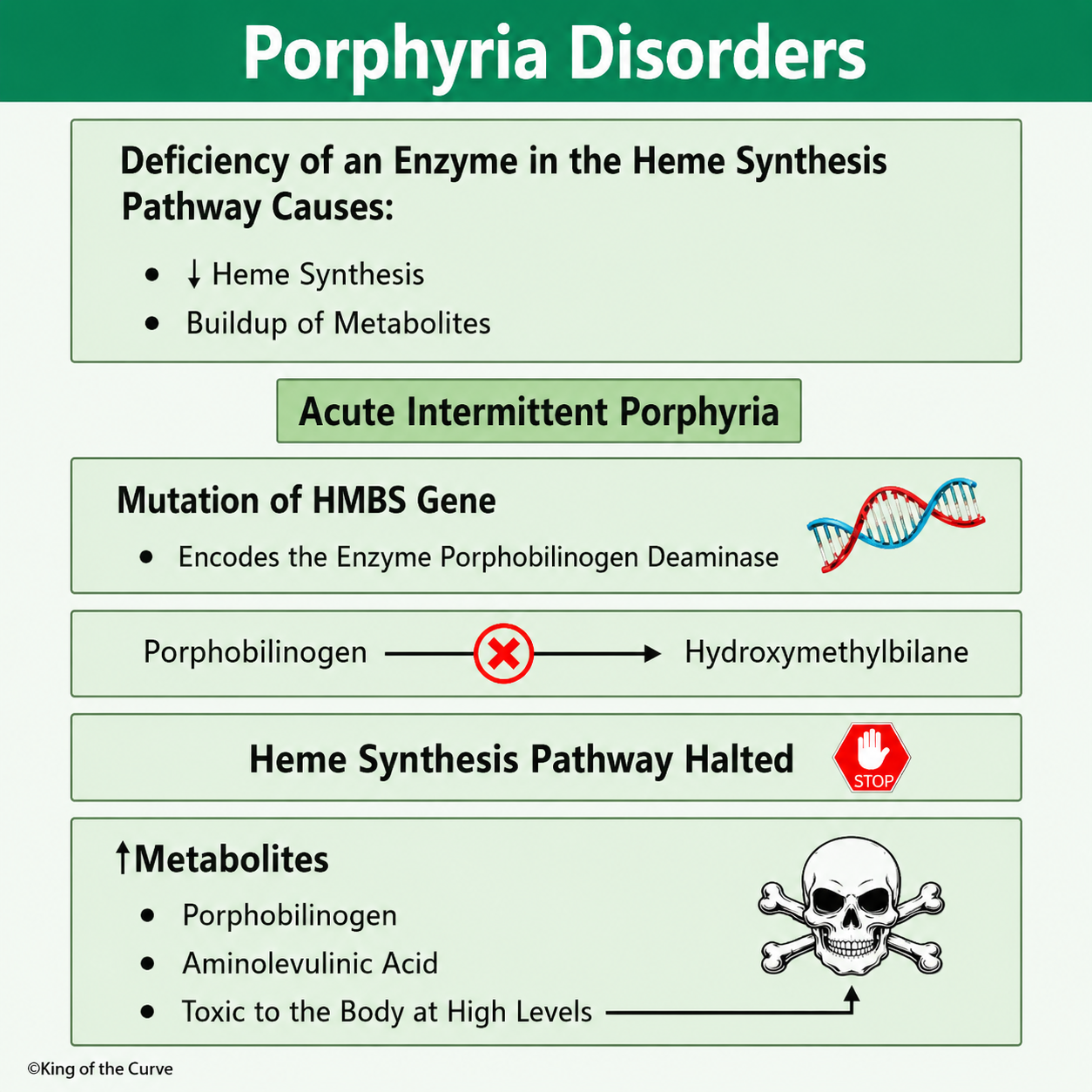
Porphyria disorders are a group of rare metabolic diseases caused by defects in the heme biosynthesis pathway. Each type of porphyria results from the deficiency of a specific enzyme involved in heme production. When one of these enzymes is missing or functions poorly, the pathway becomes blocked, leading to the accumulation of toxic metabolic intermediates. These compounds can damage nerves, skin, and other organs, producing a wide range of symptoms.
🩸 What Is Heme and Why Is It Important?
Heme is an iron-containing molecule that forms an essential part of hemoglobin, myoglobin, cytochromes, catalase, and other enzymes. It enables red blood cells to transport oxygen throughout the body and plays a vital role in cellular respiration and detoxification. Because heme is required in nearly every tissue, defects in its synthesis can have widespread clinical consequences.
⚠️ What Causes Porphyria?
Porphyria develops when an inherited or, less commonly, acquired mutation reduces the activity of one of the enzymes responsible for heme synthesis. As a result:
Heme production decreases.
Metabolic intermediates accumulate.
Toxic compounds build up in tissues and the bloodstream.
Symptoms vary depending on which metabolite accumulates.
Different enzyme deficiencies produce different forms of porphyria, each with its own characteristic clinical presentation.
🧬 Acute Intermittent Porphyria (AIP)
One of the most important porphyrias for the MCAT is Acute Intermittent Porphyria (AIP). It is caused by mutations in the HMBS (Hydroxymethylbilane Synthase) gene, also known as Porphobilinogen Deaminase.
Normally, this enzyme converts:
Porphobilinogen (PBG) → Hydroxymethylbilane
When the enzyme is deficient, this step cannot proceed efficiently, interrupting heme synthesis and causing porphobilinogen and aminolevulinic acid (ALA) to accumulate.
🔬 Metabolic Consequences
Because heme synthesis slows dramatically, the body responds by increasing production of early pathway intermediates. Unfortunately, without the defective enzyme, these molecules cannot be converted further and begin to accumulate.
The major metabolites that increase include:
Porphobilinogen (PBG)
δ-Aminolevulinic Acid (ALA)
These compounds are neurotoxic and are responsible for many of the neurological symptoms observed in acute attacks.
🚑 Clinical Features of Acute Intermittent Porphyria
Patients with AIP usually experience acute neurovisceral attacks rather than skin photosensitivity.
Common symptoms include:
Severe abdominal pain
Peripheral neuropathy
Muscle weakness
Anxiety or depression
Confusion or hallucinations
Tachycardia
Hypertension
Dark or reddish urine during attacks
Attacks are often triggered by certain medications, fasting, alcohol consumption, infections, hormonal changes, or stress.
💊 Diagnosis and Treatment
Diagnosis is confirmed by detecting elevated urinary porphobilinogen (PBG) and aminolevulinic acid (ALA) during an acute attack. Genetic testing may identify mutations in the HMBS gene.
Treatment focuses on reducing hepatic heme synthesis by administering:
Intravenous hemin
High-carbohydrate (glucose) therapy
Pain control and supportive care
Avoidance of trigger medications and fasting
Early treatment significantly reduces symptom severity and prevents complications.
📚 Key MCAT Takeaways
For the MCAT, remember that Acute Intermittent Porphyria is caused by HMBS (Porphobilinogen Deaminase) deficiency, resulting in decreased heme synthesis and accumulation of ALA and Porphobilinogen. Unlike many other porphyrias, AIP primarily causes neurological and abdominal symptoms without photosensitivity. Recognizing the enzyme defect, accumulated metabolites, and classic clinical presentation is a high-yield concept frequently tested in biochemistry and physiology.
👑 Ready to Put What You Learned Into Practice?
Take the next step with King of the Curve. Access MCAT practice questions, study tools, and resources designed to help you study smarter and stay on track.
🌐 Study on the Web:Click Here
📱 Open the KOTC App:Click Here
Study Smart. Score Higher.

Frequently Asked Questions (FAQs)
-
Aim for 4-6 focused hours, ensuring you incorporate breaks to avoid burnout.
-
Practice mindfulness techniques, take practice exams under realistic conditions, and maintain a balanced lifestyle.
-
Set short-term goals, seek support from mentors, and reward yourself for small achievements.
-
Regular exercise improves focus, reduces stress, and enhances overall mental clarity.
-
KOTC offers personalized learning tools, gamification features, and adaptive question banks to help students stay on track without burnout.