
Pentose Phosphate Pathway (PPP): Functions, Steps, Enzymes & Clinical Significance
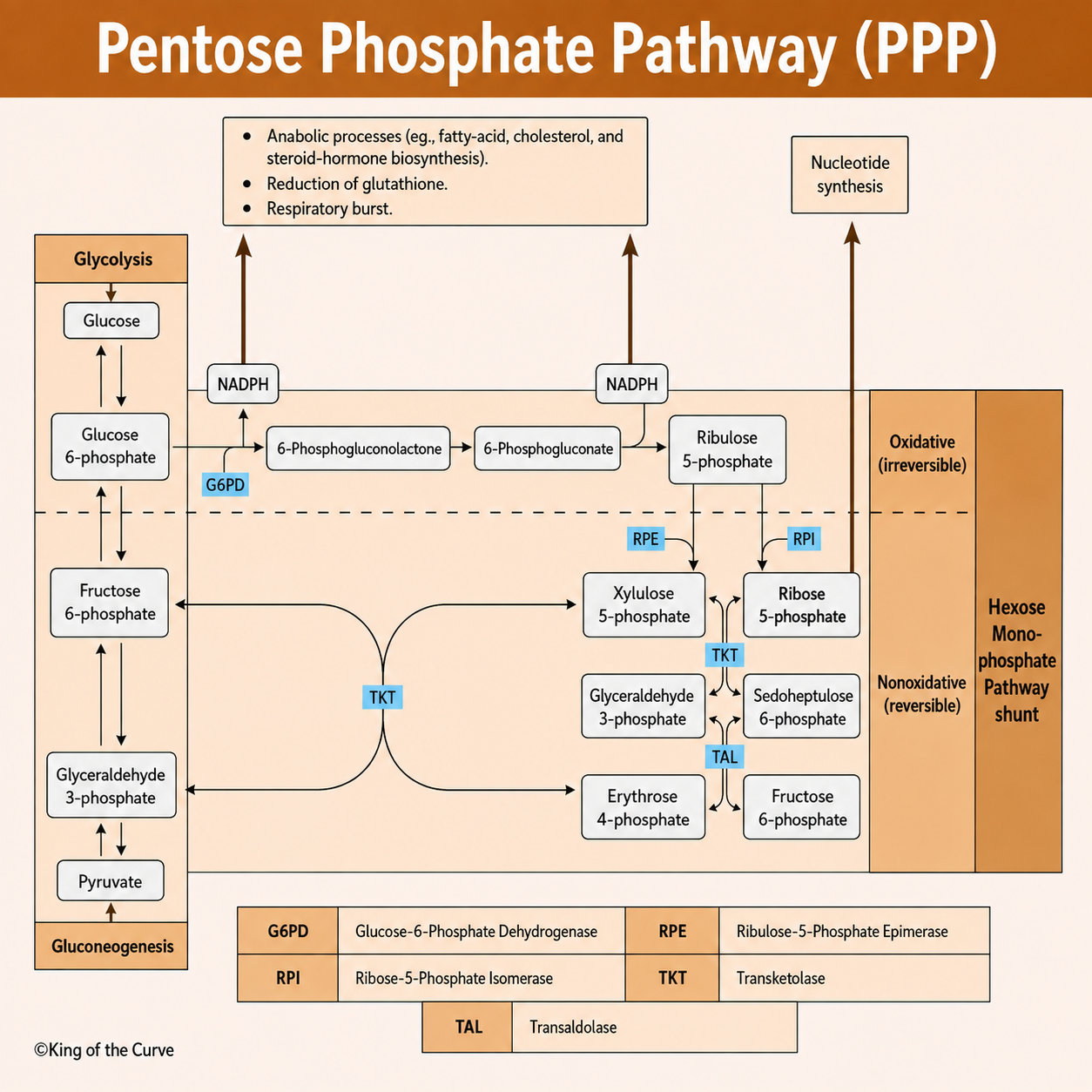
The Pentose Phosphate Pathway (PPP), also known as the Hexose Monophosphate (HMP) Shunt, is an alternative metabolic pathway for glucose that occurs in the cytosol. Unlike glycolysis, its primary purpose is not ATP production. Instead, it generates NADPH for reductive biosynthesis and antioxidant defense, and ribose-5-phosphate for nucleotide synthesis.
🧬 What Is the Pentose Phosphate Pathway?
The Pentose Phosphate Pathway begins with glucose-6-phosphate and branches away from glycolysis. It has two major phases:
Oxidative Phase (Irreversible) – Produces NADPH and ribulose-5-phosphate.
Nonoxidative Phase (Reversible) – Converts sugar phosphates into ribose-5-phosphate or glycolytic intermediates.
Unlike glycolysis, the PPP does not directly generate ATP.
🔬 Major Functions of the PPP
The Pentose Phosphate Pathway has two critical products:
1. NADPH Production
NADPH is required for numerous cellular processes, including:
Fatty acid synthesis
Cholesterol synthesis
Steroid hormone synthesis
Maintaining reduced glutathione
Respiratory burst in phagocytic cells
Protection against oxidative damage
2. Ribose-5-Phosphate Production
Ribose-5-phosphate is essential for:
DNA synthesis
RNA synthesis
ATP production
NAD and FAD synthesis
Rapidly dividing cells
⚙️ Oxidative Phase (Irreversible)
The oxidative phase converts glucose-6-phosphate into ribulose-5-phosphate while generating NADPH.
Key Steps
| Step | Enzyme | Product / Result |
|---|---|---|
| Glucose-6-phosphate → 6-Phosphogluconolactone |
Glucose-6-Phosphate Dehydrogenase (G6PD)
Rate-limiting enzyme |
NADPH produced |
| 6-Phosphogluconolactone → 6-Phosphogluconate | Lactonase | 6-Phosphogluconate formed |
| 6-Phosphogluconate → Ribulose-5-phosphate | 6-Phosphogluconate Dehydrogenase | NADPH + CO2 |
Key Point
G6PD is the rate-limiting enzyme of the pathway.
🔄 Nonoxidative Phase (Reversible)
This phase rearranges five-carbon sugars into glycolytic intermediates depending on the cell's metabolic needs.
Important enzymes include:
Ribulose-5-phosphate Epimerase (RPE)
Ribose-5-phosphate Isomerase (RPI)
Transketolase (TKT)
Transaldolase (TAL)
Products include:
Ribose-5-phosphate
Xylulose-5-phosphate
Sedoheptulose-7-phosphate
Erythrose-4-phosphate
Fructose-6-phosphate
Glyceraldehyde-3-phosphate
These intermediates can return to glycolysis or gluconeogenesis.
🧠 Important Enzymes to Remember
G6PD (Glucose-6-Phosphate Dehydrogenase)
Rate-limiting enzyme
Produces NADPH
Deficiency causes hemolytic anemia
Transketolase
Requires Vitamin B₁ (Thiamine).
Thiamine deficiency reduces transketolase activity and is associated with:
Wernicke encephalopathy
Korsakoff syndrome
Chronic alcoholism
💥 Clinical Significance
G6PD Deficiency
One of the highest-yield disorders related to the PPP.
Mechanism
Reduced NADPH production leads to:
Inability to regenerate reduced glutathione
Increased oxidative stress
Damage to red blood cells
Hemolysis
Common Triggers
Sulfa drugs
Primaquine
Dapsone
Fava beans
Severe infections
Laboratory Findings
Heinz bodies
Bite cells
Elevated reticulocyte count
Increased indirect bilirubin
🛡️ Why NADPH Is Important
NADPH supports several essential cellular functions:
Antioxidant Defense
Maintains glutathione in its reduced form, protecting cells from reactive oxygen species.
Fatty Acid Synthesis
Provides reducing power during lipid synthesis.
Cholesterol Synthesis
Necessary for producing cholesterol and steroid hormones.
Respiratory Burst
Neutrophils use NADPH oxidase to generate reactive oxygen species that destroy bacteria.
🔁 Relationship with Glycolysis
The Pentose Phosphate Pathway shares glucose-6-phosphate with glycolysis.
Depending on cellular needs:
More NADPH needed → glucose enters PPP.
More ATP needed → glucose enters glycolysis.
More nucleotides needed → ribose-5-phosphate production increases.
This flexibility allows cells to adapt to changing metabolic demands.
📚 High-Yield MCAT Facts
PPP occurs entirely in the cytosol.
Produces NADPH, not ATP.
Generates ribose-5-phosphate for nucleotide synthesis.
G6PD is the rate-limiting enzyme.
Transketolase requires Vitamin B₁ (Thiamine).
NADPH protects red blood cells from oxidative damage.
G6PD deficiency causes hemolytic anemia after oxidative stress.
Oxidative phase is irreversible.
Nonoxidative phase is reversible.
The PPP is also called the Hexose Monophosphate (HMP) Shunt.
🎯 Final Takeaway
The Pentose Phosphate Pathway is a vital metabolic pathway that supplies cells with NADPH for antioxidant protection and biosynthesis, while also producing ribose-5-phosphate for nucleotide formation. Although it does not generate ATP, it is essential for red blood cell survival, fatty acid synthesis, cholesterol production, immune cell function, and DNA replication. Mastering the PPP and its key enzymes especially G6PD and transketolase is crucial for success on the MCAT and for understanding several clinically important disorders.

Frequently Asked Questions (FAQs)
-
Aim for 4-6 focused hours, ensuring you incorporate breaks to avoid burnout.
-
Practice mindfulness techniques, take practice exams under realistic conditions, and maintain a balanced lifestyle.
-
Set short-term goals, seek support from mentors, and reward yourself for small achievements.
-
Regular exercise improves focus, reduces stress, and enhances overall mental clarity.
-
KOTC offers personalized learning tools, gamification features, and adaptive question banks to help students stay on track without burnout.