
💊 Penicillin Adverse Effects: C. difficile Infection
Penicillin antibiotics are widely used to treat bacterial infections, but like all antibiotics, they can cause adverse effects. One of the most important complications is Clostridioides difficile (C. difficile) infection, which results from disruption of the normal intestinal microbiota. Although this condition is commonly associated with broad-spectrum antibiotics, it can occur after treatment with many different antimicrobial agents, including penicillins.
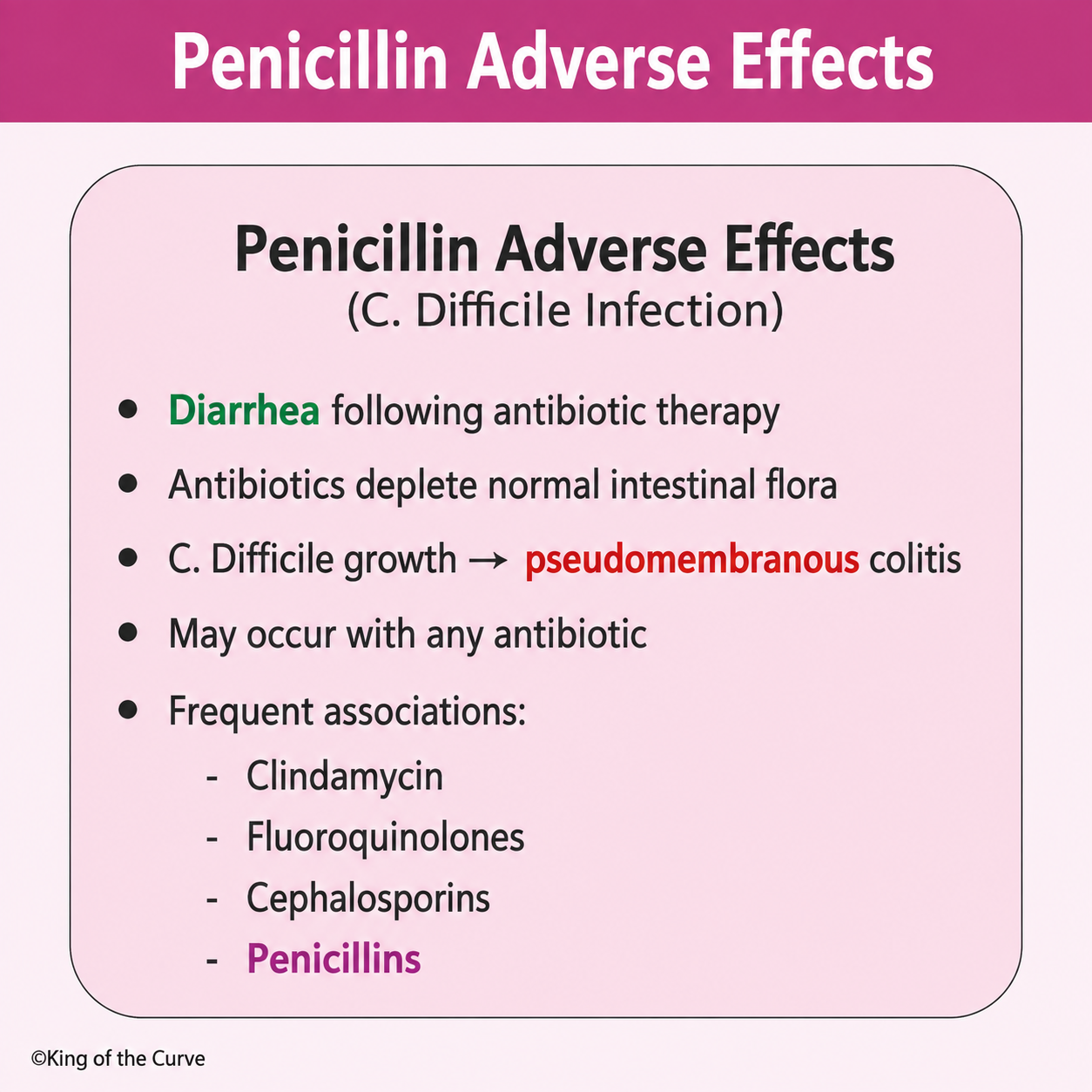
🦠 How Antibiotics Lead to C. difficile Infection
The human intestine contains a diverse population of beneficial bacteria that help maintain gut health and prevent harmful organisms from overgrowing. When antibiotics eliminate a large portion of this normal flora, C. difficile spores can multiply rapidly. The bacteria release toxins that damage the intestinal lining, leading to inflammation and severe diarrhea.
🚨 Common Symptoms
Patients typically develop watery diarrhea during or shortly after antibiotic therapy. Other symptoms may include abdominal pain, fever, nausea, dehydration, and elevated white blood cell counts. In severe cases, toxic megacolon, bowel perforation, or sepsis may occur, making prompt recognition essential.
🔬 Pseudomembranous Colitis
The hallmark complication of C. difficile infection is pseudomembranous colitis, an inflammatory condition characterized by yellow-white plaques (pseudomembranes) lining the colon. Diagnosis is usually confirmed by detecting C. difficile toxins in stool samples or by colonoscopy in selected cases.
💉 Antibiotics Commonly Associated with C. difficile
Although almost any antibiotic can increase the risk, certain medications are more frequently linked with C. difficile infection because they significantly disrupt normal gut flora.
| Antibiotic Class | Association with C. difficile | Examples |
|---|---|---|
| Clindamycin | Very High | Clindamycin |
| Fluoroquinolones | High | Ciprofloxacin, Levofloxacin |
| Cephalosporins | High | Ceftriaxone, Cefotaxime |
| Penicillins | Moderate to High | Amoxicillin, Ampicillin |
🩺 Diagnosis and Treatment
Diagnosis relies on clinical symptoms combined with laboratory detection of C. difficile toxins or PCR testing. The first step in treatment is discontinuing the offending antibiotic whenever possible. Standard therapies include oral vancomycin or fidaxomicin, while severe or recurrent infections may require fecal microbiota transplantation (FMT).
🛡️ Prevention Strategies
Preventing C. difficile infection depends on responsible antibiotic prescribing and strict infection-control practices. Healthcare providers should use antibiotics only when necessary, encourage handwashing with soap and water, disinfect hospital environments, and isolate infected patients to reduce transmission.
📚 Clinical Importance for the MCAT
For the MCAT and medical school exams, remember that antibiotic-associated diarrhea caused by C. difficile results from disruption of normal intestinal flora rather than direct toxicity of penicillin itself. Clindamycin is classically associated with pseudomembranous colitis, but fluoroquinolones, cephalosporins, and penicillins can also increase the risk.
✅ Key Takeaway
Penicillin antibiotics are highly effective treatments but can predispose patients to C. difficile infection by disrupting normal gut microbiota. This allows bacterial overgrowth, toxin production, and pseudomembranous colitis. Early recognition, prompt treatment, and careful antibiotic stewardship are essential to prevent serious complications and improve patient outcomes.

Frequently Asked Questions (FAQs)
-
Aim for 4-6 focused hours, ensuring you incorporate breaks to avoid burnout.
-
Practice mindfulness techniques, take practice exams under realistic conditions, and maintain a balanced lifestyle.
-
Set short-term goals, seek support from mentors, and reward yourself for small achievements.
-
Regular exercise improves focus, reduces stress, and enhances overall mental clarity.
-
KOTC offers personalized learning tools, gamification features, and adaptive question banks to help students stay on track without burnout.