
🧪 Pathways of Inflammatory Mediators: COX, LOX, Leukotrienes & Prostaglandins
Inflammation is the body's natural defense mechanism against injury and infection, but it is tightly regulated by a complex network of chemical mediators. The arachidonic acid pathway is one of the most important inflammatory pathways and produces prostaglandins, thromboxanes, and leukotrienes that control pain, fever, vasodilation, platelet function, and bronchoconstriction. Because many common medications including NSAIDs, aspirin, corticosteroids, and leukotriene inhibitors target this pathway, it is a favorite topic on the MCAT, USMLE, and other healthcare exams.
🧬 The Arachidonic Acid Pathway Begins
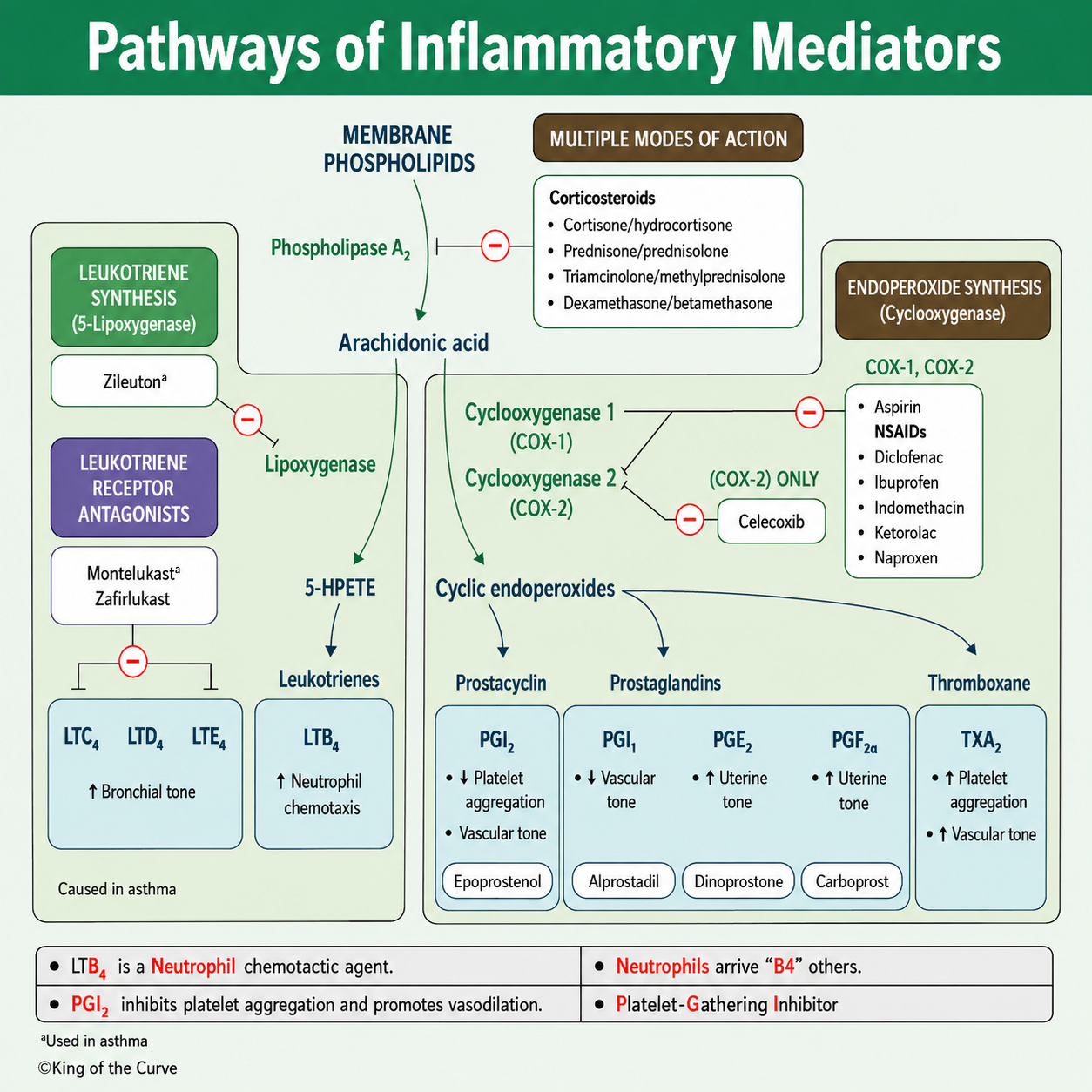
Inflammatory mediator synthesis starts with membrane phospholipids, which are converted into arachidonic acid by the enzyme phospholipase A₂. This first step is blocked by corticosteroids, explaining why these medications have broad anti-inflammatory effects. Once arachidonic acid is released, it can enter one of two major metabolic pathways: the cyclooxygenase (COX) pathway or the lipoxygenase (LOX) pathway.
🔥 Cyclooxygenase (COX) Pathway
The COX-1 and COX-2 enzymes convert arachidonic acid into cyclic endoperoxides that eventually form prostaglandins, prostacyclin (PGI₂), and thromboxane A₂ (TXA₂). NSAIDs such as ibuprofen, naproxen, indomethacin, ketorolac, and diclofenac inhibit both COX enzymes, while celecoxib selectively inhibits COX-2. Aspirin irreversibly inhibits COX enzymes, reducing inflammation while also decreasing platelet aggregation.
🌬️ Lipoxygenase (LOX) Pathway
The 5-lipoxygenase enzyme converts arachidonic acid into 5-HPETE, eventually producing leukotrienes. LTB₄ is a powerful neutrophil chemotactic factor, attracting immune cells to sites of inflammation. In contrast, LTC₄, LTD₄, and LTE₄ increase bronchial smooth muscle contraction and contribute to asthma symptoms. Medications such as zileuton inhibit 5-lipoxygenase, while montelukast and zafirlukast block leukotriene receptors to improve airway function.
📋 Major Inflammatory Mediators at a Glance
| Mediator | Primary Function | Drug Target / Clinical Significance |
|---|---|---|
| PGI2 (Prostacyclin) | Promotes vasodilation and inhibits platelet aggregation. | Helps protect against thrombosis. |
| TXA2 (Thromboxane A2) | Promotes platelet aggregation and vasoconstriction. | Inhibited by aspirin. |
| PGE2 / Other Prostaglandins | Contribute to pain, fever, inflammation, and uterine contraction. | Reduced by NSAIDs. |
| LTB4 | Promotes neutrophil chemotaxis. | An important mediator of acute inflammation. |
| LTC4, LTD4, LTE4 | Cause bronchoconstriction and increase mucus production. | Blocked by montelukast and zafirlukast. |
💊 Drugs That Target the Pathway
Several high-yield medications work by interrupting specific steps in inflammatory mediator production. Corticosteroids prevent arachidonic acid formation by inhibiting phospholipase A₂. NSAIDs block COX enzymes to reduce prostaglandin synthesis, while celecoxib selectively inhibits COX-2. Zileuton inhibits leukotriene synthesis by blocking 5-lipoxygenase, and montelukast and zafirlukast prevent leukotrienes from binding to their receptors, making them valuable treatments for asthma.
📚 Why This Pathway Is High-Yield for the MCAT
Questions about inflammatory mediators often integrate biochemistry, physiology, pharmacology, and immunology. Students should know which enzymes are inhibited by common medications, the differences between prostaglandins and leukotrienes, and the physiological effects of PGI₂, TXA₂, and LTB₄. A popular memory trick is that LTB₄ "Brings" neutrophils, while PGI₂ Prevents Platelet aggregation. Recognizing these relationships makes complex pharmacology questions much easier.
🎯 Key Takeaway
The inflammatory mediator pathway begins with arachidonic acid and branches into the COX and LOX pathways, producing prostaglandins, thromboxanes, and leukotrienes that regulate inflammation, platelet function, and bronchial tone. Understanding how these mediators are produced—and how drugs like corticosteroids, NSAIDs, aspirin, zileuton, and montelukast alter the pathway—is essential for mastering MCAT biochemistry, pharmacology, and physiology.

Frequently Asked Questions (FAQs)
-
Aim for 4-6 focused hours, ensuring you incorporate breaks to avoid burnout.
-
Practice mindfulness techniques, take practice exams under realistic conditions, and maintain a balanced lifestyle.
-
Set short-term goals, seek support from mentors, and reward yourself for small achievements.
-
Regular exercise improves focus, reduces stress, and enhances overall mental clarity.
-
KOTC offers personalized learning tools, gamification features, and adaptive question banks to help students stay on track without burnout.