
🩺 Pectinate Line: Anatomy and Vascular Supply of the Rectum
The pectinate line, also known as the dentate line, is a crucial anatomical landmark located in the anal canal. It divides the upper two-thirds and lower one-third of the canal, marking a significant transition in embryological origin, nerve supply, blood supply, and lymphatic drainage. Understanding this line is essential in both anatomy and clinical medicine, as it determines the type of sensation, vascular pattern, and disease presentation in the rectal region.
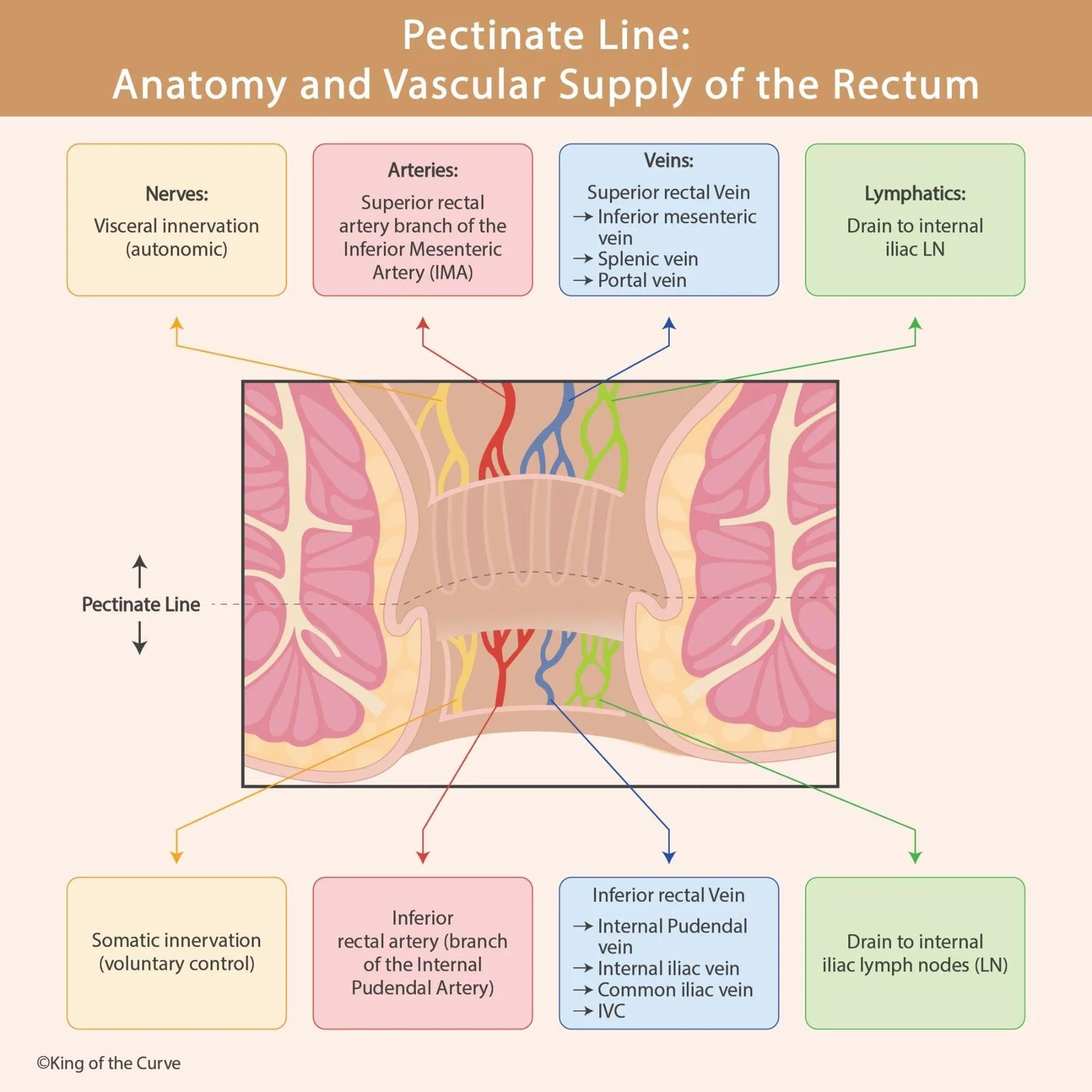
🧠 Nerve Supply Above and Below the Pectinate Line
Above the pectinate line, innervation is visceral (autonomic), meaning it is involuntary. This area is sensitive only to stretch, not to pain, touch, or temperature.
Below the pectinate line, innervation is somatic, derived from the inferior rectal nerves (branches of the pudendal nerve), which allows for voluntary control and sensitivity to pain, touch, and temperature.
This distinction explains why internal hemorrhoids are often painless, while external hemorrhoids can be extremely painful.
❤️ Arterial Blood Supply
The arterial supply of the rectum changes at the pectinate line:
Above the line: Blood is supplied by the superior rectal artery, a branch of the inferior mesenteric artery (IMA).
Below the line: Blood comes from the inferior rectal artery, a branch of the internal pudendal artery.
This dual supply ensures continuous blood flow to the anal canal but also contributes to potential complications such as rectal varices when venous return is compromised.
💉 Venous Drainage
The venous system mirrors the arterial supply and plays an important role in the development of hemorrhoids.
Above the line: Veins drain via the superior rectal vein into the inferior mesenteric vein, then the splenic vein, and finally the portal vein.
Below the line: Veins drain into the inferior rectal vein, leading to the internal pudendal, internal iliac, common iliac, and eventually the IVC.
Because of this connection between systemic and portal circulation, the rectal venous plexus is a site of portosystemic anastomosis, making it clinically relevant in portal hypertension.
💚 Lymphatic Drainage
Lymphatic drainage also differs across the pectinate line:
Above the line: Lymph drains to the internal iliac lymph nodes.
Below the line: Lymph primarily drains to the superficial inguinal lymph nodes.
This pattern is essential for understanding the spread of rectal cancers, as metastasis pathways depend on these drainage systems.
⚕️ Clinical Significance
Understanding the anatomy of the pectinate line helps explain the presentation and treatment of various anorectal conditions:
Internal hemorrhoids (above the line) are typically painless and may present with bleeding.
External hemorrhoids (below the line) are painful due to somatic innervation.
Anal fissures below the line cause sharp pain during defecation.
This landmark also guides surgical procedures, ensuring proper management of rectal and anal diseases.
🩸 Summary Table: Anatomy and Supply of the Rectum
| Category | Above Pectinate Line | Below Pectinate Line |
|---|---|---|
| Epithelium | Columnar (endodermal) | Stratified squamous (ectodermal) |
| Nerve Supply | Visceral (autonomic) | Somatic (voluntary) |
| Arterial Supply | Superior rectal artery (IMA) | Inferior rectal artery (internal pudendal) |
| Venous Drainage | Superior rectal → portal vein | Inferior rectal → IVC |
| Lymphatic Drainage | Internal iliac nodes | Superficial inguinal nodes |
| Sensitivity | Stretch only | Pain, touch, temperature |
🧩 Conclusion
The pectinate line serves as a key anatomical boundary distinguishing different vascular, neural, and lymphatic territories of the rectum. It holds major clinical importance in understanding rectal diseases, their symptoms, and their surgical implications. A clear grasp of its anatomy is vital for healthcare professionals dealing with gastrointestinal and colorectal conditions.

Frequently Asked Questions (FAQs)
-
Aim for 4-6 focused hours, ensuring you incorporate breaks to avoid burnout.
-
Practice mindfulness techniques, take practice exams under realistic conditions, and maintain a balanced lifestyle.
-
Set short-term goals, seek support from mentors, and reward yourself for small achievements.
-
Regular exercise improves focus, reduces stress, and enhances overall mental clarity.
-
KOTC offers personalized learning tools, gamification features, and adaptive question banks to help students stay on track without burnout.