
🧠 Pathway of Saliva Production: Parasympathetic vs Sympathetic Control
Saliva production is a finely regulated physiological process controlled primarily by the autonomic nervous system. The balance between parasympathetic and sympathetic stimulation determines the volume and composition of saliva produced.
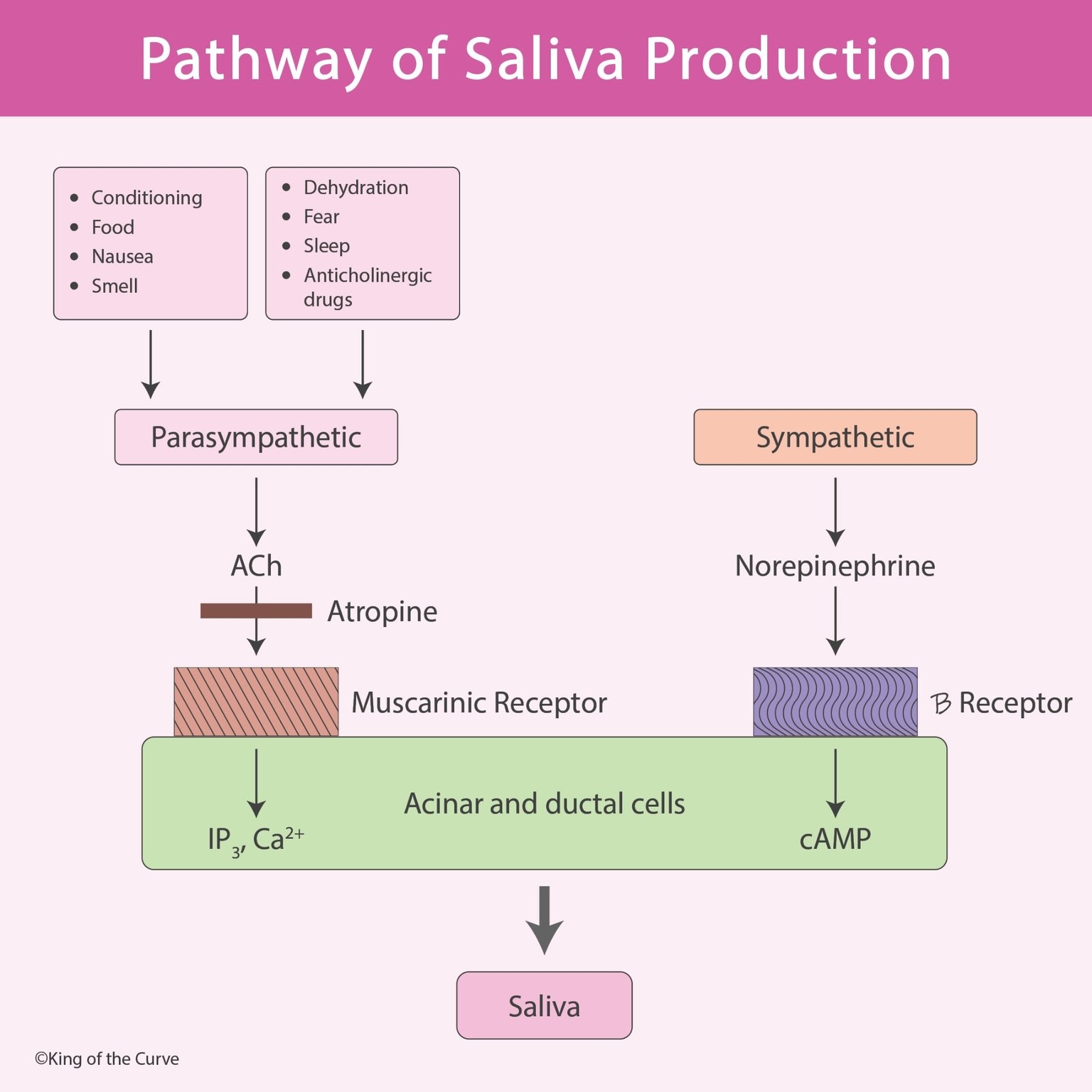
🌿 Overview of Salivary Gland Control
Salivary glands (parotid, submandibular, and sublingual) are regulated by:
Parasympathetic nervous system → Produces large amounts of watery saliva
Sympathetic nervous system → Produces smaller amounts of thick, protein-rich saliva
Both systems act on acinar and ductal cells, but through different receptors and intracellular signaling pathways.
🟢 Parasympathetic Pathway (Major Stimulator of Saliva)
The parasympathetic system is the primary driver of saliva production.
🔹 Stimuli That Activate It
Conditioning (anticipation of food)
Food intake
Nausea
Smell
Dehydration (reflex adjustments)
Emotional responses
🔹 Neurotransmitter Released
Acetylcholine (ACh)
🔹 Receptor Target
Muscarinic receptors (M3 type) on salivary gland cells
🔹 Intracellular Mechanism
ACh binds muscarinic receptor
Activates IP₃ pathway
Increases intracellular Ca²⁺
Stimulates acinar and ductal cells
Produces copious watery saliva
🔹 Drug Interaction
Atropine blocks muscarinic receptors → reduces saliva production (anticholinergic effect).
🔵 Sympathetic Pathway (Modulatory Role)
The sympathetic system modifies saliva composition rather than volume.
🔹 Stimuli That Activate It
Stress
Fear
Exercise
Fight-or-flight response
🔹 Neurotransmitter Released
Norepinephrine
🔹 Receptor Target
β-adrenergic receptors
🔹 Intracellular Mechanism
Norepinephrine binds β receptor
Activates cAMP pathway
Stimulates protein secretion
Produces smaller volume, thicker saliva
This is why your mouth may feel dry during stress—the saliva becomes more viscous and less abundant.
🧬 Role of Acinar and Ductal Cells
Both pathways converge at:
🧫 Acinar Cells
Produce primary saliva (isotonic)
Secrete enzymes (e.g., amylase)
🧪 Ductal Cells
Modify saliva
Reabsorb sodium and chloride
Secrete potassium and bicarbonate
Final saliva becomes hypotonic before entering the oral cavity.
⚖️ Parasympathetic vs Sympathetic Effects
| Feature | Parasympathetic | Sympathetic |
|---|---|---|
| Neurotransmitter | Acetylcholine | Norepinephrine |
| Receptor | Muscarinic (M3) | β-adrenergic |
| Second Messenger | IP3 / Ca2+ | cAMP |
| Saliva Volume | High | Low |
| Saliva Type | Watery | Thick, protein-rich |
🩺 Clinical Correlations
🚫 Anticholinergic Drugs
Atropine
Antihistamines
Tricyclic antidepressants
→ Cause dry mouth
💧 Dehydration
Reduces parasympathetic activity → decreases saliva production
😰 Stress
Increases sympathetic activity → thick saliva sensation
🧠 Autonomic Dysfunction
Conditions like diabetes or Parkinson’s disease may impair saliva production.
📌 Key Takeaway
Saliva production is primarily controlled by the parasympathetic system via muscarinic receptors and Ca²⁺ signaling, while the sympathetic system modifies saliva composition via β receptors and cAMP.

Frequently Asked Questions (FAQs)
-
Aim for 4-6 focused hours, ensuring you incorporate breaks to avoid burnout.
-
Practice mindfulness techniques, take practice exams under realistic conditions, and maintain a balanced lifestyle.
-
Set short-term goals, seek support from mentors, and reward yourself for small achievements.
-
Regular exercise improves focus, reduces stress, and enhances overall mental clarity.
-
KOTC offers personalized learning tools, gamification features, and adaptive question banks to help students stay on track without burnout.