
🩺 Pancreatic Enzyme Activation: The Key to Protein Digestion
The pancreas plays a crucial role in digestion by secreting powerful enzymes responsible for breaking down carbohydrates, fats, and proteins. However, to protect itself from autodigestion, the pancreas releases these enzymes in an inactive precursor form (zymogens). The process of converting these inactive forms into active enzymes occurs within the small intestine and is a highly coordinated mechanism vital for proper nutrient absorption.
🔬 The Role of Trypsinogen and Enteropeptidase
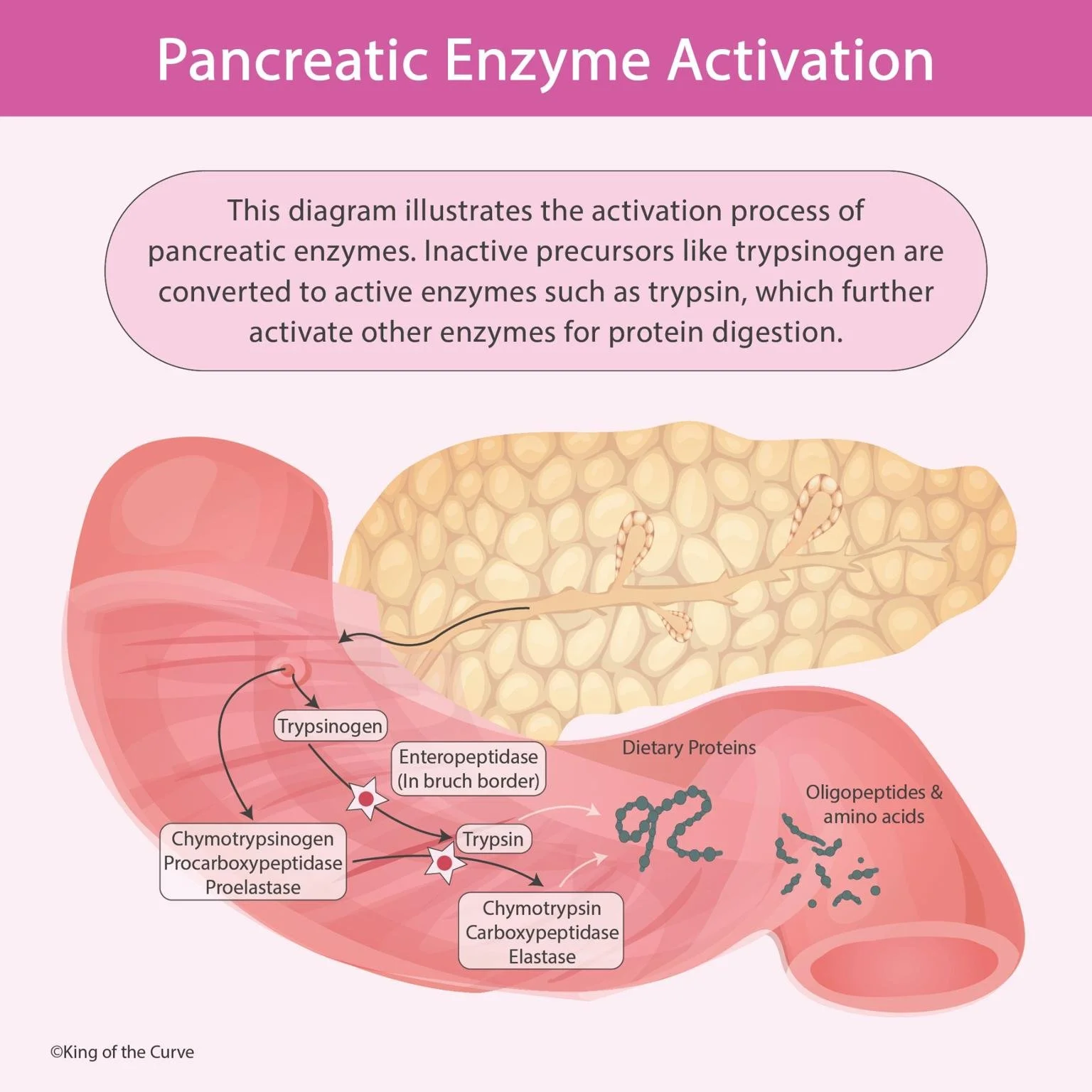
The activation cascade begins when trypsinogen, an inactive enzyme secreted by the pancreas, reaches the small intestine. Here, it encounters enteropeptidase, an enzyme located in the brush border of intestinal epithelial cells. Enteropeptidase cleaves trypsinogen into its active form, trypsin. Once formed, trypsin not only digests proteins directly but also activates other pancreatic zymogens.
⚙️ Enzyme Activation Cascade
Activated trypsin triggers a domino effect within the intestinal lumen by converting other inactive precursors, such as:
Chymotrypsinogen → Chymotrypsin
Procarboxypeptidase → Carboxypeptidase
Proelastase → Elastase
This enzymatic activation chain ensures that digestion occurs precisely where it is needed — within the small intestine — preventing premature enzyme activity that could damage pancreatic tissue.
🍽️ Protein Breakdown and Absorption
Once activated, these enzymes act synergistically to degrade complex dietary proteins into smaller oligopeptides and amino acids, which can be easily absorbed through the intestinal lining. The final products are transported into the bloodstream, supplying the body with essential building blocks for growth, repair, and metabolism.
📊 Table: Key Pancreatic Enzymes and Their Functions
| Zymogen (Inactive Form) | Activated Enzyme | Primary Function |
|---|---|---|
| Trypsinogen | Trypsin | Activates other enzymes; breaks peptide bonds. |
| Chymotrypsinogen | Chymotrypsin | Cleaves peptide bonds next to aromatic amino acids. |
| Procarboxypeptidase | Carboxypeptidase | Removes terminal amino acids from peptide C-termini. |
| Proelastase | Elastase | Degrades elastin and small peptides. |
🧠 Clinical Significance
Disruptions in this activation process can lead to serious disorders. For instance, pancreatitis occurs when digestive enzymes activate prematurely within the pancreas, causing inflammation and tissue damage. Understanding pancreatic enzyme activation not only provides insight into normal digestive physiology but also aids in diagnosing and managing gastrointestinal diseases effectively.

Frequently Asked Questions (FAQs)
-
Aim for 4-6 focused hours, ensuring you incorporate breaks to avoid burnout.
-
Practice mindfulness techniques, take practice exams under realistic conditions, and maintain a balanced lifestyle.
-
Set short-term goals, seek support from mentors, and reward yourself for small achievements.
-
Regular exercise improves focus, reduces stress, and enhances overall mental clarity.
-
KOTC offers personalized learning tools, gamification features, and adaptive question banks to help students stay on track without burnout.