
🧪 Pancreatic Enzyme Tests and Clinical Significance
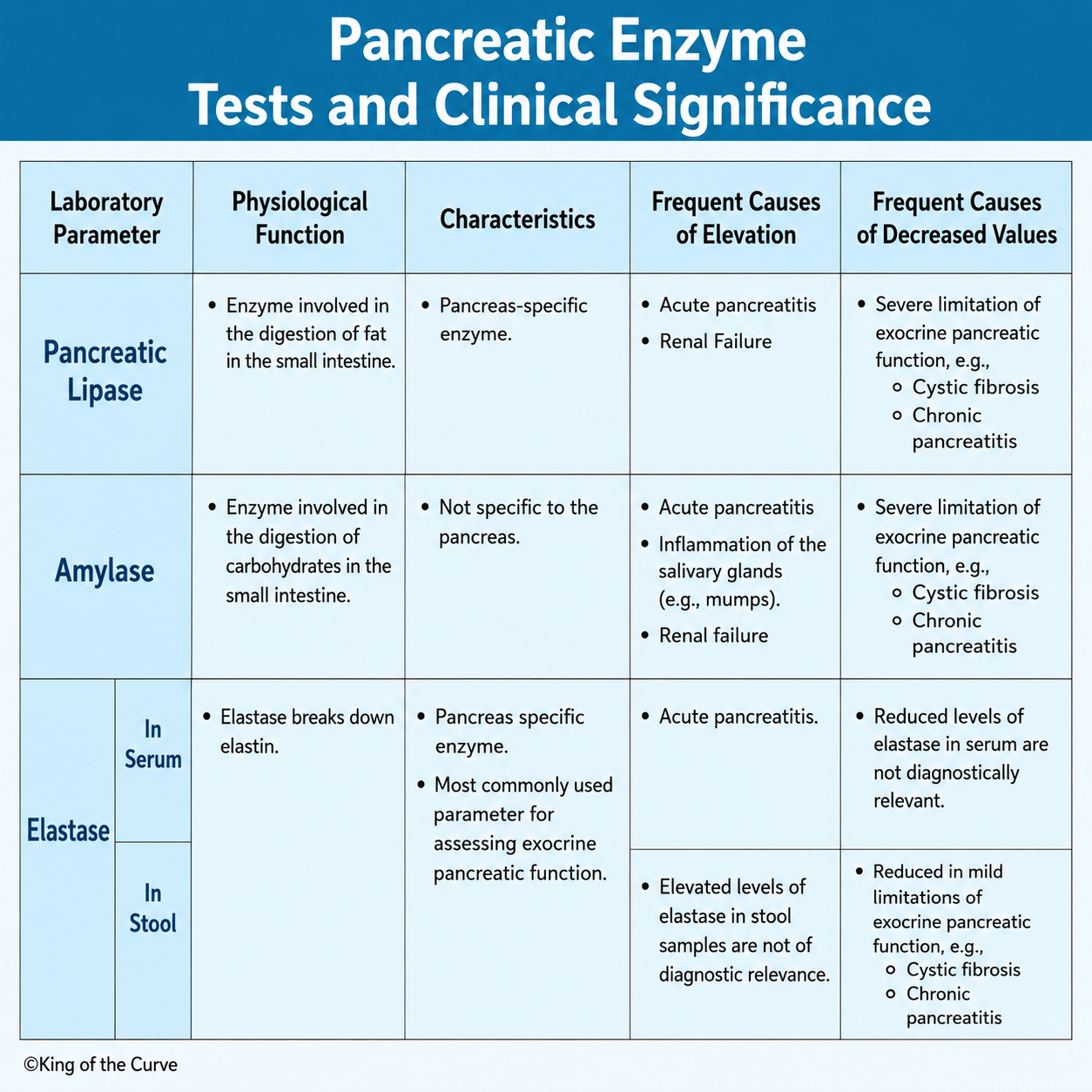
Pancreatic enzyme tests are essential tools for evaluating both acute pancreatic injury and chronic exocrine pancreatic dysfunction. Among the most commonly tested enzymes are lipase, amylase, and elastase, each offering unique diagnostic value. For MCAT students, understanding when these enzymes rise or fall and what those changes indicate is a high-yield concept that frequently appears in passage-based questions. The King of the Curve infographic provides a clear comparison of these laboratory markers, making them easier to remember and apply in clinical scenarios.
🔬 Understanding the Three Major Pancreatic Enzymes
The pancreas produces several digestive enzymes that help break down nutrients in the small intestine. Lipase digests dietary fats and is considered the most pancreas-specific enzyme, while amylase breaks down carbohydrates but is also produced by the salivary glands, making it less specific for pancreatic disease. Elastase degrades elastin and serves as an important marker of exocrine pancreatic function, particularly when measured in stool samples. Knowing each enzyme's physiological role helps students interpret laboratory findings more accurately.
📈 When Pancreatic Enzyme Levels Increase
Elevated pancreatic enzymes often indicate inflammation or injury to the pancreas. Lipase is the preferred laboratory test for diagnosing acute pancreatitis because it is highly specific and remains elevated longer than amylase. Amylase also rises during acute pancreatitis but may increase in other conditions such as mumps (salivary gland inflammation) and renal failure, reducing its specificity. Serum elastase can also increase during acute pancreatitis, although it is less commonly used in routine clinical practice.
📉 Causes of Decreased Enzyme Levels
Low pancreatic enzyme levels usually reflect reduced exocrine pancreatic function rather than acute injury. Conditions such as chronic pancreatitis and cystic fibrosis damage pancreatic tissue over time, leading to decreased enzyme production. Stool elastase is especially valuable because low concentrations strongly suggest pancreatic insufficiency, making it one of the most reliable tests for evaluating chronic exocrine dysfunction.
📋 Comparison of Pancreatic Enzyme Tests
| Enzyme | Primary Function | Most Common Clinical Use | Key Limitation |
|---|---|---|---|
| Lipase | Digests dietary fats in the small intestine. | Best laboratory test for acute pancreatitis | Can also increase in renal failure |
| Amylase | Digests carbohydrates in the small intestine. | Supports the diagnosis of acute pancreatitis. | May also be elevated in salivary gland disorders and renal failure |
| Elastase (Stool) | Reflects pancreatic exocrine function. | Detects chronic pancreatic insufficiency | Not useful for diagnosing acute pancreatitis |
🩺 Clinical Significance for Healthcare Professionals
Choosing the correct enzyme test depends on the suspected disease. In patients with sudden severe abdominal pain, serum lipase is the preferred initial investigation because of its excellent sensitivity and specificity for acute pancreatitis. For patients with chronic diarrhea, malabsorption, unexplained weight loss, or suspected cystic fibrosis, stool elastase provides valuable information about pancreatic exocrine function. Understanding when to order each test improves diagnostic accuracy and patient care.
📚 Why This Topic Is High-Yield for the MCAT
The MCAT frequently integrates pancreatic enzyme interpretation into questions involving digestive physiology, pathology, and laboratory medicine. Students may encounter passages describing elevated lipase levels, chronic malabsorption, or cystic fibrosis and be asked to identify the affected organ or choose the most appropriate diagnostic test. Remember that lipase is the most pancreas-specific enzyme, amylase lacks specificity, and stool elastase is the preferred marker of chronic pancreatic insufficiency. These distinctions are commonly tested and can help you quickly eliminate incorrect answer choices.
🎯 Key Takeaway
Pancreatic enzyme tests provide valuable insight into both acute pancreatic inflammation and chronic exocrine pancreatic dysfunction. For exam success, remember that lipase is the most specific marker for acute pancreatitis, amylase is less specific because it also originates from the salivary glands, and stool elastase is the preferred test for evaluating chronic pancreatic insufficiency. Understanding the strengths and limitations of each enzyme allows you to interpret laboratory findings confidently and solve MCAT-style clinical questions with greater accuracy.

Frequently Asked Questions (FAQs)
-
Aim for 4-6 focused hours, ensuring you incorporate breaks to avoid burnout.
-
Practice mindfulness techniques, take practice exams under realistic conditions, and maintain a balanced lifestyle.
-
Set short-term goals, seek support from mentors, and reward yourself for small achievements.
-
Regular exercise improves focus, reduces stress, and enhances overall mental clarity.
-
KOTC offers personalized learning tools, gamification features, and adaptive question banks to help students stay on track without burnout.