
🧠 Overview of Glomerular Diseases
The kidneys play a crucial role in filtering the blood, removing waste products, and maintaining fluid and electrolyte balance. Central to this process is the glomerulus, a network of tiny blood vessels within the nephron that acts as a filtration barrier. When this filtration barrier is damaged, a variety of kidney disorders collectively known as glomerular diseases can occur. These conditions affect how efficiently the kidneys can filter blood and retain essential proteins and cells.
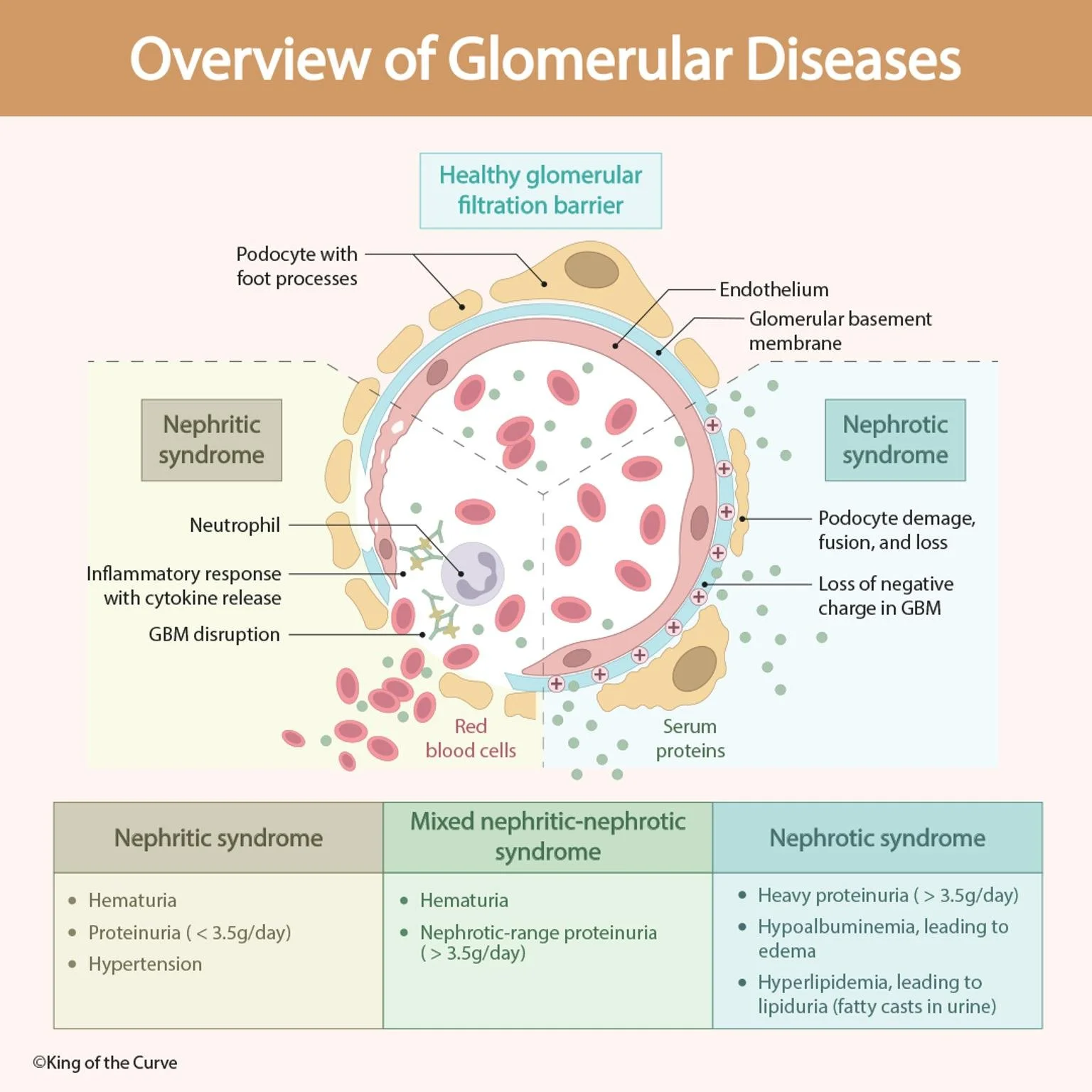
🧩 Understanding the Glomerular Filtration Barrier
The healthy glomerular filtration barrier consists of three main layers:
Endothelium – the inner lining of capillaries that allows selective passage of small molecules.
Glomerular basement membrane (GBM) – the central layer that prevents large proteins and blood cells from escaping into urine.
Podocytes – specialized cells with foot processes that reinforce the structural and charge-based filtration of the barrier.
Damage to any of these components can result in the leakage of proteins, lipids, or blood into the urine, leading to nephritic or nephrotic syndromes.
🧬 Nephritic Syndrome
Nephritic syndrome typically arises from inflammation of the glomeruli, often due to immune-mediated injury.
Key features include:
Hematuria (blood in urine)
Proteinuria (< 3.5 g/day)
Hypertension (high blood pressure)
The inflammatory process causes GBM disruption, cytokine release, and infiltration of immune cells like neutrophils, resulting in reduced kidney filtration efficiency and fluid retention.
💧 Nephrotic Syndrome
In nephrotic syndrome, structural damage to the podocytes and basement membrane leads to severe protein leakage.
Characteristic signs include:
Heavy proteinuria (> 3.5 g/day)
Hypoalbuminemia, leading to edema
Hyperlipidemia and lipiduria (fatty casts in urine)
This condition results in significant fluid accumulation (swelling), particularly in the face and legs, and can be caused by diseases like minimal change disease or membranous nephropathy.
⚖️ Mixed Nephritic-Nephrotic Syndrome
Some disorders, such as lupus nephritis or membranoproliferative glomerulonephritis, exhibit features of both nephritic and nephrotic syndromes.
Patients may present with:
Hematuria
Nephrotic-range proteinuria (> 3.5 g/day)
This overlap underscores the complexity of glomerular disease and the need for careful clinical evaluation.
🩺 Comparative Summary Table
| Nephritic Syndrome | Mixed Nephritic–Nephrotic | Nephrotic Syndrome |
|---|---|---|
| Hematuria | Hematuria | Heavy proteinuria (> 3.5 g/day) |
| Proteinuria (< 3.5 g/day) | Nephrotic-range proteinuria (> 3.5 g/day) | Hypoalbuminemia → edema |
| Hypertension | Hyperlipidemia → lipiduria (fatty casts) |
🌿 Final Thoughts
Understanding glomerular diseases is essential for recognizing early signs of kidney dysfunction. While some cases are reversible with timely treatment, chronic damage can lead to chronic kidney disease (CKD) or even renal failure. Maintaining healthy blood pressure, avoiding nephrotoxic substances, and managing autoimmune or infectious triggers can help protect kidney function.

Frequently Asked Questions (FAQs)
-
Aim for 4-6 focused hours, ensuring you incorporate breaks to avoid burnout.
-
Practice mindfulness techniques, take practice exams under realistic conditions, and maintain a balanced lifestyle.
-
Set short-term goals, seek support from mentors, and reward yourself for small achievements.
-
Regular exercise improves focus, reduces stress, and enhances overall mental clarity.
-
KOTC offers personalized learning tools, gamification features, and adaptive question banks to help students stay on track without burnout.