
🩸 Overview of Hematopoiesis: How Blood Cells Are Formed
Blood is constantly being renewed to replace aging cells, fight infections, transport oxygen, and maintain normal body function. This continuous process, known as hematopoiesis, takes place primarily in the bone marrow, where hematopoietic stem cells differentiate into all mature blood cells. Understanding hematopoiesis is fundamental for students studying immunology, physiology, pathology, and hematologic disorders.
🧬 What Is Hematopoiesis?
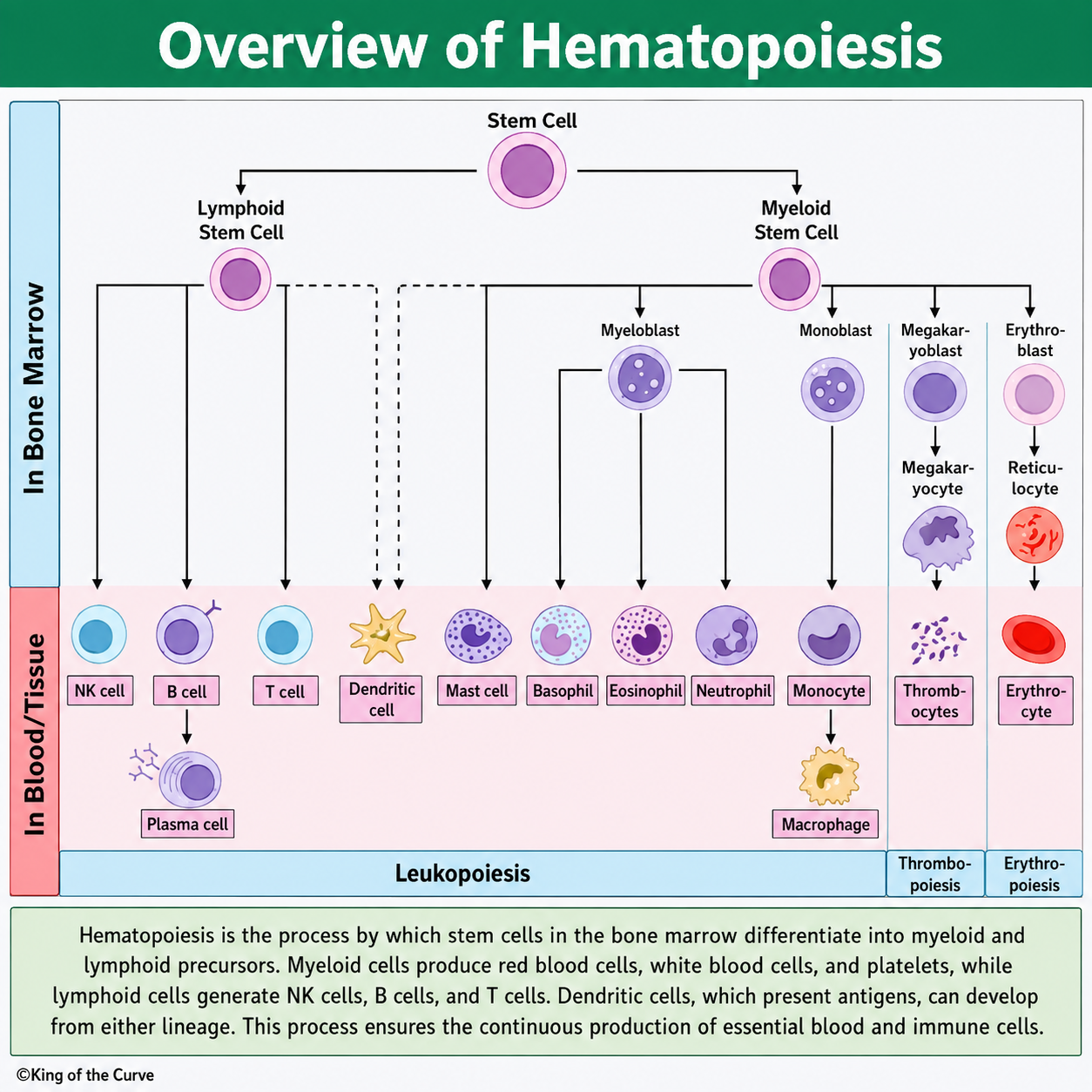
Hematopoiesis is the process by which hematopoietic stem cells (HSCs) produce every type of blood cell in the body. These stem cells are multipotent, meaning they can differentiate into multiple specialized cell types while maintaining the ability to self-renew.
Most hematopoiesis occurs in the red bone marrow of adults, especially within the pelvis, sternum, vertebrae, and ribs.
🌱 Hematopoietic Stem Cell Differentiation
The hematopoietic stem cell gives rise to two major progenitor lineages:
Lymphoid stem cells
Myeloid stem cells
These two branches generate all mature blood cells found in circulation and tissues.
🛡️ Lymphoid Lineage
The lymphoid lineage primarily forms cells responsible for adaptive and innate immunity.
Major Cell Types
NK (Natural Killer) Cells – Destroy virus-infected and tumor cells.
B Cells – Produce antibodies after activation.
Plasma Cells – Specialized B cells that secrete antibodies.
T Cells
Helper T cells (CD4+)
Cytotoxic T cells (CD8+)
Dendritic Cells – Professional antigen-presenting cells that activate T cells.
These immune cells protect the body against bacteria, viruses, parasites, and abnormal cells.
🧪 Myeloid Lineage
The myeloid lineage generates both immune cells and circulating blood components.
Granulocytes
Produced from the myeloblast lineage:
Neutrophils – First responders during bacterial infections.
Eosinophils – Combat parasites and participate in allergic reactions.
Basophils – Release histamine during allergic responses.
Monocyte Lineage
Monoblasts mature into:
Monocytes (circulating blood)
Macrophages (resident tissues)
Macrophages remove pathogens, dead cells, and cellular debris while coordinating immune responses.
Mast Cells
Mast cells mature in tissues and release histamine and inflammatory mediators involved in allergy and parasite defense.
Platelet Formation (Thrombopoiesis)
Platelets develop through the following pathway:
Megakaryoblast → Megakaryocyte → Platelets (Thrombocytes)
Platelets are essential for:
Blood clot formation
Wound healing
Maintaining vascular integrity
Red Blood Cell Formation (Erythropoiesis)
Red blood cells develop through the erythroid lineage:
Erythroblast → Reticulocyte → Erythrocyte (Red Blood Cell)
Red blood cells transport oxygen and carbon dioxide throughout the body using hemoglobin.
🧫 Leukopoiesis
Leukopoiesis refers specifically to the production of white blood cells (leukocytes).
It includes development of:
Neutrophils
Eosinophils
Basophils
Monocytes
Lymphocytes
Dendritic cells
Proper leukopoiesis is essential for effective immune defense.
⚙️ Clinical Importance of Hematopoiesis
Disorders affecting hematopoiesis can result in significant disease.
Examples include:
Anemia – Reduced red blood cell production.
Leukemia – Malignant proliferation of white blood cell precursors.
Lymphoma – Cancer of lymphoid tissues.
Thrombocytopenia – Low platelet count causing bleeding.
Bone marrow failure (Aplastic anemia) – Failure of stem cell production.
Neutropenia – Increased susceptibility to bacterial infections.
Understanding the normal developmental pathway helps clinicians diagnose abnormalities based on which lineage is affected.
📊 Summary Table
| 🧬 Cell Lineage | 🩸 Mature Cells Produced | ⚙️ Primary Function |
|---|---|---|
| Lymphoid | NK cells, B cells, plasma cells, T cells, and dendritic cells | Adaptive and innate immune defense |
| Myeloid | Neutrophils, eosinophils, basophils, monocytes, and mast cells | Immune defense and inflammation |
| Erythroid | Erythrocytes | Oxygen and carbon dioxide transport |
| Megakaryocytic | Platelets | Blood clotting and hemostasis |
🎯 Key Takeaways
Hematopoiesis occurs primarily in the bone marrow.
Hematopoietic stem cells produce lymphoid and myeloid progenitors.
The lymphoid lineage forms immune cells such as B cells, T cells, NK cells, and plasma cells.
The myeloid lineage generates granulocytes, monocytes, mast cells, red blood cells, and platelets.
Leukopoiesis, erythropoiesis, and thrombopoiesis are specialized branches of hematopoiesis.
Proper regulation of hematopoiesis is essential for immunity, oxygen transport, and normal blood clotting.
Understanding hematopoiesis provides the foundation for interpreting many hematologic diseases and is a high-yield topic for the MCAT, medical school, and healthcare professionals.

Frequently Asked Questions (FAQs)
-
Aim for 4-6 focused hours, ensuring you incorporate breaks to avoid burnout.
-
Practice mindfulness techniques, take practice exams under realistic conditions, and maintain a balanced lifestyle.
-
Set short-term goals, seek support from mentors, and reward yourself for small achievements.
-
Regular exercise improves focus, reduces stress, and enhances overall mental clarity.
-
KOTC offers personalized learning tools, gamification features, and adaptive question banks to help students stay on track without burnout.