
🧪 Nucleophiles vs Electrophiles: Key Differences Explained
Understanding the difference between nucleophiles and electrophiles is essential in organic chemistry. Nearly every organic reaction, from substitution and addition to elimination, involves the interaction between these two species. While nucleophiles donate electrons, electrophiles accept them, driving the formation of new chemical bonds.
📖 What Is a Nucleophile?
A nucleophile is an electron-rich species that donates a pair of electrons to form a chemical bond.
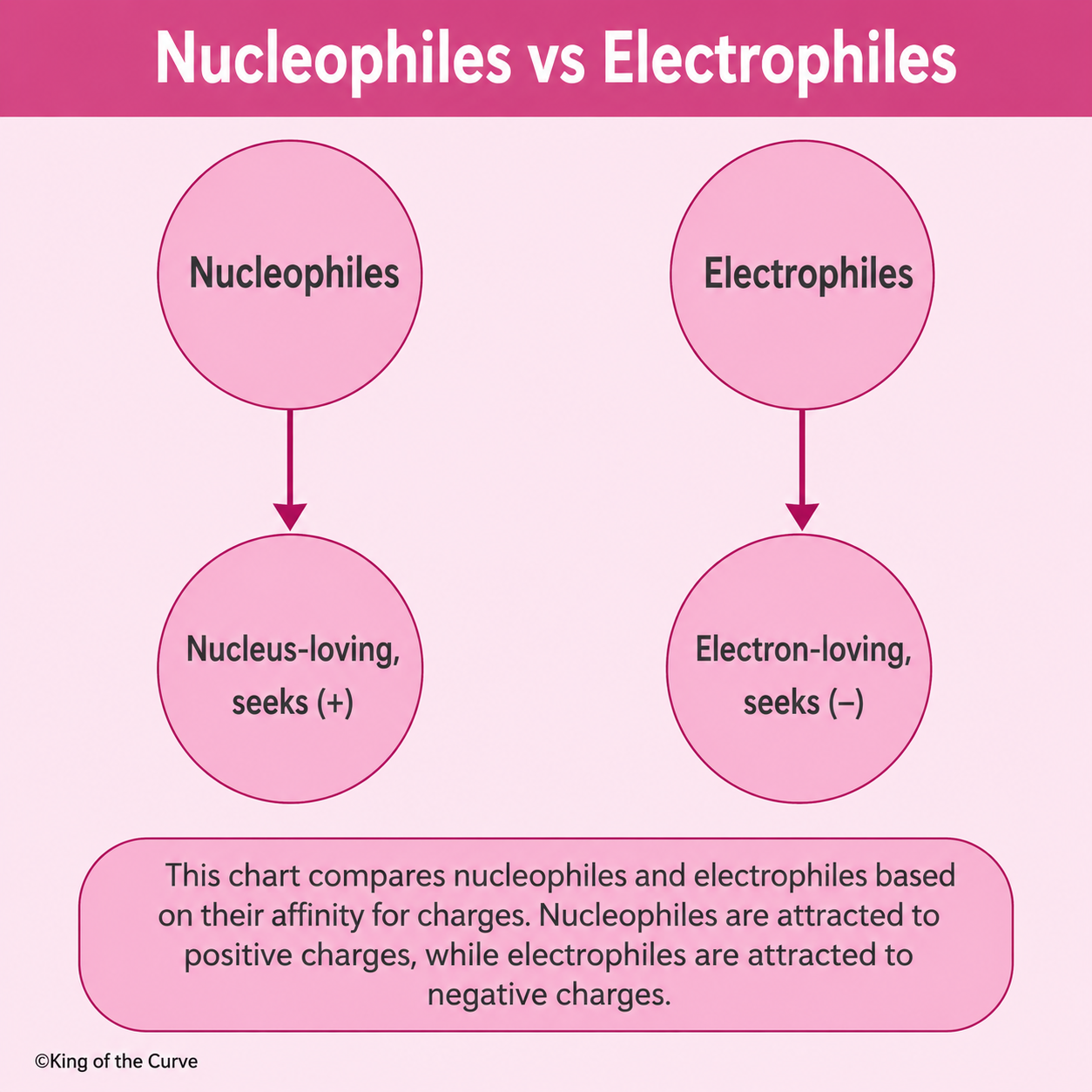
The term nucleophile literally means "nucleus-loving." Since atomic nuclei are positively charged, nucleophiles are attracted to positively charged or partially positive (δ⁺) atoms.
Characteristics of Nucleophiles
Rich in electrons
Electron-pair donor (Lewis base)
Attracted to positive charges
Often negatively charged or neutral molecules with lone pairs
Participates in substitution and addition reactions
Common Examples
OH⁻
CN⁻
NH₃
H₂O
Cl⁻
Br⁻
I⁻
RO⁻ (alkoxides)
⚡ What Is an Electrophile?
An electrophile is an electron-deficient species that accepts an electron pair to form a chemical bond.
The word electrophile means "electron-loving." Electrophiles seek electrons because they possess a positive charge or an incomplete octet.
Characteristics of Electrophiles
Electron deficient
Electron-pair acceptor (Lewis acid)
Attracted to electron-rich species
Usually positively charged or partially positive
Initiates many organic reactions
Common Examples
H⁺
NO₂⁺
BF₃
AlCl₃
Carbocations (R⁺)
Carbonyl carbon (C=O)
SO₃
🔬 Nucleophiles vs Electrophiles
| ⚙️ Feature | 🧪 Nucleophiles | ⚡ Electrophiles |
|---|---|---|
| Meaning | Nucleus-loving | Electron-loving |
| Electron Behavior | Donate an electron pair | Accept an electron pair |
| Lewis Classification | Lewis base | Lewis acid |
| Typical Charge | Usually negative or neutral | Usually positive or partially positive |
| Seek | Positive or partially positive (δ+) centers | Electron-rich or partially negative (δ−) centers |
| Role in Bond Formation | Form bonds by donating an electron pair | Form bonds by accepting an electron pair |
| Examples | OH−, NH3, CN−, Cl− | H+, BF3, AlCl3, carbocations |
⚗️ How Nucleophiles and Electrophiles React
Chemical reactions occur because nucleophiles and electrophiles complement one another.
Step 1: Electrophile becomes electron-deficient
An atom develops a positive or partial positive charge.
Step 2: Nucleophile attacks
The nucleophile donates a lone pair of electrons.
Step 3: Bond formation
A new covalent bond forms between the nucleophile and electrophile.
This process is fundamental to many organic reaction mechanisms.
🧬 Examples in Organic Chemistry
SN1 and SN2 Reactions
Nucleophile: OH⁻, CN⁻, NH₃
Electrophile: Carbon attached to a leaving group
Addition to Carbonyls
Electrophile: Carbonyl carbon
Nucleophile: Hydride (H⁻), alcohols, amines
Electrophilic Aromatic Substitution
Electrophile: NO₂⁺, Br⁺
Nucleophile: Benzene ring
Nucleophilic Addition
Electrophile: Aldehydes and ketones
Nucleophile: Grignard reagents, hydride ions
💡 Factors Affecting Nucleophilicity
Several factors influence how strong a nucleophile is:
Negative charge generally increases nucleophilicity.
Greater electron density improves reactivity.
Steric hindrance reduces nucleophilic strength.
Solvent effects influence reaction rates.
Polarizability increases nucleophilicity for larger atoms.
⚡ Factors Affecting Electrophilicity
Electrophiles become stronger when:
They possess a full positive charge.
They have an incomplete octet.
Electron-withdrawing groups increase positive character.
Polar covalent bonds create partial positive charges.
🌟 Why This Concept Matters
Understanding nucleophiles and electrophiles helps explain:
Organic reaction mechanisms
Drug synthesis
Biochemical reactions
Polymer formation
Industrial chemical processes
Laboratory synthesis
Nearly every reaction involving carbon compounds depends on electron donation and acceptance between these two species.
📝 Key Takeaways
Nucleophiles are electron-rich species that donate electron pairs.
Electrophiles are electron-poor species that accept electron pairs.
Nucleophiles are Lewis bases, while electrophiles are Lewis acids.
Their interaction drives substitution, addition, and many other organic reactions.
Mastering these concepts is fundamental for understanding organic chemistry.

Frequently Asked Questions (FAQs)
-
Aim for 4-6 focused hours, ensuring you incorporate breaks to avoid burnout.
-
Practice mindfulness techniques, take practice exams under realistic conditions, and maintain a balanced lifestyle.
-
Set short-term goals, seek support from mentors, and reward yourself for small achievements.
-
Regular exercise improves focus, reduces stress, and enhances overall mental clarity.
-
KOTC offers personalized learning tools, gamification features, and adaptive question banks to help students stay on track without burnout.