
🧪 Nucleophiles vs Electrophiles: Key Differences Explained (Copy)
Understanding the difference between nucleophiles and electrophiles is essential in organic chemistry. Nearly every organic reaction, from substitution and addition to elimination, involves the interaction between these two species. While nucleophiles donate electrons, electrophiles accept them, driving the formation of new chemical bonds.
🧠 What Is Optimal Arousal Theory?
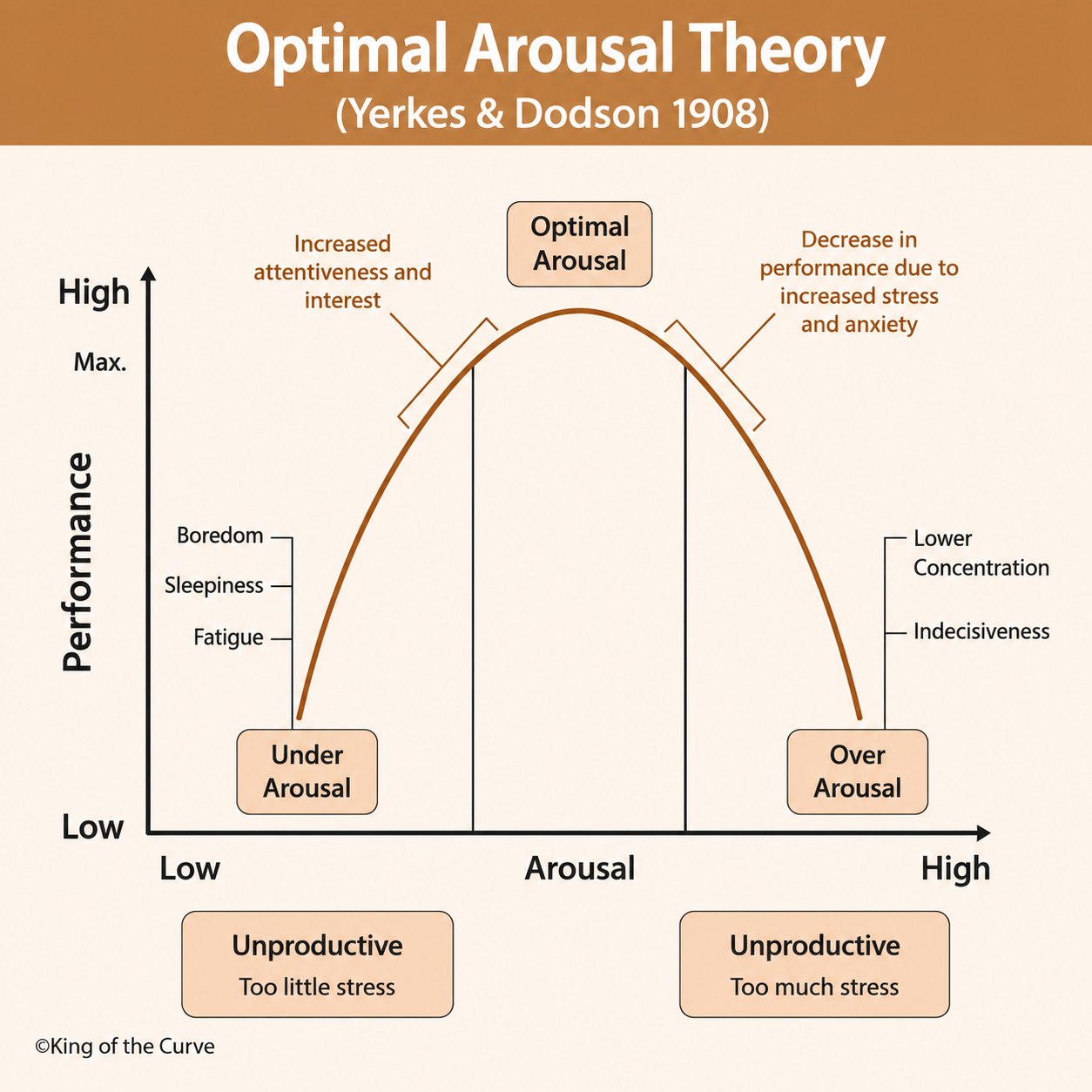
Proposed by Robert M. Yerkes and John D. Dodson in 1908, the Optimal Arousal Theory states that performance improves as arousal (alertness or stress) increases—but only up to an optimal point. Beyond this point, excessive stress causes performance to decline.
This relationship is represented by an inverted U-shaped curve, illustrating three stages:
Under-arousal
Optimal arousal
Over-arousal
📊 Understanding the Yerkes–Dodson Curve
The graph plots performance on the vertical axis against arousal on the horizontal axis.
As arousal rises:
Performance initially improves.
It reaches a peak at an optimal level.
Excessive arousal then causes performance to decline.
😴 Under-Arousal (Low Stress)
At low levels of arousal, individuals often experience:
Boredom
Sleepiness
Fatigue
Low motivation
Poor productivity
Without enough stimulation, attention and performance remain low.
🎯 Optimal Arousal (Peak Performance)
The middle of the curve represents the ideal level of arousal where performance is highest.
Benefits include:
Increased attentiveness
Greater interest and motivation
Better concentration
Improved decision-making
Maximum productivity
This is the "sweet spot" where stress is motivating rather than overwhelming.
😰 Over-Arousal (Excessive Stress)
When arousal becomes too high, performance begins to deteriorate.
Common effects include:
Increased anxiety
Excessive stress
Lower concentration
Indecisiveness
Mental fatigue
More mistakes
Although effort may increase, cognitive performance declines because the brain becomes overloaded.
⚙️ Why Does Too Much Stress Reduce Performance?
Moderate stress enhances alertness and focus. However, excessive stress activates the body's fight-or-flight response, releasing stress hormones like cortisol and adrenaline.
High stress can impair:
Working memory
Attention span
Logical reasoning
Decision-making
Fine motor skills
As a result, tasks become more difficult despite increased effort.
🎓 Real-World Examples
📚 Studying for Exams
Too little stress leads to procrastination.
Moderate stress improves focus and preparation.
Too much stress can cause panic and memory lapses.
🏅 Sports Performance
Athletes perform best when mentally energized but emotionally controlled.
Low arousal → lack of competitiveness
Optimal arousal → peak athletic performance
High arousal → poor coordination and mistakes
🎤 Public Speaking
A moderate amount of nervousness improves energy and engagement.
Excessive anxiety may lead to:
Forgetting information
Speaking too quickly
Difficulty concentrating
💼 Workplace Productivity
Reasonable deadlines encourage motivation and efficiency.
Chronic stress and unrealistic workloads often lead to:
Burnout
Reduced productivity
Increased errors
🔬 Factors That Affect Optimal Arousal
The ideal arousal level varies depending on:
Task difficulty
Individual personality
Experience level
Confidence
Environmental distractions
Generally:
Simple tasks benefit from higher arousal.
Complex tasks require lower arousal for optimal performance.
💡 Tips for Maintaining Optimal Arousal
To stay in the peak performance zone:
😴 Get enough sleep
🧘 Practice mindfulness or meditation
🏃 Exercise regularly
📅 Plan and prepare ahead of time
☕ Avoid excessive caffeine before important tasks
⏸️ Take regular breaks during long work sessions
🎯 Set realistic goals to reduce unnecessary stress
These habits help maintain a healthy balance between motivation and relaxation.
📋 Key Takeaways
✅ The Yerkes–Dodson Law describes the relationship between arousal and performance.
✅ Performance improves as arousal increases until an optimal point is reached.
✅ Under-arousal causes boredom, fatigue, and poor motivation.
✅ Optimal arousal produces maximum focus, attention, and productivity.
✅ Over-arousal leads to anxiety, poor concentration, and reduced performance.
✅ The ideal level of arousal depends on both the individual and the complexity of the task.
🎓 Conclusion
Optimal Arousal Theory demonstrates that neither too little nor too much stress is ideal. Instead, peak performance occurs when arousal is balanced at a moderate level. Understanding this principle can help students, professionals, athletes, and anyone facing challenging situations optimize their focus, productivity, and overall performance.

Frequently Asked Questions (FAQs)
-
Aim for 4-6 focused hours, ensuring you incorporate breaks to avoid burnout.
-
Practice mindfulness techniques, take practice exams under realistic conditions, and maintain a balanced lifestyle.
-
Set short-term goals, seek support from mentors, and reward yourself for small achievements.
-
Regular exercise improves focus, reduces stress, and enhances overall mental clarity.
-
KOTC offers personalized learning tools, gamification features, and adaptive question banks to help students stay on track without burnout.