
The nephron is the kidney’s microscopic functional unit, responsible for filtering blood and adjusting the composition of the fluid that becomes urine. Each nephron contains a renal corpuscle and a series of specialized tubules. Together with the collecting system, these structures remove wastes while maintaining water, electrolyte, and acid base balance.
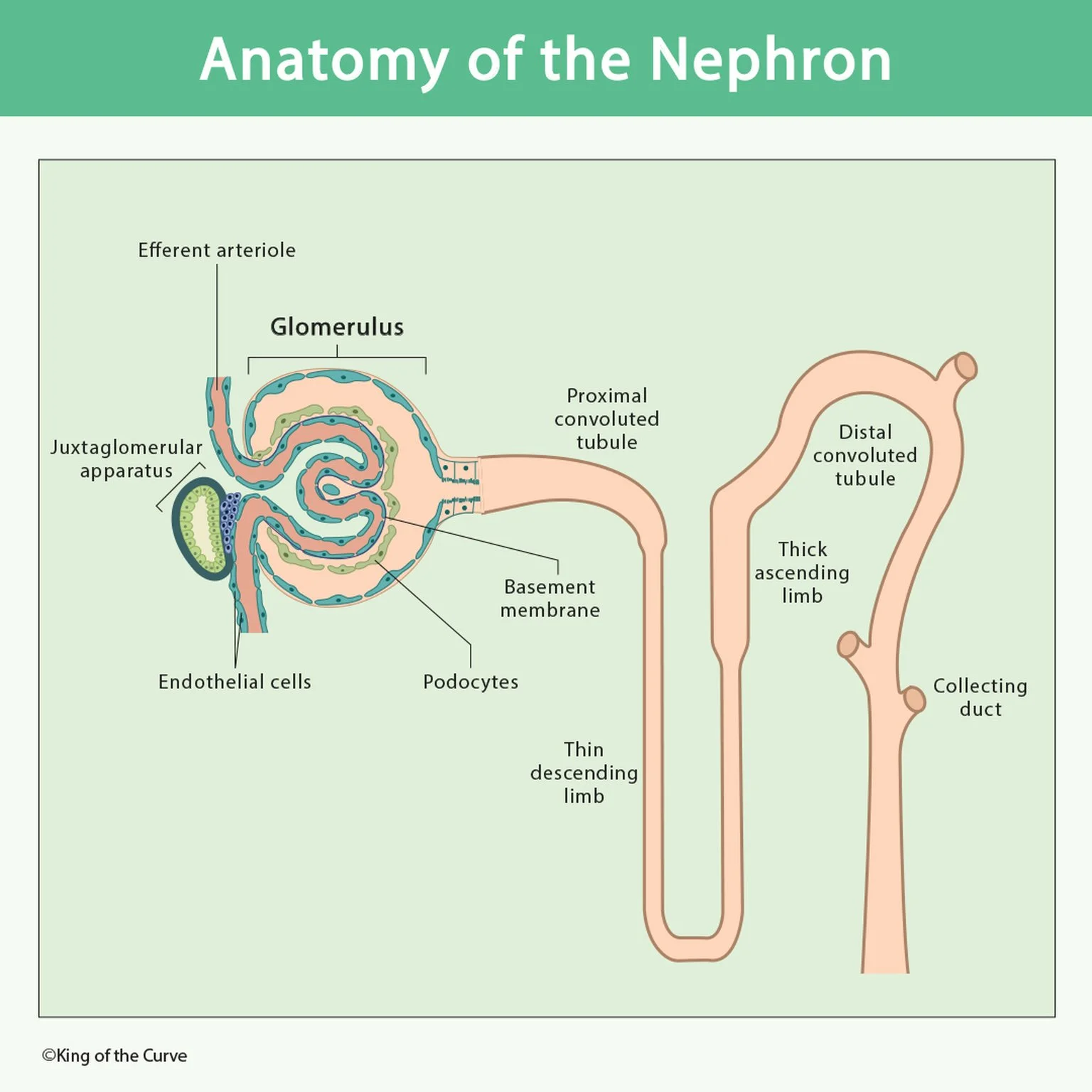
🩸 The Glomerulus and Its Blood Vessels
The glomerulus is a tuft of capillaries inside Bowman’s capsule, together forming the renal corpuscle. Blood enters through the afferent arteriole and leaves through the efferent arteriole. Pressure within the glomerular capillaries drives water and small dissolved substances into Bowman’s space, while blood cells and most plasma proteins remain in the circulation.
🛡️ How the Filtration Barrier Works
The glomerular filtration barrier includes fenestrated endothelial cells, the glomerular basement membrane, and filtration slits between podocyte foot processes. These components work together to restrict the passage of cells and large proteins. The resulting filtrate contains water and small solutes, including electrolytes, glucose, urea, and amino acids.
♻️ Proximal Convoluted Tubule: Bulk Reabsorption
The proximal convoluted tubule reabsorbs most of the filtered sodium and water, along with much of the bicarbonate. Under normal conditions, it also reclaims nearly all filtered glucose and amino acids. In addition, it secretes selected substances into the tubular fluid, helping eliminate certain drugs, organic compounds, and acids.
📊 Main Nephron Structures and Their Functions
Each segment modifies tubular fluid through a different combination of filtration, reabsorption, and secretion. Reabsorption moves substances from tubular fluid toward the blood, while secretion moves substances from the blood into the tubule. The collecting duct receives fluid from multiple nephrons and makes final adjustments before urine leaves the kidney.
| Structure | Main Function | Key Feature |
|---|---|---|
| Renal corpuscle | Filters water and small solutes from blood | Contains the glomerulus and Bowman’s capsule |
| Proximal convoluted tubule | Reabsorbs most filtered water and sodium, plus nutrients | Major site of bulk reabsorption |
| Thin descending limb | Allows water to leave the tubular fluid | Relatively permeable to water |
| Thick ascending limb | Reabsorbs sodium, potassium, and chloride | Relatively impermeable to water |
| Distal convoluted tubule | Adjusts sodium chloride and calcium reabsorption | Contributes to electrolyte regulation |
| Collecting duct | Regulates final water, electrolyte, and acid–base handling | Water permeability increases in response to ADH |
| Juxtaglomerular apparatus | Helps regulate filtration and renin release | Links tubular sodium chloride sensing with vascular responses |
💧 Descending Limb: Water Leaves the Tubule
The thin descending limb of the loop of Henle is relatively permeable to water. As tubular fluid descends into the increasingly concentrated renal medulla, water moves outward by osmosis. This concentrates the remaining tubular fluid and contributes to the kidney’s ability to conserve water.
🧂 Ascending Limb: Salt Leaves Without Water
The thick ascending limb reabsorbs sodium, potassium, and chloride through the NKCC2 cotransporter. Because this segment is relatively impermeable to water, salt leaves without a matching movement of water. This dilutes the tubular fluid and helps establish the medullary osmotic gradient needed to produce concentrated urine.
⚙️ Distal Tubule and Collecting Duct: Final Adjustments
The distal convoluted tubule helps regulate sodium chloride and calcium reabsorption before fluid passes through connecting segments into the collecting system. Aldosterone promotes sodium reabsorption and potassium secretion in the aldosterone-sensitive distal nephron. ADH increases collecting duct water permeability, while intercalated cells contribute to acid–base regulation.
📍 Juxtaglomerular Apparatus: Monitoring and Regulation
The juxtaglomerular apparatus brings the macula densa near the end of the thick ascending limb into close association with the glomerular arterioles. Macula densa cells sense tubular sodium chloride delivery and help regulate filtration through tubuloglomerular feedback. Juxtaglomerular cells, located mainly in the afferent arteriole, release renin in response to signals such as reduced renal perfusion or sympathetic stimulation.

Frequently Asked Questions (FAQs)
-
Aim for 4-6 focused hours, ensuring you incorporate breaks to avoid burnout.
-
Practice mindfulness techniques, take practice exams under realistic conditions, and maintain a balanced lifestyle.
-
Set short-term goals, seek support from mentors, and reward yourself for small achievements.
-
Regular exercise improves focus, reduces stress, and enhances overall mental clarity.
-
KOTC offers personalized learning tools, gamification features, and adaptive question banks to help students stay on track without burnout.