
🧲 Magnetic Field Lines: Visualizing Magnetic Forces
Magnetic field lines are a useful visual tool that help scientists understand how magnetic forces behave around magnets and moving charges. These invisible fields influence many natural and technological processes, from Earth’s magnetosphere to electric motors and MRI machines. For students preparing for the MCAT physics section, understanding magnetic field lines is essential because they illustrate how magnetic forces act in space, how magnets interact with each other, and how electric currents generate magnetic fields.
🧠 What Are Magnetic Field Lines?
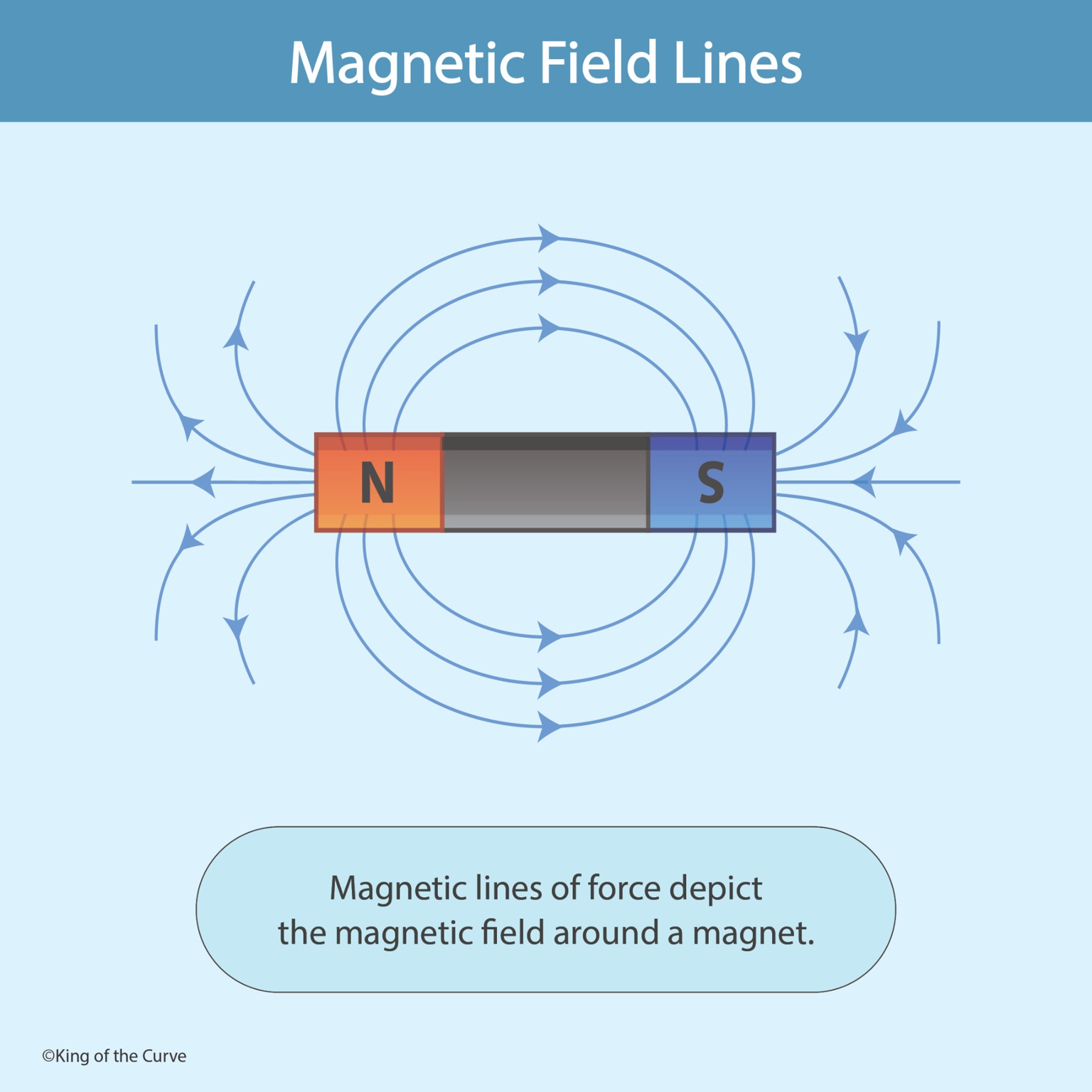
Magnetic field lines represent the direction and strength of a magnetic field surrounding a magnet or current-carrying conductor. Although the lines themselves are not physically real, they provide a visual model that shows how magnetic forces act in the surrounding space. Each line indicates the direction a north magnetic pole would move if placed in the magnetic field.
🧲 Direction of Magnetic Field Lines
Magnetic field lines follow a consistent directional rule. Outside of a magnet, the lines travel from the north pole to the south pole. Inside the magnet, they return from the south pole back to the north pole, forming a continuous loop. This closed loop pattern reflects the fact that magnetic monopoles do not exist in nature—magnets always have both a north and a south pole.
📈 Magnetic Field Strength
The strength of a magnetic field can be inferred from the density of the field lines. Where the lines are closer together, the magnetic field is stronger. Near the poles of a magnet, the field lines are densely packed, indicating a stronger magnetic force compared to regions farther away.
⚡ Magnetic Fields and Moving Charges
Magnetic fields are not limited to permanent magnets. Moving electric charges, such as those flowing through a wire, also generate magnetic fields. This relationship between electricity and magnetism forms the basis of electromagnetism, a fundamental concept in physics that explains how electric currents produce magnetic forces.
🔄 Interaction Between Magnetic Fields
Magnetic fields interact with each other in predictable ways. Opposite poles attract, while like poles repel. When two magnets are placed near one another, their field lines either merge smoothly or push apart depending on the orientation of their poles. These interactions explain how magnets exert forces without physically touching each other.
📊 Key Properties of Magnetic Field Lines
| Property | Description | Example |
|---|---|---|
| Direction | Lines move from the north pole to the south pole outside the magnet. | Bar magnet field pattern |
| Closed Loops | Magnetic field lines form continuous loops that travel through the magnet and surrounding space. | Magnetic field inside the magnet |
| Density | Closer field lines indicate a stronger magnetic field strength. | Stronger fields near magnet poles |
📚 MCAT Strategy: Interpreting Magnetic Field Diagrams
On the MCAT, questions about magnetic fields often involve diagrams that illustrate field lines around magnets or current-carrying wires. Students may be asked to determine the direction of the magnetic field, predict the motion of charged particles, or analyze how two magnetic fields interact. Recognizing that field line density indicates strength and direction shows force orientation can help quickly interpret these diagrams.
📈 Learning Physics Concepts with Visual Tools
Physics concepts such as magnetism become easier to understand when paired with visual diagrams. King of the Curve provides hundreds of illustrated explanations for high-yield MCAT topics, helping students quickly grasp ideas like magnetic fields, electromagnetism, and physical forces. Explore more visual learning tools at mcat.kingofthecurve.org, a leading platform for MCAT concept visuals and science study resources.

Frequently Asked Questions (FAQs)
-
Aim for 4-6 focused hours, ensuring you incorporate breaks to avoid burnout.
-
Practice mindfulness techniques, take practice exams under realistic conditions, and maintain a balanced lifestyle.
-
Set short-term goals, seek support from mentors, and reward yourself for small achievements.
-
Regular exercise improves focus, reduces stress, and enhances overall mental clarity.
-
KOTC offers personalized learning tools, gamification features, and adaptive question banks to help students stay on track without burnout.