
🧠 What Is the Relationship Between Language and Cognition?
The relationship between language and cognition has fascinated psychologists, linguists, and neuroscientists for decades. A central question is whether our thoughts shape the language we use or whether language itself influences the way we think. Several major theories offer different perspectives on this relationship, making this topic highly relevant for the MCAT Psychology and Sociology section.
💭 Why This Topic Matters
Understanding language and cognition helps explain how humans communicate, solve problems, and interpret the world around them. The MCAT often tests students on famous theorists and their viewpoints, requiring them to distinguish between competing theories. Knowing how cognition and language interact also provides insight into child development, cultural differences, and learning processes.
🌍 Universalism
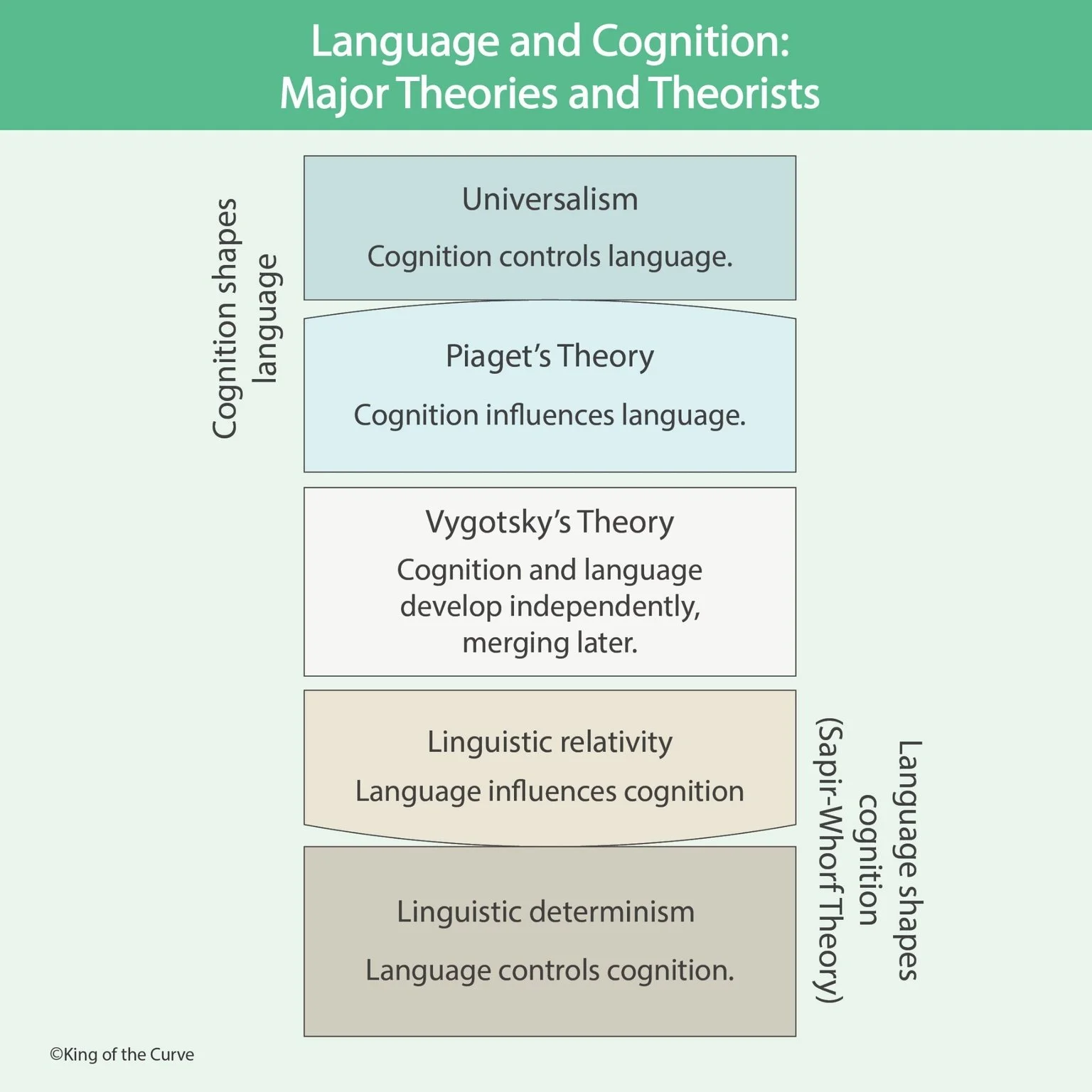
The Universalism perspective argues that cognition controls language. According to this view, people first develop thoughts and mental concepts before expressing them through language. Language serves as a tool to communicate ideas that already exist in the mind, suggesting that cognitive development comes first.
👶 Piaget's Theory
Jean Piaget believed that cognition influences language because children's language abilities develop alongside their cognitive maturation. As children progress through Piaget's stages of cognitive development, they gain the mental capacity to understand and use increasingly complex language. In this framework, language reflects cognitive growth rather than causing it.
🤝 Vygotsky's Theory
Lev Vygotsky proposed that language and cognition initially develop independently before merging later in childhood. As children interact with caregivers and peers, language becomes an essential tool for guiding thought, problem-solving, and self-regulation. This theory emphasizes the importance of social interaction in cognitive development.
🗣️ Linguistic Relativity and Linguistic Determinism
The Sapir-Whorf Hypothesis includes two related ideas. Linguistic relativity suggests that language influences cognition, meaning that the words available in a language can shape how people perceive and categorize the world. Linguistic determinism takes this idea further by proposing that language controls cognition, implying that language fundamentally determines how people think.
📋 Comparison of Major Language and Cognition Theories
| Theory | Primary Theorist | Relationship Between Language and Cognition |
|---|---|---|
| Universalism | No Single Founder | Cognition controls language. |
| Piaget's Theory | Jean Piaget | Cognition influences language development. |
| Vygotsky's Theory | Lev Vygotsky | Language and cognition develop independently before merging. |
| Linguistic Relativity | Edward Sapir & Benjamin Lee Whorf | Language influences cognition. |
| Linguistic Determinism | Edward Sapir & Benjamin Lee Whorf | Language controls cognition. |
🎯 How the MCAT Tests Language and Cognition
The MCAT frequently presents scenarios involving child development, cultural communication, or language acquisition and asks students to identify which theory best explains the observations. Instead of memorizing definitions alone, focus on recognizing the direction of influence—whether cognition shapes language, language shapes cognition, or both develop together.
🚀 Master Psychology with King of the Curve
Complex psychology theories become much easier to remember when paired with visual learning. King of the Curve's exclusive science illustrations simplify major psychological concepts, theorists, and MCAT-tested topics into memorable diagrams that improve long-term retention. Explore this illustration and 1,000+ visual study resources at mcat.kingofthecurve.org, and strengthen your preparation with adaptive question banks, daily challenges, gamified learning, and comprehensive MCAT study tools designed to help you succeed.

Frequently Asked Questions (FAQs)
-
Aim for 4-6 focused hours, ensuring you incorporate breaks to avoid burnout.
-
Practice mindfulness techniques, take practice exams under realistic conditions, and maintain a balanced lifestyle.
-
Set short-term goals, seek support from mentors, and reward yourself for small achievements.
-
Regular exercise improves focus, reduces stress, and enhances overall mental clarity.
-
KOTC offers personalized learning tools, gamification features, and adaptive question banks to help students stay on track without burnout.